


What is VNC?
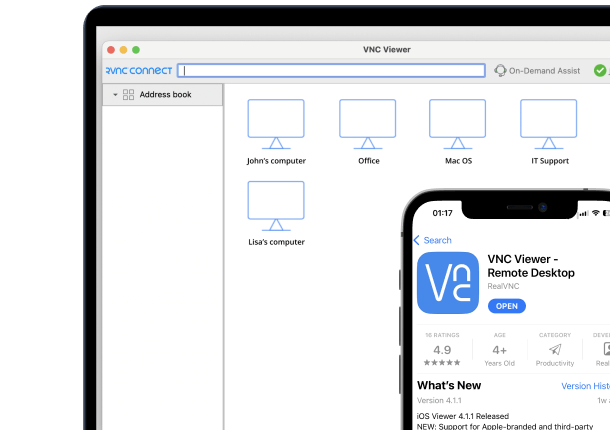
VNC stands for Virtual Network Computing. It is a cross-platform screen-sharing system created to remotely control another computer. This means that a computer’s screen, keyboard, and mouse can be used from a distance by a remote user from a secondary device as though they were sitting right in front of it.
VNC was created at the Olivetti & Oracle Research Laboratory in Cambridge in 1998 by the founders of RealVNC, who established the company in 2002 and released the first commercial version in 2003.
How Does VNC Work?
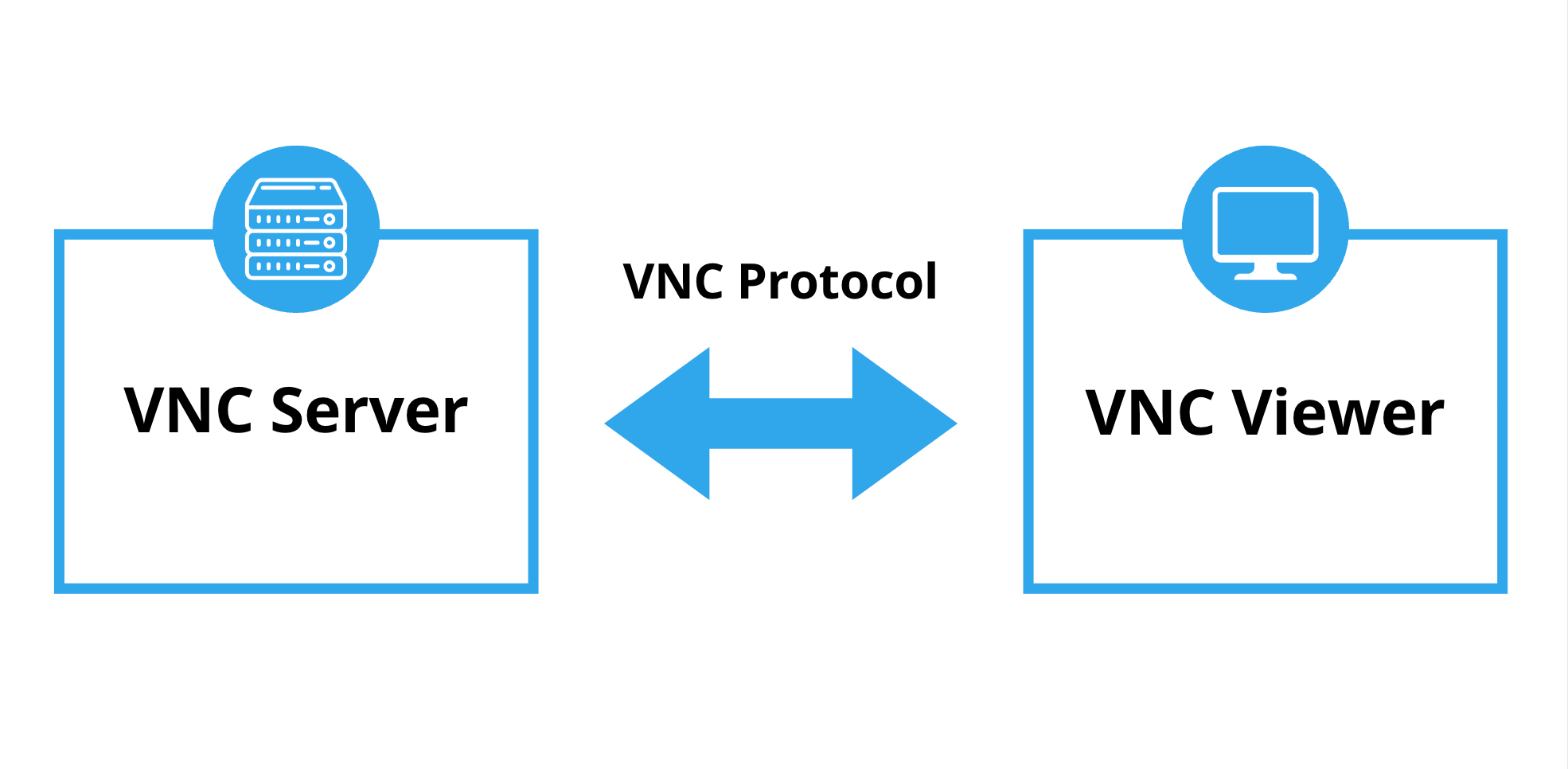
Virtual Network Computing (VNC) operates using a client-server model, facilitated by the Remote Framebuffer (RFB) protocol. A server component is installed on the remote computer you want to control, while a VNC viewer is installed on the computers or mobile devices you’ll use to control it.
Once connected, the server transmits the remote computer’s screen to the viewer, adhering to the RFB protocol’s standards, which define how this data exchange is formatted and transmitted.
VNC software allows you to see the remote computer’s entire screen and control it using keyboard and mouse commands from your device. Mouse movements and keystrokes pass straight to the remote machine, so once permission is granted, the connected user has full control of one computer from another. This makes VNC a powerful tool for remote work, troubleshooting, or accessing files.
What's a VNC Server?
VNC server software is installed on a computer to make it accessible for remote control. It enables the remote computer’s desktop to be shared with VNC clients on other devices. The server uses the RFB protocol to transmit display updates in real time, keeping communication between the server and the viewer efficient.
This follows the client-server model, where the server provides services to clients. Because the RFB protocol is platform independent, one server can serve multiple clients across different platforms, which makes it versatile for IT professionals and collaborative work.
Download the RealVNC Connect app here: RealVNC Connect download
What's a VNC Viewer?
VNC viewer software is the client-side application that connects to a remote computer running VNC server software. It provides a graphical interface to the remote desktop, using the RFB protocol to receive updates from the server and transmit keyboard, mouse, or touch events back. This two-way communication ensures the viewer interacts with the remote computer as if it were local.
For example, with a VNC viewer on your mobile phone, you can fully operate a remote computer as if you were sitting in front of it. The RFB protocol’s lightweight design keeps a VNC connection responsive, even on devices with limited resources.
Download the RealVNC Connect app here: RealVNC Connect download
Watch: RealVNC Server and RealVNC Viewer tutorial
What is the RFB protocol?
Remote Framebuffer, or RFB, is the protocol that governs how data passes between client and server in a VNC system. It’s what lets a viewer see and control another machine. Because RFB works at the framebuffer level rather than the application level, it runs across Windows, macOS, Linux and other operating systems.
The device you sit at is the RFB client, or viewer. The machine where the screen changes originate, as in the windowing system, is the RFB server. RFB started as a simple protocol and has grown to cover file transfer, better compression and stronger security, with VNC clients and servers negotiating the best version they both support when they connect. It was developed in Cambridge by some of the original VNC developers, is published as an open standard in RFC 6143, and its specifications are hosted on the RealVNC website.
Similarities between VNC and RDP
The VNC protocol and RDP, the Remote Desktop Protocol developed by Microsoft, share several similarities:
- These protocols both provide access to remote desktops for quick and easy troubleshooting and remote working.
- They both require both client and server-side software to support communication.
- They use direct peer-to-peer communication, which means that the local user’s computer can connect directly to the remote computer or device.
- Both support software to manage users and enable secure access.
Differences between VNC and RDP
Both VNC and RDP connect devices through a network, either via server or peer-to-peer. Although their goals are the same—to provide graphical remote desktop capabilities to a device—they differ in how they achieve that goal.
- RDP has limited platform capabilities, whereas VNC works across multiple operating systems.
- RDP can be faster than VNC.
- Security levels can vastly differ between the two protocols.
- VNC connects directly to the computer, but RDP connects to a shared server.
- RDP is not very compatible if you need to implement a remote desktop solution across a wide range of devices. Because of this, RDP can limit the ability to provide IT help.
Remote Computer Access Use Cases
VNC technology is incredibly versatile and is used in various scenarios where remote computer access is required. Some of the most common use cases include:
Remote IT Support
IT support teams widely use VNC to troubleshoot and resolve issues on employee computers remotely. This allows for quick and efficient problem-solving without the need for in-person tech visits.

Remote Work
VNC enables remote workers to access their office computers from anywhere, allowing them to work remotely and stay productive. This is especially useful for accessing files and applications that are only available on the office network.
Web Development
Web development teams use VNC to remotely access web servers and cloud-hosted virtual machines. This allows developers to manage and update websites and applications from any location.

Call Center Management
Call center managers use VNC to display data on multiple screens for the entire sales team to see. This helps them monitor performance and provide real-time updates to the team.
Remote Education
Educational institutions use VNC to provide remote access to computer labs and other resources. This allows students to access necessary software and tools from home, facilitating remote learning.
Setting Up VNC for Remote Access
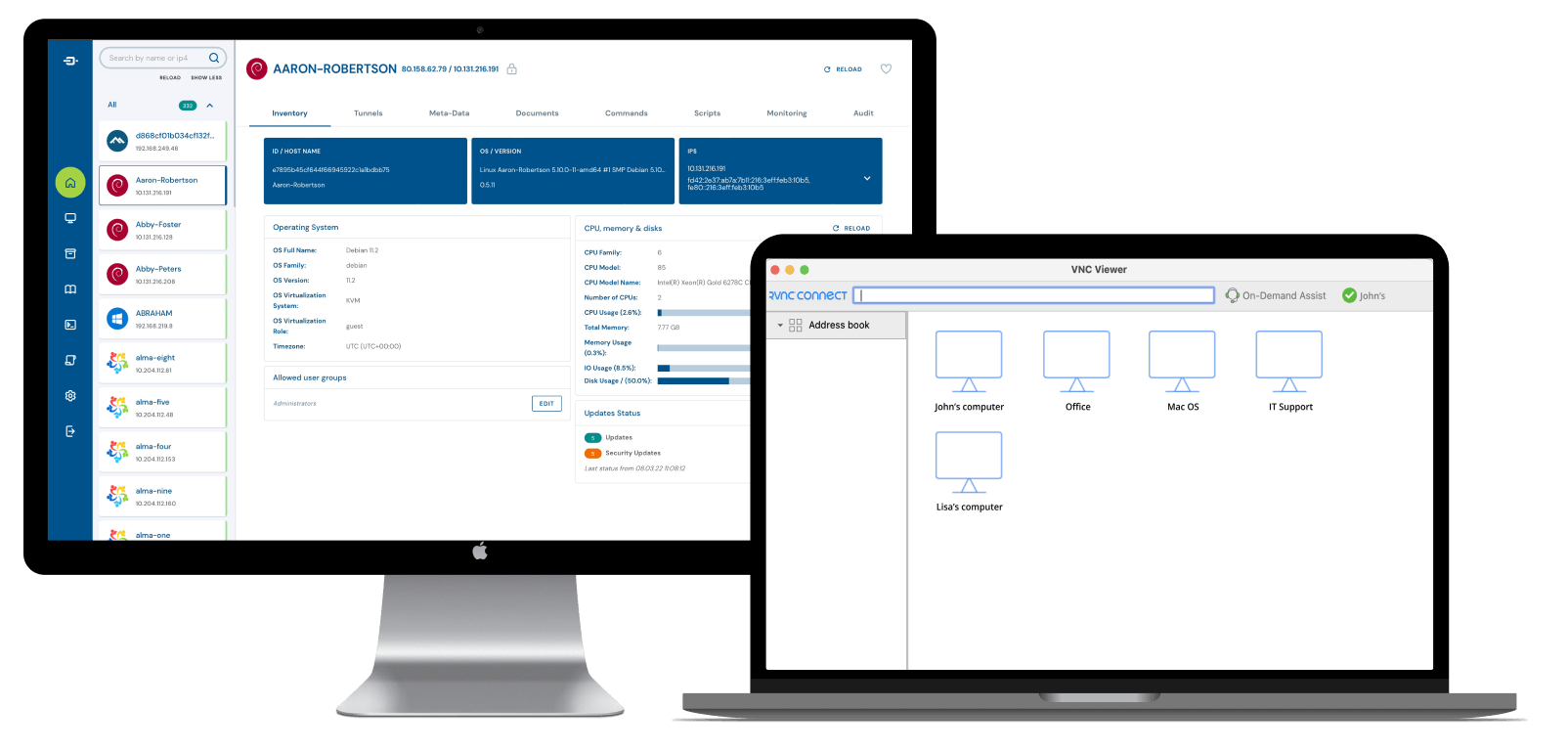
The process of remotely controlling a computer using VNC involves three quick steps:
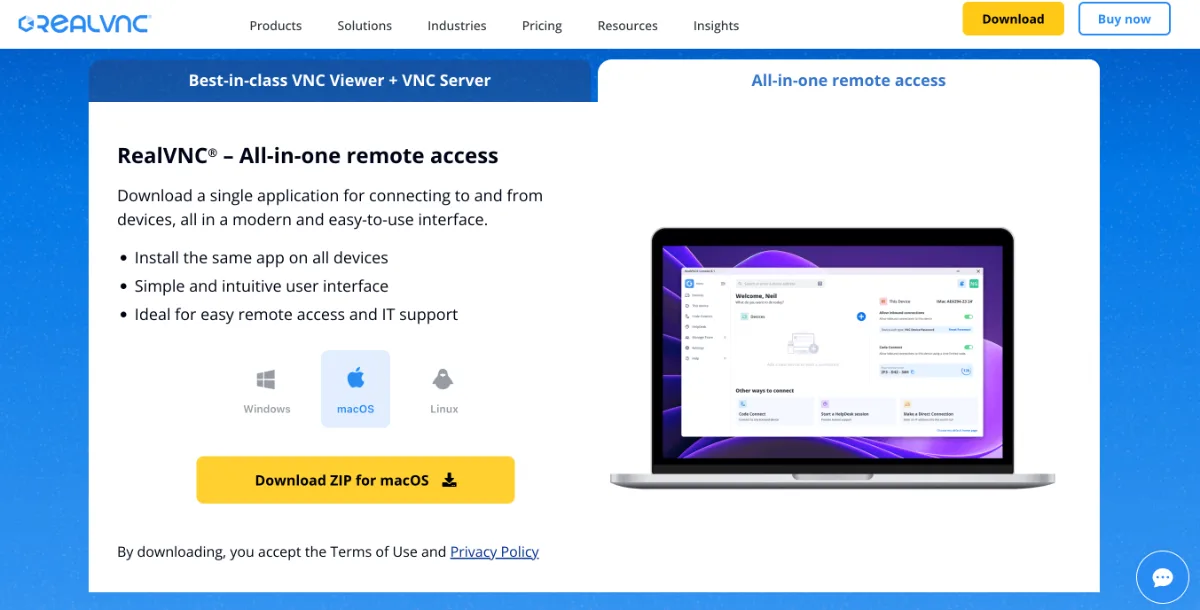
1. Download
Install the RealVNC Connect app on both machines: the one you want to control, and the one you’ll control it from. Version 8 brings viewer and server into a single application, so it’s the same download either way.
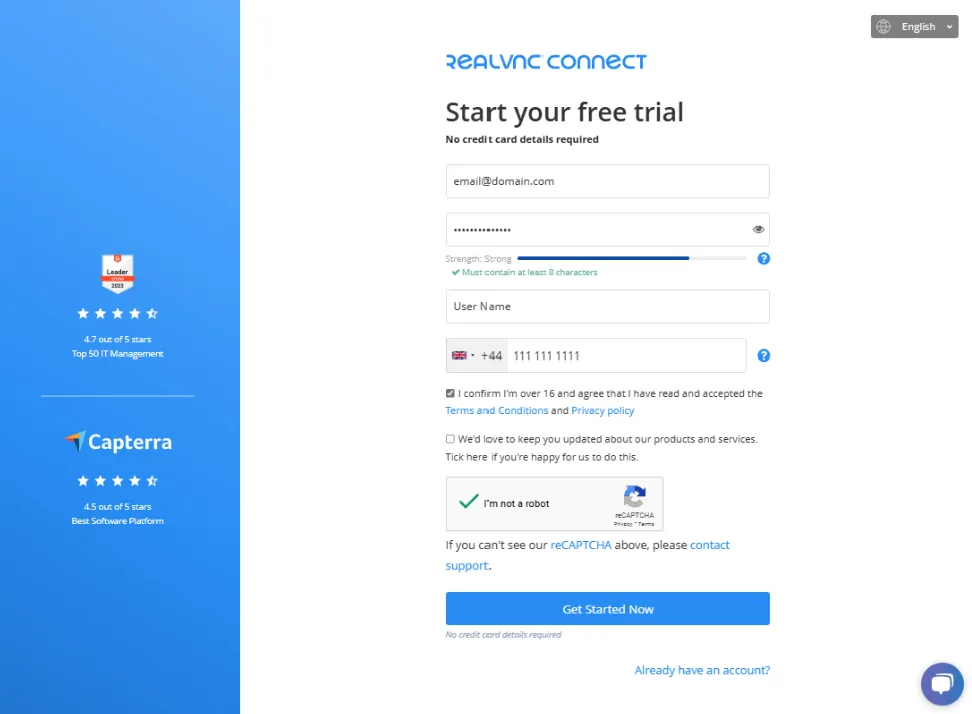
2. Sign In/Sign Up
Sign in or create an account (and claim a free 14-day trial).
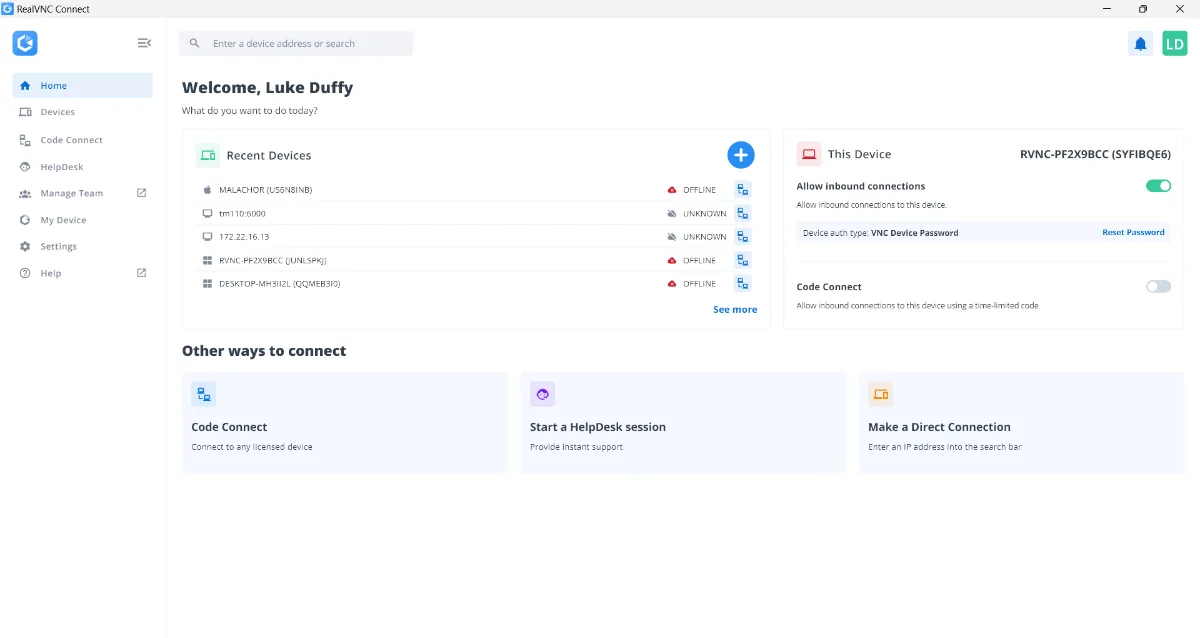
3. Setup and Connect
Sign in on both devices and connect. The machine you want to reach stays securely available, and the one you’re sitting at takes control.
Setting up VNC for remote access is designed to be simple and efficient, ensuring you can get started in no time. Once connected, you’ll have full control of your remote device, whether you’re troubleshooting, collaborating, or accessing files from afar.
With RealVNC, remote access becomes a seamless part of your workflow—reliable, secure, and user-friendly.
RealVNC Connect: Secure and Seamless Remote Access from the Pioneers of VNC Technology
RealVNC Connect comes from the team that created VNC technology. Version 8, the current release, merges RealVNC Viewer and RealVNC Server into a single application.
Key Features:
- Enterprise-Grade Security: RealVNC Connect safeguards your systems with AES-GCM 256-bit end-to-end encryption. Multi-factor authentication (MFA), granular access controls, and single sign-on (SSO) provide robust defenses tailored to your organization’s needs.
- Cross-Platform Compatibility: RealVNC Connect seamlessly accesses Windows, macOS, Linux, Raspberry Pi, iOS, and Android devices. Its flexibility ensures uninterrupted workflows across diverse operating systems.
- Innovative Connectivity Options: RealVNC Connect offers both cloud-based and direct (IP) connections, adapting to your security policies and operational requirements. Thus, it is ideal for businesses of all sizes.
- Productivity-Boosting Tools: High-speed streaming, remote audio, file transfer, real-time chat, and other collaboration features make RealVNC Connect an indispensable tool for IT support and remote work.
- Scalability and Management: RealVNC Connect is designed to grow with your organization and includes intuitive tools for user and device management, ensuring smooth deployment and administration.
- Secure Guest Access: Code Connect issues a single-use access code that expires after 120 seconds, so you can hand over control without pre-configuring permissions.
- No-Install Support: On-Demand Assist lets technicians reach unmanaged devices without installing anything on them.
Discover the next generation of remote access solutions from the pioneers of VNC technology. Start your free 14-day trial today.
Frequently Asked Questions
Is VNC the same as remote desktop?
Not quite. Remote desktop is the general category, and VNC is one technology within it. VNC uses the RFB protocol to share the actual screen of the machine you’re connecting to, so you see exactly what someone sitting at that computer would see.
Microsoft’s RDP sits in the same category but works differently, typically creating its own session on a server rather than mirroring the physical desktop. Both let you work on a distant machine; they just take different routes to it.
What is the difference between VNC and VPN?
They solve different problems, despite the similar acronym. VNC gives you the screen and control of one specific computer, as though you were sitting at it. A VPN doesn’t show you a screen at all; it puts your device on a private network so you can reach the resources on it.
They’re often used together rather than instead of each other. A VPN can get you onto the corporate network, and VNC then gives you control of a particular machine on it.