
A manufacturer on the outskirts of a city suffers an IT outage, grounding production to a halt. The plant manager starts watching the clock like it’s a billing timer, and nervously glances at the traffic building outside. Under the traditional break-fix support arrangement, the technician assigned to the company has to get in a car, fight with traffic, and will realistically only arrive hours later.
The incident is, of course is resolved, but the financial impact of the delay will last long after the last log entry.
With secure remote access, that same fault can be diagnosed and resolved in the time it takes to send plant workers on a lunch break. That contrast captures the core of what the break-fix model is. It’s a predominantly reactive method of technical support that waits until something breaks, then responds.
In modern IT, teams must manage distributed users, critical cloud platforms, and strict compliance rules. Downtime has moved from being an annoyance to a significant risk. Many organizations still rely on a traditional break-fix service, while others have adopted proactive models or a combination of the two.
RealVNC Connect provides a secure remote support foundation that allows engineers to reach systems quickly, rather than scheduling site visits. The rest of this article will examine where break-fix services still make sense, how managed services can fit in, and how RealVNC Connect supports both models.
What is Break-Fix Support? Definition and Core Principles
Break-fix support is a reactive fee-for-service model where IT teams will step in only after something fails. The provider in a break-fix model does not provide any kind of continuous oversight or monitoring, nor do they provide mitigation services in a proactive way. Basically, when an organization hits a snag, they log a ticket, and once it’s open, the clock starts, and the engineer begins work.
In the classic break-fix model, a customer contacts their service provider when something isn’t working or breaks. The engineer collects the symptoms, attempts fixes from their end, and typically travels to the site. Time then goes into diagnostics, swapping out hardware, or adjusting configuration. The customer is then billed hourly, or sometimes per incident.
Once the engineer is finished fixing issues, the work wraps up, and the relationship goes quiet until the next outage. A lot of technicians jokingly describe it as the “call me when the server is on fire” model of support.
Break-fix services cover a wide range of incidents. Failed disks, broken applications, network misconfigurations, malware infections, and just good old user error all fall into the scope. Technicians are expected to arrive under pressure, often with whatever documentation and tools they can carry, and with staff asking, “How long until it works again?’
Despite the reactive nature, break-fix still does support specific business contexts:
- Small businesses with stable environments
- SME’s with limited budgets
- Organizations running legacy equipment
- Short-term projects where year-long arrangements are superfluous
More proactive models tend to focus on prevention rather than cure, which we’ll explore later. For now, it helps to view break-fix as one valid option in a wider toolkit rather than “mistake by default.”
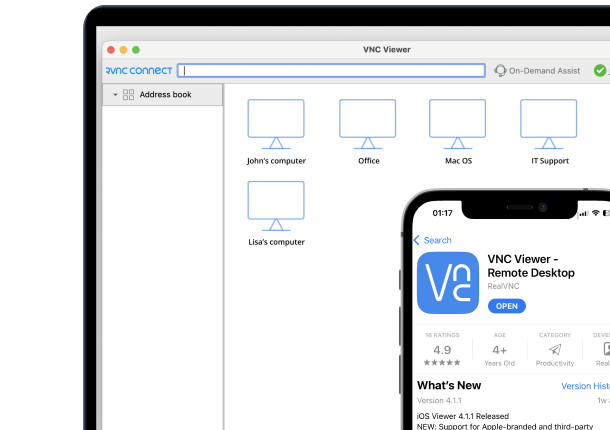
RealVNC Connect gives technicians and support engineers a secure remote access path that strengthens this incident-driven response. The On-Demand Assist in V8 allows a technician to generate a time-limited session code. The user then downloads a small, disposable app and enters the code, with the engineer gaining encrypted, attended access within minutes.
No install remains on the device once the session concludes. That workflow delivers zero install, code-based instant access to attended remote endpoints, which is the fastest form of break-fix incident response. For businesses that rely on break-fix services, using secure remote access reduces travel, cuts costs, and opens the door to light remote monitoring and more structured support strategies in the future.
Break-Fix vs. Managed Services: Support Models Compared
With break-fix support, the IT team waits until there’s a fault and then races to restore service. It’s a class reactive approach.

In contrast, managed server providers (MSPs) operate on a proactive approach with continuous planned work and preventive care rather than putting out fires as they pop up.
A simple way to see the difference is through the core support models:
| Aspect | Break-Fix | Managed Services |
|---|---|---|
| Commercial Model | A fee-for-service model that’s often billed hourly | Monthly and ongoing fees for a subscription to support tiers under the MSP |
| Approach | Reactive approach after incidents | Proactive maintenance and planned work |
| Monitoring | No continuous view | Ongoing monitoring and remote monitoring |
| Risk Profile | Longer downtimes with unpredictable costs. A higher chance of lost productivity | Reduced risk through ongoing maintenance and planning |
| Contract Style | Ad hoc arrangements | Long-term contracts and commitments under service level agreements (SLAs) |
| Resilience | Limited ability to plan | Structured disaster recovery capability |
The purely reactive break-fix model can represent significant cost savings, but only when everything is running fine. When major outages occur, businesses are hit with higher costs from increased downtime and multiple per-service callout fees. Many businesses reach a point where these spikes in IT spending and disruption outweigh the perceived benefits from avoiding a retainer.
This is where the managed services providers step in. They deliver continuous service, formal SLAs, and repeatable processes, all backed by tools for ongoing monitoring, remote monitoring, proactive maintenance, and tested disaster recovery plans.
However, in practice, the choice is rarely so clean-cut. A growing number of teams adopt a hybrid fix and managed services arrangements. Break-fix is kept for edge and specialist systems, and the core platforms are shifted onto a managed service model. This is typically termed a break-fix and managed mix that takes into account actual risk and limited IT budgets.
RealVNC Connect supports this hybrid approach. For reactive work, HelpDesk with On-Demand Assist gives technicians instantaneous, zero-install access to attended devices using short-lived session codes, which support the break-fix model.
For proactive support, unattended connections provide a secure path for scheduled updates, scripted tasks, and patch management across fleets of endpoints. The same secure remote access platform lets IT teams refine their support models over time for businesses of any size.
When to Use Break-Fix Support: Practical Use Cases
Most businesses are many organizations tend to lean more toward proactive contracts now, but that’s not to say that break-fix still doesn’t have a place in IT support. There are a variety of situations and IT infrastructures where the model still fits. The key is knowing what those scenarios are, rather than trying to force every environment onto the same template.
- Infrequent issues for smaller teams: For small businesses that have a few laptops, most services in the cloud, and minor IT issues, paying a retainer doesn’t make a lot of sense. Break-fix services let service providers step in only when needed. The company ends up only paying for real incidents instead of idle capacity.
- Legacy systems and short-term work: If your business has an old Windows NT server humming away in the cupboard, or has to support old applications, chances are scheduled patching isn’t going to be a priority. A focused provider can handle one-off upgrades or end-of-life changes without long-term commitments.
- BYOD and unmanaged endpoints: Where staff primarily use their own devices, full management is over the top. A cost-effective option is to use break-fix services on demand.
- High urgency specialist incidents: Malware outbreaks, outages in niche lines of business tools, or failures in specialized hardware often need vendor break-fix support rather than generalized management. Short, focused engagements typically work better here.
- Situations where flexibility is important: Some teams just need the freedom to be able to switch providers if performance or staffing levels drop. Working with the break-fix model keeps negotiation power with the client.
In all of these cases, RealVNC Connect works with IT service providers who use the break-fix approach. HelpDesk with On-Demand Assist and Code Connect can be used to provide remote assistance.
On-Demand Assist uses a technician-generated session code and a disposable app for attended access, while Code Connect lets the end user create a self-expiring code that grants temporary guest access. Both routes avoid full deployment, support Windows, macOS, Linux, and mobile platforms iOS and Android. With RealVNC, break-fix technicians can make reactive work far more precise and efficient than a queue of on-site visits.
Accelerating Break-Fix Support with Secure Remote Access
Traditional break-fix support meant a technician in a car, a long drive, and a nervous client waiting for system restoration while their IT systems sit idle.

With secure remote access, break-fix turns into a rapid incident response rather than a travel schedule.
A typical RealVNC Connect workflow with break-fix looks like this when a service call comes in:
- Incident occurs: A user reports the outage, and the IT provider logs the IR ticket. A decision is made whether or not it’s a candidate for fixing issues remotely or needs an on-site visit.
- Session creation: Using HelpDesk with On-Demand Assist, the technician generates a time-limited session code. The user downloads and runs a disposable app from www.realvnc.help, enters the code, and the technician gains encrypted access with elevated permissions (On Windows). No agent remains afterward, which suits the break-fix and other support models with a more purely transactional approach.
- Diagnosis and resolution: The technician can now see the screen. They can also use file transfer, multi-monitor support, and chat while focusing on fixing problems. Most businesses can expect to see resolved incidents in under an hour instead of waiting half a day.
- Verification and documentation: The technician tests, closes the session, and can replay the fix via session recording for documentation. The sessions come with full auditable logs for compliance and future support strategies.
How does this translate for business IT budgets?
- Businesses can expect 80-90% of issues to be resolved with no travel required.
- Average resolution time is 45 minutes, vs. 4-6 hours with on-site.
- The cost per incident drops to $75-$150, vs. $400-$600 on-site.
Conclusion: Break-Fix Model in the Remote Era
The traditional break-fix model is still relevant and useful in smaller or cost-sensitive environments. However, modern reactive response now depends on remote access and shifting away from relying solely on reactive work alone.
Larger IT companies lean on the managed services model, though many organizations now blend both break-fix and managed practices rather than seeing them as opposites. RealVNC Connect offers a secure remote platform with complete control over access workflows, helping teams manage IT systems, refine their support strategies, and cut downtime.
You can try RealVNC by downloading it today and explore remote support options suitable for any support model.