



A help desk ticket comes in: someone needs to install a plugin, and their laptop won’t allow it without admin rights. Multiply that request by a few thousand employees, and most IT teams provide the same shortcut. Hand out local admin rights and move on. This band-aid solution works until one of those laptops is phished and the attacker inherits everything that comes with administrator privileges, including a path to whatever sensitive data sits on that machine.
Endpoint privilege management solutions exist to close that gap. Instead of choosing between locked-down devices and blanket admin rights, EPM tools grant elevated access only when it’s genuinely needed, then take it back. This guide explains what EPM does and how it differs from broader privileged access tools, then covers what to check before signing a contract.
Endpoint Privilege Management Solutions: What They Do and Why Organizations Use Them
Endpoint privilege management sits between a user and the administrative functions of their device, whether that’s a desktop, a laptop, a server, or mobile devices now common on corporate networks. It decides, case by case, whether a person, application, or process gets to act with elevated privileges, and for how long. Rather than a permanent switch between admin and non-admin, it works closer to a set of time-limited permission slips.
Most organizations still default to standing local admin accounts, because it’s the path of least resistance and keeps IT ticket queues shorter. The tradeoff shows up the moment one of those accounts is compromised. An attacker holding permanent admin rights on a single laptop can disable security tools and install malware, then start looking for a way into other systems on the network. Plenty of exposure comes from ordinary human error rather than anything malicious.
EPM works differently. User privileges default to standard. When someone needs to run an installer or change a system setting, the request is checked against policy. If it’s approved, elevation is granted for that task alone. This is least privilege in practice. People get exactly the access their job requires, not a permanent grant “just in case,” and controlling access extends to everything else on the device.
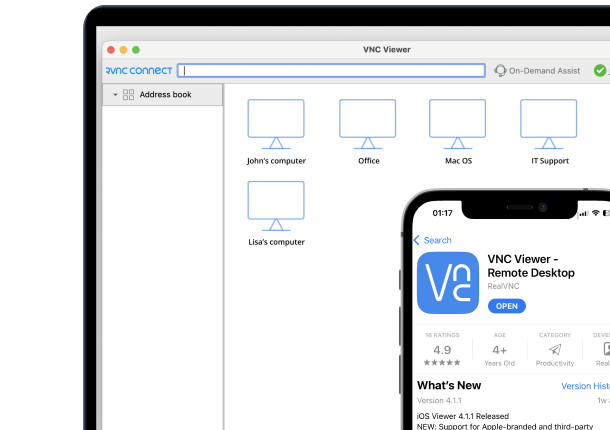
The business case usually comes down to fewer standing privileged accounts and fewer tickets tied to blocked software installs, plus better oversight of who holds elevated access and when. This shift toward context-based, expiring access is often labeled Zero Trust, though plenty of organizations move in the same direction without using the term. EPM doesn’t have a monopoly on context-based access control. RealVNC Connect‘s inbound connection settings work on a similar idea. Who can connect to a device, and how, stays behind administrative rights. It’s never open to just any standard account.
Endpoint Privilege Management Solutions vs PAM: Key Differences for Buyers
Endpoint privilege management is often described as part of the wider privilege management category, but, in reality, its scope is narrower. EPM governs privileged rights and elevation, with auditing built in to track both. Broader privileged access management (PAM) platforms typically go further, covering the full lifecycle of privileged accounts, credential vaulting, session recording for remote administrative access, and identity governance across sensitive systems and third-party access.
Endpoint management tools are a separate category again. They handle deployment and patching, plus device inventory, not privilege enforcement. A device can be perfectly patched and still hand every user standing admin rights.
For a buyer, the practical question is scope. A company mainly worried about local admin rights on employee laptops may get most of what it needs from a standalone EPM solution. A larger organization managing hundreds of privileged accounts and vendor access, with regular credential rotation across a mixed estate, is more likely to need full PAM, sometimes with endpoint-specific controls layered on top. RealVNC’s own buyer’s guide to secure remote access makes a similar point for admin-facing connections specifically, noting that a secure setup should pair privileged access management with role-based controls and detailed session logs.
| Criteria | Endpoint Privilege Management (EPM) | Privileged Access Management (PAM) |
|---|---|---|
| Primary focus | Elevation and privilege controls on individual endpoints | Full lifecycle of privileged accounts organization-wide |
| Typical use case | Local admin removal, application elevation, endpoint auditing | Credential vaulting, session recording, identity governance |
| Scope | Endpoint-level: desktops, laptops, servers | Organization-wide: accounts, systems, third-party access |
| Best fit | Teams focused on removing standing local admin access | Teams managing complex, high-volume privileged account estates |
| Overlap | Both enforce least privilege and produce audit trails for elevation events | |
Many organizations run both. EPM handles granular control over individual devices, while PAM covers everything tied to shared or service accounts further up the stack.
Core Capabilities in Endpoint Privilege Management Solutions
Strong endpoint privilege management (EPM) tools combine two things:
- Privilege security controls decide who gets elevated access.
- Visibility covers what happens once they have it.
Buyers should separate what’s required for baseline endpoint security from what improves scale and compliance on top of daily usability.
Least Privilege and Elevation Controls
The core mechanism is policy-based interception. Someone tries to run something that needs elevated rights, and the system checks it against policy before allowing anything. That check can weigh who’s asking, what they’re trying to run, what device they’re on, sometimes even the time of day. If it matches an approved policy, temporary elevated access is granted for that action only.
This is important operationally as much as defensively, especially once a device spends weeks outside the corporate perimeter.
Application Control, Auditing, and Workflow Features
Elevation controls alone aren’t enough at scale. Allowlisting and denylisting control which applications can run, which cuts down on case-by-case approval requests. Software install approvals and MFA-backed elevation prompts handle the sensitive cases. Help-desk workflows pick up everything else, without opening a hole in the policy.
Logging depth is important as well. Session management and detailed audit trails back up everything above. RealVNC Connect logs activity too. Connections get logged through either local Server logs or the centralized Audit feature for cloud sessions. File-transfer activity is available through these same logging and audit tools, depending on setup.
How Endpoint Privilege Management Solutions Work Across Windows, macOS, and Linux
Windows, macOS, and Linux don’t handle privileged access the same way. A policy that works cleanly on one can fall apart on another. Buyers need to check this themselves. Does the vendor actually enforce consistent controls across all three, or does support quietly drop off outside Windows?
- On Windows, the relevant question is what replaces “Run as administrator” for everyday tasks. Some endpoint privilege manager tools intercept elevation requests before the standard UAC prompt ever fires. Policy makes the call instead of a binary yes-or-no dialog box.
- On macOS, controls need to account for how the platform handles admin accounts and consent prompts, which work differently from Windows.
- On Linux endpoints, the equivalent question is sudo governance. Does the system log each request, set a time limit on it, and tie it to specific commands, or is it running on a blanket sudoers entry that never expires?
| Platform | Common risk without EPM | Example policy | Buyer question |
|---|---|---|---|
| Windows | Standing local admin via default accounts | Just-in-time elevation instead of UAC bypass | Does elevation happen before or after the Windows prompt? |
| macOS | Broad admin accounts for routine tasks | Scoped elevation for specific approved apps | How are consent prompts handled for standard users? |
| Linux | Sudoers entries with no expiry | Time-bound, command-specific sudo policy | Are sudo sessions logged and time-limited? |
RealVNC Connect handles this differently depending on the platform. On Windows, inbound access settings go through Group Policy or Microsoft Intune. On macOS and Linux, they’re set through local policy templates instead. The tooling changes, but a company running all three platforms still ends up enforcing the same connection rules.
Security Benefits of Endpoint Privilege Management Solutions
The security case for EPM holds up against how data breaches actually happen. Ransomware showed up in 48% of breaches in Verizon’s 2026 Data Breach Investigations Report. Payouts keep shrinking anyway. More businesses are simply refusing to pay. There’s another shift buried in the same data. Attackers are increasingly breaking in through legitimate remote administration software instead of custom hacking tools. As Verizon puts it, “What is a threat actor but an unapproved (and malicious) administrator?” EPM addresses one important part of that risk. It limits the standing privileges available to a compromised account or process, regardless of how the access was gained. Standing admin access helps legitimate users get work done. It also hands the same power to whoever compromises their account.
Removing standing admin access changes what that foothold is worth:
- Smaller attack surface. Unauthorized software has fewer places to install itself without triggering a policy check.
- Less room for lateral movement. A compromised account without standing admin rights can’t easily jump from one device or system to the next. That also closes off a common privilege elevation path attackers rely on.
- Lower payoff from credential theft. A stolen password tied to a standard-user account with no elevation path is worth far less than one tied to a standing admin account.
- Smaller blast radius overall. When one device is compromised, the damage tends to stay contained to that device instead of spreading.
None of this eliminates risk outright. It narrows what a single compromised account or device can do. That’s real, but it isn’t automatic. Users feel it as friction or don’t, largely based on how carefully the elevation workflow gets designed. RealVNC’s research into remote access threats found something similar. Plenty of IT teams feel confident about their security posture right up until they get breached anyway. Tighter privilege controls are exactly what closes that kind of blind spot.
There’s real value in the evidence trail, too. Logging elevation requests and privileged activities gives security teams a clearer record when investigating an incident. That cuts real time off getting from “something happened” to “we know what happened and where it stopped.”
Integrations That Strengthen Endpoint Privilege Management Solutions
EPM doesn’t work alone. Its value increases when elevation decisions draw on signals from identity providers, MDM platforms, EDR tools, and SIEM systems already in place. It increases again when that activity feeds back into whatever service management platform a team already uses to track work. Better integrations mean less manual admin overhead and faster incident response, not just tidier dashboards.
Identity, Device, and Security Stack Integration
Identity-aware policy is central to modern EPM. Integration with Active Directory or a cloud identity provider lets elevation rules apply to specific users and groups, not just to every device equally. MFA-backed elevation adds a second check for higher-risk actions. Device posture matters too. Whether a laptop is encrypted, current on updates, or already flagged as compromised by an EDR tool can factor into whether a request touching sensitive resources gets approved at all. Feeding elevation events into a SIEM turns individual approvals into data a broader monitoring program can correlate.
Deployment tooling shows a similar pattern outside EPM. Microsoft Intune can deploy, configure, and license RealVNC Connect on supported Windows environments. It works as an alternative to Group Policy for Azure AD-joined devices.
Service Management and Automation Workflows
At scale, manual approval doesn’t hold up. Ticket-linked workflows connect an elevation request directly to a help desk ticket, so there’s a record beyond a log line. APIs let policy exceptions run without a person clicking through each one. None of this weakens the underlying control. It just keeps the process from collapsing once request volume grows past what a small IT team can review by hand.
Compliance and Reporting in Endpoint Privilege Management Solutions
A policy that works isn’t enough for regulated industries. Auditors want evidence they can hold up. That means being able to show who requested elevation, when, for what, and whether approval came from a person or happened automatically.
Industry regulations differ in the details, but not in the underlying ask. Every one of them wants proof that access was restricted, tracked, and reviewable after the fact. Here’s what six common frameworks actually require, and the kind of evidence that answers for each.
| Framework | What it typically requires | EPM evidence that helps | Buyer question |
|---|---|---|---|
| PCI | Access restricted by job function, tracked activity | Logged elevation requests tied to specific users | Can logs be filtered by user for an audit sample? |
| HIPAA | Monitoring of access to systems holding patient data | Session and application-level audit trails | How long are HIPAA-relevant logs retained? |
| NIST SP 800-53 (AC-6) | Least privilege enforced for users and processes | Policy-based elevation with no standing admin rights | Can the vendor show zero standing admin rights, not just a policy claiming it? |
| ISO 27001 | Documented access control policy | Centralized reporting and retention of privilege events | Does reporting map to ISO 27001 control language directly? |
| CIS Controls | Account and access management baseline | Standard-user enforcement with logged elevation | Does the vendor reference specific CIS Control mappings? |
| SOX | Controlled, reviewed access to financial systems | Audit trail of who accessed what, and when | Can evidence be pulled for a specific audit period without manual digging? |
Centralized reporting is worth seeing in practice, not just claimed on a spec sheet. RealVNC’s Connect Portal, for example, keeps device access, user permissions, and session audit logs in one web-based view instead of scattered across separate tools.
Two things won’t show up in that table, though. Whether records export in a format an auditor can actually use, and whether reporting can drill down to particular actions or only shows session-level summaries. Both are worth asking directly, since neither tends to come up in a demo unless you push for it.
Deployment and Scalability for Endpoint Privilege Management Solutions
Cloud-hosted management is usually faster to stand up. It’s also easier to update. On-premises deployment trades that speed for something else. Organizations with strict data residency rules, or environments that stay offline, tend to need it. RealVNC’s On-Prem Management Console is one example. It’s a self-hosted, browser-based console for licensing, deployment, and audit visibility that needs no outside connectivity to run.
Agent footprint is worth testing directly. A lightweight agent shouldn’t visibly slow a laptop. High availability is important too, especially at scale. A policy engine outage shouldn’t leave endpoints wide open or locked out entirely. Offline behavior deserves its own scrutiny. A laptop disconnected for a week needs cached policies, or temporary access tokens, to stay usable until it reconnects.
Choosing Endpoint Privilege Management Solutions: Evaluation Criteria and Vendor Comparison Factors
No feature list settles which EPM vendor fits best. What holds up in a demo often doesn’t after signing. Push vendors for real architecture details, a genuine week-one plan for migrating off local admin rights, and workflow examples instead of a curated success story. A low sticker price can hide costs in support tiers or add-ons.
RealVNC offers a vendor comparison template as a starting framework for this kind of evaluation, though the sample data in it is illustrative rather than a real comparison of vendors.
Practical Buyer Checklist for EPM Software
- Verify how elevation rules are created and how granular the access controls get.
- Confirm supported operating systems and check for real feature parity, not just a checkbox.
- Test workflow scenarios: self-service requests, help-desk approval, and exception handling under time pressure.
- Review deployment architecture, agent requirements, and day-to-day administrative overhead.
- Assess reporting depth against the compliance frameworks that actually apply.
- Ask directly about pricing structure and total cost of ownership, not just the headline number.
Best Practices for Implementing Endpoint Privilege Management Solutions
A phased rollout beats a single company-wide switch.
- Audit first. Find out who holds local admin rights today, and why, before removing anything. Some of it is habit. Some ties to a role or legacy software nobody’s replaced yet.
- Pilot before you scale. Start with a smaller team and build policies around the elevation and software installation scenarios that come up most often.
- Train help desk before end users. They’ll be the first to hear about anything that breaks, and need clear escalation paths for whatever the policy doesn’t cover.
- Tune as you go. A policy generating constant approval requests for the same legitimate task needs adjusting, not more tickets logged against it.
- Expand in phases. Keep change management discipline intact so employees don’t lose access they’d relied on for years without warning.
Loose permissions leave an organization exposed on more fronts than most teams expect, from account takeover to compliance gaps to plain operational mess, a connection laid out in more detail in this breakdown of least privilege access.
Conclusion
The tension at the center of this is real. Reduce endpoint risk without making people’s jobs harder. Endpoint privilege management solutions do that by replacing standing admin rights with elevation granted for a specific task, one that expires the moment the task is done. Every request gets logged along the way. That’s what makes the whole approach auditable.
Know where EPM ends and full PAM begins before you shop. Prioritize just-in-time elevation and application control over anything marketed mainly as a dashboard. Check that integrations fit the existing stack. Deployment should match the environment, not the vendor’s ideal case. And compliance reporting needs to hold up under a real audit, not just a sales deck.
Build a shortlist. Request a demo or a free trial. Then validate the product against your own migration off local admin rights and your actual endpoint hardening goals, not a vendor’s demo script. That’s what delivers stronger security without adding a heavier workload for IT.
Frequently Asked Questions
What is endpoint privilege management?
Endpoint privilege management keeps devices on standard user accounts by default. Elevated access gets granted only for a specific approved task, only for as long as that task takes. Application control and auditing round it out. Users can complete approved privileged tasks without holding permanent local admin rights.
How is EPM different from PAM?
EPM manages elevation and removes local admin rights on individual devices. PAM works at a broader scale, covering credential vaults, credential rotation, and full-session recording across an entire organization. Many organizations use both. EPM stays focused on the endpoint. PAM takes on everything shared or tied to service accounts outside any single device.
Can EPM remove local admin rights without breaking productivity?
Yes, with a smooth way to escalate in place. Self-service requests, just-in-time access, help-desk workflows–any of these work. Skip that step, and this is exactly where rollouts break down.
What features should I look for in endpoint privilege management solutions?
Least privilege enforcement and elevation controls come first. Application control and MFA on sensitive requests back them up. Policy granularity and real cross-platform support matter just as much as any single feature. Don’t skip audit reporting. It’s what makes the system defensible later. Integrations with Active Directory, EDR, MDM, SIEM, and ticketing tools are worth checking early. Retrofitting them later is harder.
How does EPM help reduce ransomware risk?
EPM limits admin privileges. That shrinks the attack surface for unauthorized software and limits how far an attacker can move after breaking in. Zero standing privileges and detailed audit trails add a second layer. Audit trails help security teams spot unusual privileged activity and investigate faster, though they don’t guarantee instant detection or containment.