



Introduction
A contractor wraps up a project on Friday, but their remote access, VPN credentials, and application logins remain active for weeks. No one notices until an audit flags unusual activity tied to a “former” user account. This is exactly where weak user provisioning and deprovisioning processes create avoidable risk.
User provisioning is the process of creating user accounts, assigning access rights, and placing users into appropriate groups so they can work securely from day one. User deprovisioning is the systematic removal of that access when a user leaves, changes roles, or no longer needs it. Together, they form the operational backbone of identity lifecycle management.
Most organizations structure this around the joiner-mover-leaver (JML) model, which ties HR events directly to access decisions. Done well, it turns onboarding and offboarding into a continuous, controlled lifecycle instead of disconnected tasks.
In this guide, you’ll learn how access controls, automation, and practical workflows come together to reduce security risk, improve compliance, and streamline user management at scale, especially in environments where remote access is part of daily operations.
Why user provisioning and deprovisioning matter for security and compliance
Understanding what provisioning and deprovisioning involve is only the starting point. The more pressing question is why getting them right or wrong has direct consequences for your organization’s security, compliance standing, and day-to-day efficiency. For instance, according to a Kaspersky Lab report, data breaches for SMBs (88%) and enterprises (91%) happen because of human factors.
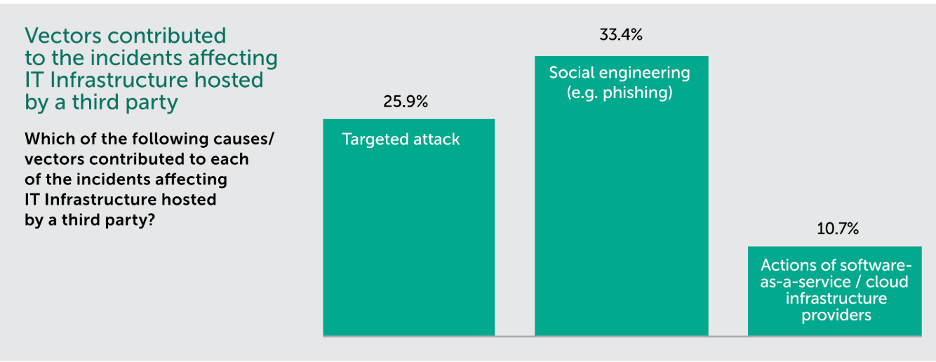
Source: https://www.kaspersky.com/blog/understanding-security-of-the-cloud/
Security posture. Every account that remains active beyond its intended use expands the attack surface. Orphaned accounts, such as those belonging to former employees, contractors, or role-changed staff, carry stale credentials that make it easier for attackers to gain unauthorized access. IBM’s 2024 Cost of a Data Breach Report put the average cost of a breach at $4.88 million and consistently ranks compromised credentials among the leading root causes, such as in the case of the 2020 SolarWinds cybersecurity breach, where the company unknowingly released compromised updates, which affected around 18,000 customers. Privilege creep, where users accumulate access rights over time without cleanup, compounds this risk by widening the blast radius when any single account is compromised.
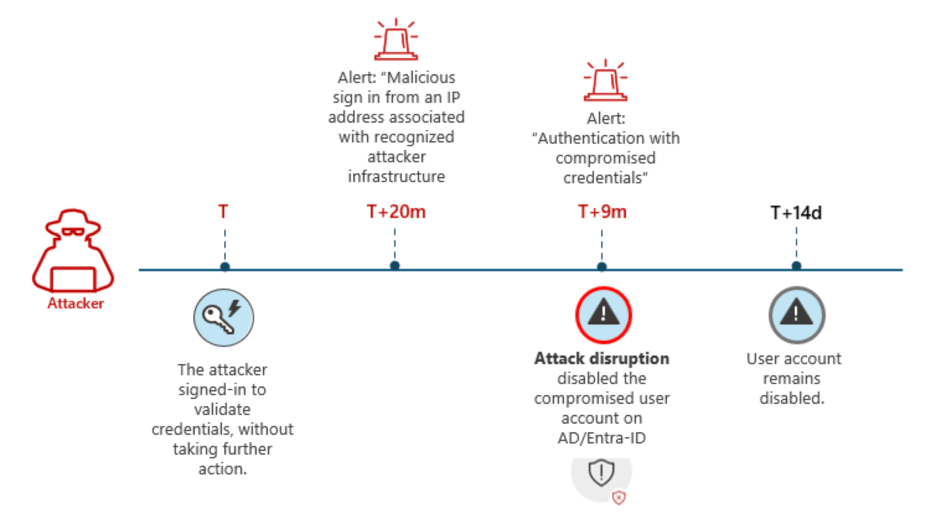
Compliance readiness. Frameworks including SOC 2, ISO 27001, GDPR, HIPAA, and SOX share a common expectation: access is granted based on business need and revoked promptly when that need ends. Auditors look for evidence of consistent, repeatable processes, not just written policies. Organizations that cannot demonstrate timely access revocation or regular access reviews face findings and potential penalties.
- Operational efficiency. Timely provisioning shortens onboarding, reduces helpdesk ticket volume, and gets new hires productive on day one. Clean deprovisioning reclaims software licenses, reduces unnecessary spend, and removes technical debt from identity systems.
All three key benefits depend on having the right access control model underlying your provisioning and deprovisioning processes.
How the joiner-mover-leaver model drives lifecycle access control
The joiner-mover-leaver model maps HR events to specific access actions. It treats user provisioning and user deprovisioning not as separate IT tasks, but as stages in a continuous identity lifecycle.
- Joiners cover new hires and rehires. When someone joins, the trigger should initiate account creation, baseline access assignment based on role, and group membership configuration. The goal is appropriate access from day one, not excessive access granted for convenience, and not a delayed setup that blocks productivity.
- Movers cover promotions, departmental transfers, and role changes. This is where organizations most frequently create problems. When someone moves to a new role, they need new access granted, but they also need the old permissions that no longer apply removed. Teams that only add access during role transitions consistently generate privilege creep over time.
- Leavers cover all departures, including voluntary, involuntary, or retirement. When someone exits, the response should be immediate, like account disablement, access revocation across all connected systems, session termination, and device recovery. The longer this takes, the longer unnecessary access persists.
Non-employee or external identities, such as contractors, vendors, temporary staff, and guests, follow the same model but typically require time-bound access with automatic expiration rather than standing permissions. Bringing these digital identities under the same governance framework is essential to closing security gaps that HR-driven processes alone do not cover.
Core access controls behind effective lifecycle management
Knowing when to provision and deprovision is only half the equation. The other half is knowing what access should look like at each stage, and that’s where access control frameworks come in.
- Role-based access control (RBAC) is the primary model for most organizations. Roles map to job functions, and each role carries a defined set of permissions. New users in the same role receive consistent access, which simplifies administration and reduces over-provisioning. RBAC makes the user provisioning process repeatable and auditable across large environments. Attribute-based access control (ABAC) can be layered on top to adjust permissions based on context, like location, device type, or time of day, where finer-grained decisions are operationally justified.
- The principle of least privilege is the policy lens behind every access decision. Every user account should operate with only the permissions required for its function, nothing more. In practice, this means distinguishing between permanent baseline access tied to a role, elevated access requiring additional approval, and temporary or just-in-time access that expires automatically after a defined period or task. Least privilege, enforced consistently, limits the damage any single compromised account can cause.
- Separation of duties prevents certain combinations of permissions from sitting with a single user, such as the same person approving and executing financial transactions. Provisioning policies should actively prevent these high-risk combinations.
- Entitlement management is the ongoing discipline of reviewing and cleaning up accumulated permissions over time. Without periodic access reviews, even well-designed RBAC implementations drift as roles evolve and exceptions accumulate.
These controls work best as a connected system: RBAC defines baseline access, least privilege constrains it, separation of duties guards against dangerous combinations, and access reviews keep the whole model accurate.
How automated provisioning and deprovisioning work across IAM systems
Manual processes are the root cause of most provisioning and deprovisioning failures. Human error, delayed tickets, and inconsistent execution all create security gaps. Automation closes the gap between an HR event and the corresponding access change.
The HR system serves as the authoritative source of identity data. When an HR system records a hire, transfer, or termination, that event should trigger downstream access changes automatically; rather than waiting for a manual ticket to be submitted, approved, and actioned, a process that can take days or weeks. The automated provisioning flow runs as follows: an HR event triggers a workflow or approval engine, which pushes changes through directory synchronization and SCIM provisioning to connected applications.
Three components play distinct roles and are worth keeping separate:
- SCIM (System for Cross-domain Identity Management) handles account lifecycle, creating, updating, and deactivating accounts in connected SaaS applications based on directory or HR data.
- Single sign-on (SSO) centralizes authentication, giving users a single login path to all authorized applications and supporting consistent policy enforcement.
- Directory synchronization keeps identity attributes aligned across systems so that policies and group memberships remain accurate as users move through their lifecycle.
Identity governance tools sit above these layers, enforcing policy and conducting the access reviews that validate whether automated assignments remain accurate over time. Manual oversight remains necessary for exception handling, approval workflows for elevated access, and governance reviews. Automation reduces the burden on IT teams, but it does not eliminate judgment from the process.
Provisioning and deprovisioning workflows with a practical offboarding checklist
Frameworks and models are only useful when they translate into action. Here’s what provisioning and deprovisioning look like in practice, from onboarding sequences to a step-by-step offboarding checklist your team can adapt.
Onboarding (joiners and role changes): Start with role identification, proceed through account creation, role and group assignment, policy enforcement, access verification, and documentation. The goal is day-one productivity without over-provisioning. For role changes, both new access grants and the removal of old permissions must happen together. Teams that only add access during transitions are the ones that build privilege creep into their user base.
Offboarding (leavers): Offboarding should follow a documented runbook. The essential steps are:
- Disable the primary account and remove all group memberships
- Revoke active sessions, tokens, MFA methods, and API keys
- Remove VPN, remote desktop, and remote access rights, including any active sessions through remote access platforms
- Recover, lock, or wipe managed devices and endpoints
- Transfer mailbox ownership, business files, and shared resources to the appropriate owner
- Reclaim software licenses
- Document completion for audit records
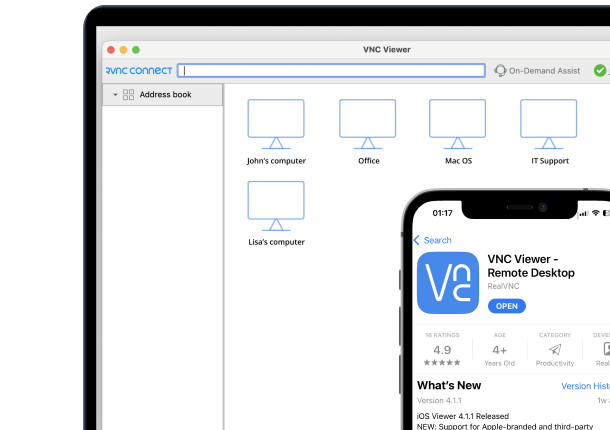
Remote access is one of the most frequently missed categories in offboarding runbooks. In distributed or hybrid environments, remote connectivity that stays active after a departure is an exposure that manual processes often overlook. Organizations using tools such as RealVNC Connect should explicitly include remote access revocation in their offboarding procedures, and should verify that departed users no longer have active connections or device permissions.
Common provisioning and deprovisioning risks and how to avoid them
Even organizations with solid policies in place run into predictable failure points. Most of them share a common root cause, and that is processes that were designed for ideal conditions but break down under real-world pressures.
- Orphaned accounts. Accounts that remain active after an employee leaves or changes roles are a consistent risk. Automated deprovisioning triggered by HR events, combined with regular account sweeps, catches what manual processes miss.
- Privilege creep. Users accumulate excessive access rights across role changes without corresponding cleanup. Role-change workflows should include a review of existing permissions alongside any new grants. Quarterly access reviews catch what day-to-day operations do not.
- Overlooked identity types. Contractors, temporary staff, shared accounts, and service accounts often sit outside normal HR-driven lifecycle processes. Bringing all identity types into the same governance scope, including assigning expiration dates for time-limited access, closes this gap and prevents potential security risks from building up.
- Unmanaged secrets and active remote connections. API keys, SSH keys, and service tokens persist after departure if offboarding procedures do not explicitly include credential rotation. Remote access connections left active after someone leaves, particularly in distributed teams, are a specific and underappreciated exposure. Including remote access platforms in deprovisioning checklists and setting up alerts for inactive sessions addresses this directly.
- Human error in manual processes. Manual provisioning and deprovisioning introduce inconsistency, such as when a ticket gets lost, an approver is unavailable, or a step is skipped under pressure. Policy enforcement and automation reduce reliance on error-prone manual steps. Regular access reviews provide the ongoing safety net.
Best practices to improve provisioning and deprovisioning at scale
Avoiding known risks is a good baseline. Building a user provisioning and deprovisioning program that holds up as your organization grows requires going further, with documented processes, clear ownership, and the right metrics to measure whether it’s actually working.
- Document SOPs for every lifecycle stage. Joiners, movers, leavers, and exceptions should each have a defined standard operating procedure specifying triggers, owners, approval paths, and expected completion times. Ambiguous ownership is one of the primary reasons deprovisioning gets delayed.
- Define clear ownership across teams. HR, managers, IT, and security teams all play a role in the user provisioning process. Each step should have a named owner and a defined fallback. Responsibility assumed but not assigned is responsibility that fails at the worst time.
- Use RBAC and automation to reduce manual work. Role definitions reduce decision burden at onboarding. Automation connected to HR data ensures that lifecycle events translate into access changes without requiring manual intervention for routine cases.
- Conduct regular access reviews. Quarterly reviews catch privilege creep, separation of duties violations, and access that should have been removed. Review findings should feed directly back into provisioning policies, closing the loop on identity lifecycle management.
- Revoke access immediately for leavers and test your runbooks. Same-day revocation should be the standard for all departing employees. Offboarding playbooks should be tested periodically to confirm they work as expected, including coverage of remote access tools and service accounts.
- Track operational metrics. Time to provision, mean time to deprovision, access error rate, orphaned account count, and license reclamation rate all measure whether processes are working. These figures make lifecycle management visible to leadership and support continuous improvement.
Underpinning all of this is a Zero Trust security posture and the principle of least privilege, or the understanding that no user, device, or connection should be trusted by default, and that appropriate access must be verified continuously.
Conclusion
User provisioning and deprovisioning are core operational and security disciplines. Done well, it reduces the attack surface, supports compliance readiness, and keeps identity systems accurate as the organization evolves.
The key takeaways: timely access provisioning and revocation reduce security risk; role-based and policy-driven controls support least privilege across the identity lifecycle; and ongoing access reviews combined with automation improve compliance posture while reducing the cost of human error.
For organizations managing distributed or hybrid teams, it is worth auditing current onboarding and offboarding processes to identify gaps, particularly around orphaned accounts and remote access tools that may be missing from deprovisioning checklists. RealVNC Connect, including its web-based Portal provides IT and security teams with centralized visibility and control needed to integrate remote identity and access management into a structured identity lifecycle approach.
Frequently Asked Questions
Q: What is user provisioning and deprovisioning?
A: The process of creating, modifying, and removing user access across systems throughout the identity lifecycle. Joiner, mover, and leaver events trigger specific access actions, ensuring the right people have the right access and that it’s removed when no longer needed.
Q: Why is deprovisioning important for security?
A: Delayed revocation leaves orphaned accounts, stale credentials, and unnecessary access rights in place, expanding the attack surface and creating insider threat exposure. It also supports audit readiness for SOC 2, ISO 27001, and GDPR compliance.
Q: What should a joiner-mover-leaver process include?
A: HR-triggered workflows for each stage: account creation and role assignment for joiners; access updates and permission removal for movers; immediate account disablement, session termination, and device recovery for leavers, each with defined ownership and approval paths.
Q: How do access reviews support provisioning and deprovisioning?
A: Quarterly reviews catch privilege creep, separation of duties violations, and access that should have been removed. Findings feed back into provisioning policies, creating a feedback loop that keeps identity systems accurate over time.
Q: How can automation improve offboarding?
A: SCIM provisioning and IAM tools can disable accounts, revoke tokens, terminate sessions, and reclaim licenses automatically. This reduces mean time to deprovision, improves consistency, and produces cleaner audit evidence than manual offboarding workflows.