


We work with organizations that manage digital screens across retail stores, quick service restaurants, corporate lobbies, public spaces, and more. In this field, we’ve started to notice a growing gap between what a screen displays and what the business should want displayed at that moment. Think of menu boards still showing breakfast pricing at lunch, a retail display promoting a product that sold out two days ago, etc. Digital signage draws up to 400% more views than static posters, according to Intel’s retail research. So why do so many screens still run it wrong?
Let’s address that.
This guide covers:
- How dynamic digital signage works: content management systems, media players, hardware, and deployment models
- Benefits and use cases across retail stores, quick service restaurants, healthcare, corporate environments, and educational institutions
- Implementation, vendor evaluation, and security for managing digital displays across multiple locations
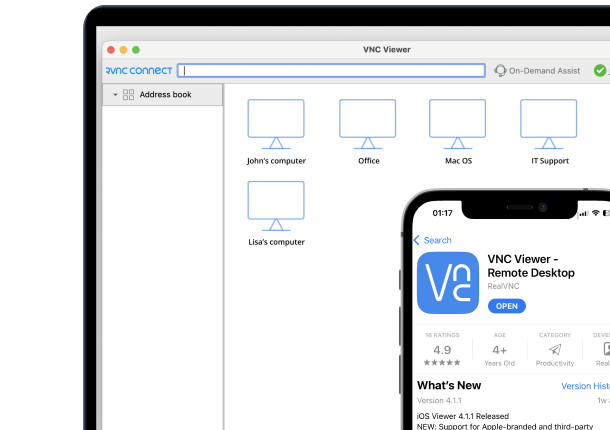
P.S. Managing screens at scale means content updates, troubleshooting, and firmware pushes without sending technicians to each location. RealVNC Connect supports commercial signage deployments where centralized control and real-time communication matter.
What Dynamic Digital Signage Is and How It Differs from Static Signage
Dynamic digital signage is a system where digital screens update content based on schedules, data inputs, or real-time triggers. Three traits define what makes signage dynamic, compared to printed signage:
- Automation (where updates happen without manual intervention)
- Contextual relevance (where content changes based on conditions like time, weather, or inventory)
- Real-time responsiveness (where messaging adapts as circumstances shift throughout the day)
Static signage, whether printed posters or fixed digital slides, shows one message until someone manually changes it. This works for stable information that rarely needs updating, such as wayfinding signs or permanent branding. The trade-off here is speed, as when pricing changes, special promotions end, or events get cancelled, static displays lag behind reality.
Dynamic signage stands out here because it’s more efficient. A digital menu board at a quick-service restaurant shifts from breakfast to lunch automatically at a set time. A retail display can pull a promotion quickly if inventory runs low. In a corporate setting, dynamic digital signage helps by showing live data, such as monthly KPIs, updated on a slide deck at any given time.
Essentially, the content stays current because the system responds to data, not to someone remembering to push an update.
Plus, according to Arbitron’s digital signage study, dynamic displays achieve an 83% recall rate, compared to half that for traditional static signs with the same message. What’s more, Grand View Research values the global digital signage market at $31.09 billion in 2025, with projected growth to $58.42 billion by 2033.
How Dynamic Digital Signage Works: Software, Hardware, and Playback
The operating model is as follows: content gets produced and uploaded to a content management system (CMS). Then, it is scheduled against playlists, distributed to endpoints, cached locally on media players, and displayed on screens. The CMS is the operational core that coordinates content updates, device control, and governance across single-site or multi-location networks.
- The software layer handles what appears on screens and when. Templates and reusable layouts let teams create content without starting from scratch each time. Playlist management organizes content into sequences, while scheduling rules determine what plays when, depending on set times or triggers. Deployment options are split between cloud-hosted CMS platforms and on-premise installations, each with different trade-offs around control, compliance, and operational overhead.
The hardware layer determines how content reaches screens. Commercial displays, LED video walls, and system-on-chip (SoC) screens handle playback directly. External media players process and deliver display content for screens without built-in computing. Selection depends on environment, brightness, and resolution requirements, connectivity options, and content complexity.
Local caching matters more than most teams expect at first. When connectivity drops, cached content keeps screens running instead of going dark. For retail stores, train stations, or healthcare facilities where screens cannot show error messages, this aspect directly impacts the business and customer experience.
For example, REJI, a provider of customer experience software for quick service restaurants and convenience stores, built its Viewport monitoring system with RealVNC to manage thousands of digital menu boards and self-ordering kiosks across multiple locations. This solution addressed their challenge of ensuring the right menus, images, and prices appeared on the right screens at the right time.
Key Features That Make Signage Dynamic
Let’s explore the capabilities that separate dynamic digital signage from basic screen displays, and explore where digital signs excel at engaging customers:
- Time-based and event-based automation is the foundation. Triggered playlists respond to conditions like inventory data pulling a promotion when stock runs low, weather feeds pushing seasonal offers when temperatures drop, calendar integrations displaying meeting room schedules that update automatically throughout the day, etc.
- Live data integration connects screens to business systems. For example, weather widgets adjust messaging based on local conditions, the same way as a POS feeds updates pricing live, or RSS feeds bring in news or social content. Unlike static posters, these integrations allow the use of live, relevant content that responds to what is happening.
- Layout flexibility allows a single screen to carry multiple content types at once. Multizone layouts combine a company’s brand messaging alongside live wait times, or demo videos next to seasonal promotions. HTML5 animations and rich visual formats keep engaging content fresh, while templates let teams edit content quickly without starting from scratch.
- Engagement features extend screens beyond passive playback. For example, touch-enabled kiosks and interactive digital signage allow for self-service browsing, or QR codes enable mobile handoff and let customers find more information on their devices.
If we consider enterprise needs, if your organization manages multiple screens across different locations, these features mean marketing can update promotions while IT manages the system, using user roles to give the right people the right level of control.
Benefits and Industry Use Cases
Dynamic digital signage delivers measurable outcomes across marketing, operations, and internal communications.
- On the marketing side: faster campaign updates across multiple locations, reduced printing costs, stronger brand consistency, and support for reporting metrics such as proof of play and campaign reporting.
- On the operational side: better message relevance, timely information for employees informed about company updates, and a smart way to attract customers and increase sales with personalized content.
Retail and Quick Service Restaurants
Retail and QSR environments need content that adapts to the time of day, inventory levels, and customer flow. So, dynamic signage handles this by automating what would otherwise require manual updates across every location. Here are a few examples of use cases for retailers:
- Digital menu boards shifting from breakfast to lunch pricing at set times
- Promotional displays pulling special offers when stock runs low
- Upsell bundles rotating based on peak hours to boost sales
Research shows that dynamic signage can boost brand awareness by 47.7%, and retailers that switch from static to digital report saving up to 30% on printing costs, says a Retail Gazette report.
Corporate and Education
Offices and campuses need to keep large, distributed audiences aligned without flooding inboxes. Well, dynamic signage solves this by displaying timely content that updates automatically across all your screens. Some use cases in this industry:
- Workplace dashboards showing live KPIs pulled from internal systems
- Meeting rooms displaying schedules synced to calendar integrations
- Educational institutions pushing class schedules, upcoming events, and emergency alerts campus-wide from a single content management system
Healthcare and Transit
High-traffic environments like hospitals and transit hubs need to manage crowd flow and reduce anxiety. Dynamic signage addresses this with real-time updates that keep people informed and moving, and healthcare waiting rooms displaying queue positions alongside health tips, which reduces perceived wait times and leads to fewer complaints.
At MiBanco in Peru, Wavetec implemented signage that combined queue numbers with promotional updates, reducing wait times by 30%. Transit hubs show live schedules and disruption notices, with multilingual messaging during incidents to help diverse audiences navigate safely.
Deployment Models, Integrations, and Security
Many factors shape how organizations deploy dynamic digital signage solutions:
- Hosting model comes first: cloud-hosted platforms offer faster setup and centralized management across different locations, while on-premise installations give organizations full control over data and compliance. Connectivity reliability matters for sites where screens cannot go dark, and content control requirements determine whether marketing teams or IT departments own the publishing workflow.
- Integrations are what make dynamic signs genuinely dynamic rather than just scheduled. Usually, traditional signage CMS systems limit content to manually scheduled photo and video uploads, whereas API-driven systems connect dynamic digital displays to POS data, calendars, weather feeds, social platforms, and other operational tools.
These connections allow for real-time content updates, depending on these integrations working reliably. - Security and governance become baseline requirements at scale. Role-based permissions control who can manage content and where, approval workflows make sure marketing messages meet brand standards before going live, and audit logs track what changed and when.
All while encryption in transit and at rest protects content and credentials, and network segmentation isolates screens and media players from broader corporate systems. - Remote access adds another layer. A secure remote access solution with built-in encryption and authentication allows IT teams to push firmware updates, troubleshoot displays, and validate device health without exposing endpoints to unauthorized access. With RealVNC, encrypted connections with granular permission controls let support teams manage distributed signage networks without requiring on-site visits.
This matters for accessibility updates as well: readable typography, adequate contrast, multilingual support, and clear emergency communication design all require ongoing maintenance.
How to Implement Dynamic Digital Signage and Evaluate Vendors
Start by defining goals, audience, and screen context before selecting any hardware or software. What business outcome does the signage need to drive? Which audience will see it, and under what conditions?
- Industry experts suggest that mapping data sources comes before specifying hardware, so list every system the signage will pull from, including POS, calendars, weather feeds, and internal databases. Most operators only need two to four dynamic data sources to extract most of the value.
- Choose displays and media players based on environment, viewing distance, brightness, and content complexity.
- Plan content strategy around daily, weekly, and seasonal relevance, and establish governance rules, approval flows, and brand standards before the first screen goes live. Here, piloting one integration at one site for four to six weeks helps surface failure modes before scaling to multiple locations.
- Focus on scalability across locations, device support for both system-on-chip screens and external players, reporting depth including proof of play and campaign metrics, and service and support resources.
- Shortlist three to five providers, request live demos, and check references with existing customers in similar situations. Note that cost drivers break into four categories: hardware, software licensing, installation, and ongoing support.
PS: Current market trends include AI-assisted content creation, no-code CMS tools, tighter POS integrations, and more sophisticated audience analytics. For organizations building signage into their own products, RealVNC OEM Solutions offer embedded remote access that scales with deployment, both through off-the-shelf integration or fully customized SDK implementations.
Your dynamic digital signage solutions lie at your fingertips
The core challenge with digital signage displays has always been the same, AKA keeping screens relevant, timely, and manageable, at scale. Dynamic digital signage solves this through real-time content updates, centralized control across multiple locations, and adaptable scheduling that responds to data, not manual intervention.
So, the decision between digital signs and traditional media is quite clear if you’re looking for more sales, interactions, and memorability. Here are three motives why that is:
- First, data-driven visuals and triggered playlists turn static counterparts into dynamic displays that respond to time, inventory, weather, and audience context.
- Second, the CMS is the operational core, coordinating content distribution, remote device management, and governance across every screen.
- Third, measurement through proof of play and campaign reporting closes the loop between what screens show and what outcomes they drive.
Before choosing a platform, assess your use case, hardware setup, governance needs, and reporting goals. The right dynamic digital signage solution should fit where your organization is today and scale as foot traffic, locations, and marketing messages grow.
Frequently Asked Questions
What is dynamic digital signage?
Dynamic digital signage uses software, connected screens, and live or scheduled content to update messaging automatically. Unlike static displays that show the same message until someone changes them manually, dynamic signs respond to real-time data, time-based triggers, and business system integrations to keep content relevant throughout the day.
How does content scheduling work on digital signage?
A content management system lets you schedule content by time, date, or triggered conditions. Dayparting shifts messaging automatically, such as breakfast to lunch menus. Triggered playlists respond to weather, inventory, or calendar data to change content at the right moment. Updates apply across all your screens without manual, screen-by-screen changes.
What features should a digital signage CMS have?
Essential features include a template editor, multizone layouts, remote device management, approval workflows, and role-based permissions. However, important features also include scheduling, analytics, and the ability to integrate live data such as calendars, dashboards, or announcements. Look for cloud and on-premise options, offline playback, and reporting tools.
Can dynamic displays show live data?
Yes. Dynamic displays pull in live data widgets, including weather, social feeds, dashboards, and business data. Practical examples include POS-driven price updates that change when inventory runs low, calendar-synced meeting room displays, and emergency alerts that override scheduled content when incidents occur, which is especially useful in crowded places like shopping malls or trade shows, where you need to spread messages quickly and effectively.
How do you measure digital signage performance?
The main metrics include proof of play (confirming content actually displayed), campaign reporting (tracking which content ran where and when), audience measurement (foot traffic and dwell time where sensors are deployed), and engagement analytics for interactive screens. ROI depends on network goals, content targeting, and operational execution.