



When teams pull figures from separate customer, finance, and operational systems, decisions slow down. Analysts spend their time reconciling conflicting records; leaders question which report reflects reality.
Building a modern data platform means creating one managed foundation for collecting, storing, transforming, and using data across the business. It connects ingestion, storage, processing, consumption, and governance so data remains usable, traceable, and trusted from source to decision.
This guide explains the architecture choices behind that foundation, from warehouses, lakes, and lakehouses to processing, data quality, lineage, and access controls. It covers how to choose between packaged and custom approaches, run a focused pilot, and build an AI-ready operating model that does not become another maintenance burden.
Why Are Data Foundations an Executive Priority?
The pressure shows up when leadership asks for one view of performance and receives several answers. Finance, operations, and product teams may all work from valid records, yet conflicting definitions and disconnected pipelines leave executives debating the numbers instead of acting on them.
Building a modern data platform means designing a governed enterprise capability that moves trusted data from source systems into analytics, operational decisions, and artificial intelligence (AI) use cases. It gives ingestion, storage, transformation, consumption, and governance named owners so teams can use consistent data with defined accountability.
Investment intent is already substantial. The Wavestone / NewVantage Partners 2026 AI & Data Leadership Executive Benchmark Survey provides source context for this discussion. The harder decision is whether your operating model can turn that investment into trusted reporting, controlled AI use, and repeatable delivery.
A cloud migration does not settle ownership, metric definitions, or access rules. Nutanix observed in its 2026 Enterprise Cloud Index that “The rise of data-driven operations and AI workloads is leading enterprises to rethink their plans to modernize infrastructure.” Leaders need to decide how data moves, who approves change, and how evidence is retained before fragmented choices become difficult to unwind.
Why Does a Modern Data Platform Matter Now?
A modern data platform unifies the lifecycle of collecting, governing, transforming, and serving data. It lets business intelligence (BI), operational teams, and AI services work from the same managed assets instead of assembling separate copies for each project.
Think of fragmented systems as departments following maps that use different street names. Each team may reach a local destination, but enterprise decisions become unreliable when the routes do not align. The Wavestone / NewVantage Partners 2026 survey provides source context for this discussion. Ambiguous data definitions and unmanaged change increase the cost of unreliable enterprise decisions.
The point is not to collect cloud services under one label. A platform sets common rules for how data enters, changes, and reaches users. As Modern Data 101’s Modern Data Report 2026 puts it, “AI cannot reason over data that humans themselves cannot rely on.”
- Decision latency: Leaders wait to reconcile reports.
- Data trust: Conflicting definitions weaken confidence in metrics.
- AI readiness: Models inherit untraceable lineage and inconsistent inputs.
- Operational cost exposure: Project-specific pipelines duplicate work and cloud consumption.
| Legacy Pattern | Modern Platform Pattern | Executive Consequence |
|---|---|---|
| Project-owned extracts | Shared, governed data products | Clearer accountability |
| Local metric definitions | Certified semantic definitions | Consistent reporting |
| Manual pipeline recovery | Documented orchestration and service expectations | More predictable operations |
| Separate access decisions | Policy-led identity controls | Reviewable use of sensitive data |
Which Architecture Model Fits Enterprise Data?
)
The right enterprise architecture depends on workload diversity, ownership capacity, regulatory obligations, and desired portability. Choose a model for the decisions and operating conditions it must serve, rather than for the newest architectural label.
A warehouse suits defined, structured reporting. A lakehouse combines lower-cost object storage with managed table structures for broader analytical and AI workloads. A data mesh framework assigns greater responsibility to business domains, and a hybrid model combines shared services with domain accountability. Your choice needs to hold up when a reporting team, a data science team, and a regulated operational function all need different service expectations.
| Model | Best-Fit Workloads | Ownership Pattern | Strength | Watch-Out |
|---|---|---|---|---|
| Warehouse | Structured reporting | Central data team | Predictable analytics | Less flexible for varied data |
| Lakehouse | Mixed analytics and AI | Central or shared | Broad workload fit | Requires disciplined governance |
| Data mesh | Domain data products | Federated domains | Local business accountability | Demands mature stewardship |
| Hybrid | Diverse enterprise needs | Shared and federated | Balances control and autonomy | Decision rights need clarity |
Use five selection tests:
- Workload fit: Separate predictable reporting from exploratory analysis and model training.
- Ownership model: Match decision rights to the teams able to maintain them.
- Interoperability: Define how data products share meaning across domains.
- Resilience: Set recovery expectations for business-critical services.
- Portability: Avoid unnecessary dependence where future change matters.
How centralized should data ownership be?
Central teams should own common controls, shared tooling, and enterprise definitions. Domain teams should own the meaning, quality, and business use of data they produce. Hybrid ownership often works best when stewardship maturity differs across the organization.
Use this short test:
- Can each domain name an accountable data-product owner?
- Are common policies enforceable across domains?
- Does the central team have authority to maintain shared standards?
Federated ownership is an operating-model commitment, not a software purchase. If leaders cannot assign decision rights and funding, central services provide a steadier starting point.
When does workload isolation change the choice?
Workload isolation separates jobs with different performance, recovery, and cost needs. Production reporting should not compete blindly with exploratory queries or resource-intensive model training. One team’s urgent work can delay another team’s business process.
- Workload isolation: Separate compute or processing paths for different service expectations.
- Medallion layers: A progression from raw inputs to cleaned and business-ready data.
- Open table format: A table structure designed for interoperable storage and processing tools.
Scale makes this a governance decision. Turnberry Solutions’ 2024 Comcast case study describes an AWS data platform handling 14 PB of data and about 500,000 daily queries. That example is context, not a target; it shows why shared capacity needs defined rules before contention reaches executive reporting.
What Components Make a Platform Dependable?
Dependable platforms treat ingestion, storage, transformation, consumption, and governance as interdependent layers. Each layer needs a named owner, measurable service expectations, and an agreed response when data or processing changes.
Cloud spend and security need to be designed together. The Flexera 2026 State of the Cloud Report found that 84% of organizations identified cloud spend management as a top challenge. It found that 77% identified security. A platform team that treats either issue as an afterthought creates avoidable rework.
- Ingestion and schema evolution: Define source ownership, validation rules, and accountability when a source format changes. Unmanaged schema drift travels downstream quickly.
- Storage and serving: Match warehouse, lake, and lakehouse patterns to reporting, exploration, and data-science needs. One storage pattern rarely fits every workload.
- Transformation and orchestration: Require reproducible transformations, dependency visibility, and recovery procedures. Pipelines that rely on undocumented manual intervention cannot be governed reliably.
- Consumption and semantic access: Set standards for certified metrics, BI dashboards, application programming interfaces (APIs), and self-service boundaries. This limits contradictory dashboard definitions.
- Governance and identity access management: Maintain cataloging, lineage, retention, role- or attribute-based controls, and audit evidence from the start.
| Capability Layer | Leadership Signal | Decision Supported | Common Interpretation Error |
|---|---|---|---|
| Ingestion | Source changes are visible | Data readiness | Treating extraction as a one-time task |
| Storage | Workloads have defined homes | Cost and service design | Using one pattern for all needs |
| Transformation | Dependencies are documented | Recovery planning | Accepting manual repair as normal |
| Consumption | Metrics are certified | Trusted reporting | Equating more dashboards with insight |
| Governance | Ownership and access are reviewable | Risk and control | Adding controls after data spreads |
Governed consumption has practical reach. The element61’s 2024 Katoen Natie case provides source context for this discussion. The lesson is straightforward: broad use requires shared metric rules, not simply more reporting tools.
How Should Leaders Sequence Platform Delivery?
Platform delivery needs decision gates, not a long migration calendar with no demonstrated value. Start with a bounded business decision, prove that users trust and use the resulting data, then expand the reusable controls that made the first result dependable.
- Value discovery: Identify a decision with material business impact, known users, available sources, and a measurable baseline.
- Controlled pilot: Deliver for a defined user group and test data quality, adoption, performance, and operating assumptions.
- Reusable foundations: Standardize ingestion patterns, policy templates, semantic definitions, and infrastructure-as-code modules.
- Governed scale-out: Add domains only when ownership, access, support, and cost accountability are ready.
| Phase | Leadership Decision | Exit Evidence |
|---|---|---|
| Value discovery | Which decision matters first? | Baseline and accountable sponsor |
| Controlled pilot | Is the use case trusted and adopted? | Active use and agreed quality measures |
| Reusable foundations | What should become standard? | Documented patterns and owners |
| Governed scale-out | Which domain joins next? | Control evidence and operating capacity |
Which use case earns the first investment?
Choose a use case by decision value, source complexity, user readiness, and a measurable baseline. Political visibility alone is a poor selection method; it can conceal weak data ownership or low user readiness.
- Is there a named decision owner?
- Can users describe the action the data will change?
- Is the baseline available before work begins?
Microsoft’s 2026 Al-Futtaim customer story reports organization-specific gains after its Azure program, including more than $50 million in incremental revenue. Treat that as a case example, not a return target. The first pilot earns continued investment when it proves a repeatable way of working.
What should become reusable by design?
Reuse should include more than code. Standard ingestion patterns, policy templates, semantic definitions, observability rules, and adoption materials all reduce repeated decision-making as new domains join the enterprise data architecture.
- Ingestion templates define validation and ownership at the source.
- Infrastructure-as-code modules make approved environments repeatable.
- Policy templates apply retention and access requirements consistently.
- User guides show people how to find certified metrics and request changes.
Technical go-live does not prove adoption. Valorem Reply’s 2026 modernization roadmap reports a financial-services migration where finance teams continued using the prior system after launch when training and access paths were missing. The next phase should begin only when people use the new route for real decisions.
Where Do Governance Failures Derail Modernization?
)
Governance fails when accountability disappears between the source system and the business decision. Teams may have capable data services, yet still lack a reliable answer to who owns a metric, what changed, who viewed sensitive data, and whether a dashboard remains fit for use.
A data governance framework must make control evidence usable by data teams, security leaders, and business owners. ISO/IEC 27001:2022, SOC 2, GDPR, HIPAA, NIS2, and PCI DSS apply according to your organization’s obligations and operating geography. Where they apply, they require defined controls and reviewable evidence rather than informal assurances.
- Ownership ambiguity: No person approves definitions, quality thresholds, or changes.
- Lineage blind spots: Teams cannot trace a metric back to its source and transformation steps.
- Policy drift: Access and retention rules differ across services without review.
- Observability gaps: Freshness, volume changes, and failed processing remain unseen until users report them.
- Uncontrolled cost allocation: Consumption cannot be connected to an accountable owner or business purpose.
| Governance Risk | Control Evidence | Executive Review Cadence |
|---|---|---|
| Ownership ambiguity | Named owner and stewardship record | Quarterly |
| Lineage blind spots | Source-to-report lineage | At material change |
| Policy drift | Access and retention review | Quarterly |
| Observability gaps | Freshness and processing alerts | Monthly |
| Uncontrolled cost allocation | Usage tied to service owner | Monthly |
The human side determines whether these controls stay active. Teams need strong incentives to document, review, and improve shared data products. Governance becomes useful when it shortens the path from a question to a trusted answer.
How RealVNC Closes the Data Operations Gap
Catalogs, policies, and pipeline monitoring do not cover every operational event. When a production dashboard, data-processing node, integration service, or analyst workstation needs attention, leaders need a record of who entered the environment, why access was granted, and what occurred during the session.
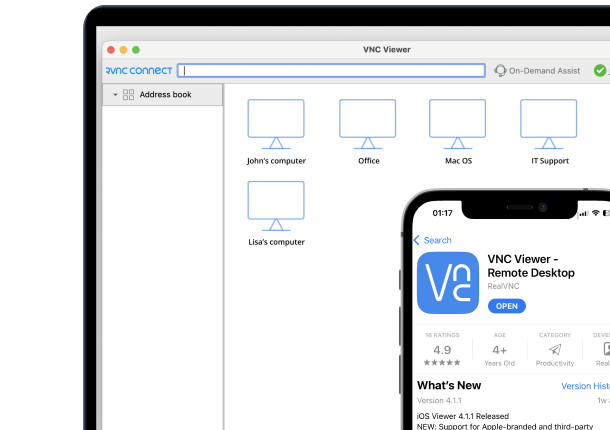
RealVNC Connect addresses this adjacent access-governance workflow for teams maintaining systems around the data lifecycle. It does not build the platform or replace a data governance framework. It provides controlled remote support and remediation where identity controls, least-privilege permissions, and session evidence matter.
- Multi-factor authentication (MFA) and single sign-on (SSO) with Microsoft Entra ID or Okta align remote-session access with established enterprise identity controls.
- Role-based access controls (RBAC) and granular action-based permissions let administrators limit keyboard, mouse, and file-transfer permissions to the task at hand.
- Session monitoring, recording, and detailed audit logs provide attributable evidence for review, investigation, and operational governance.
This matters when access decisions affect the services that deliver analytics and AI. A support session involving a data service should be as reviewable as a change to a pipeline or dashboard definition. RealVNC Connect gives IT teams a controlled way to provide remote assistance across hybrid environments and preserves the accountability your wider governance model requires.
Final Words
Building a modern data platform requires architecture, decision rights, data-product priorities, and cost controls to work as one operating model. Progress shows in trusted decisions and sustainable operations, not migrated volume.
RealVNC Connect adds accountable remote support through MFA and SSO, role-based access controls, and detailed audit logs. Book a meeting to discuss accountable remote access across the data operations your teams run with RealVNC Connect.
FAQs
What framework guides a modern data platform?
Building a modern data platform means connecting ingestion, storage and serving, transformation and orchestration, consumption, and governance as one lifecycle. Architecture, ownership, and operating controls determine whether those layers produce trusted business outcomes.
How does a lakehouse differ from a data warehouse?
A data warehouse serves structured data and predictable analytics; a lakehouse combines flexible lake storage with warehouse-style management. Hybrid designs are common when reporting, exploration, and artificial intelligence workloads need different performance and governance controls.
How should data pipelines support modern architectures?
Data pipelines should use defined ownership, validation, dependency visibility, and recovery expectations. Reusable ingestion patterns and documented schema-change processes reduce manual intervention as new data products and workloads are added.
What does an enterprise data platform example include?
An enterprise data platform example includes shared data services, certified metrics, access controls, lineage, monitoring, and domain-level ownership. The model should connect operational sources to reporting and AI use cases without forcing every workload into one storage pattern.
Which governance controls make data trustworthy?
Trustworthy data requires named ownership, metadata, lineage, quality monitoring, least-privilege access, retention rules, and audit evidence. These controls give data teams and risk stakeholders a traceable basis for reviewing data use.
How does RealVNC support governed data operations?
When a third-party remediation request reaches a data pipeline, RealVNC Connect supports remote support and remediation through multi-factor authentication, single sign-on, role-based access controls, and granular permissions. After the work, session monitoring, recording, and detailed audit logs give teams attributable evidence for reviewing access to data pipelines, business intelligence environments, or production systems.