


Many organizations manage screen content across multiple locations. The most common examples include retail locations, corporate offices, schools, healthcare facilities, quick-service restaurants, and many more. The common challenge for these companies is selecting the best digital signage software solution from dozens of platforms that claim to be the right fit.
The truth is, no single solution works for every deployment. The right choice depends on screen count, hardware compatibility, content workflow, security requirements, budget constraints, and remote management needs.
So, this guide covers all you need to know before making an informed decision. Let’s dive in!
What Is the Best Digital Signage Software?
Digital signage software is the management layer between your content and your screens. It handles content creation, scheduling, distribution, playback, and device monitoring across one platform. Unlike physical displays, media players, or TV operating systems such as Tizen or webOS, digital signage software provides the workflow, controls, and reporting that allow teams to:
- Create playlists
- Push remote updates
- Schedule content by time or location
- Verify that the right content reaches the right screens
A display is hardware, while a media player is the device or application rendering content on that hardware.
The digital signage platform sits above both, orchestrating content management and remote device management from a central interface. Some vendors bundle software with proprietary hardware solutions, while others support a range of existing screens and players.
Buyers like yourself usually compare three main categories:
- Cloud-based digital signage platforms host the CMS in the vendor’s infrastructure, providing centralized administration and remote updates.
- On-premise or open-source signage software such as Xibo gives organizations full control over data, hosting, and updates, shifting responsibility for patching and backups to the buyer’s IT team.
- Hardware-led signage systems bundle software with proprietary media players from vendors such as BrightSign, simplifying support while limiting hardware choices.
One common misconception is that free or low-cost signage tools are always cheaper at scale. Entry-level pricing may exclude advanced scheduling, proof-of-play, single sign-on, or premium support. Hardware costs, storage limits, user seats, and implementation services also affect total cost of ownership.
Key Components of Digital Signage Software
The difference between digital signage platforms comes down to how well the underlying components match your operations.
Content CMS, Templates, and Scheduling
- A good CMS platform should offer templates, approval chains, localization rules, and role-based permissions that allow your regional teams to update screens without requiring central intervention for every change.
- Dayparting and advanced scheduling features also matter in environments with content that changes throughout the day. Evaluate if scheduling rules can target by device, location group, or tag, and if the platform supports conditional playback triggered by external data (weather conditions, inventory levels, calendar events, etc.)
- Dynamic content generation through widgets, RSS feeds, social integrations, and BI dashboards reduces the need for static asset creation. Request proof-of-play reporting that confirms that dynamic elements rendered correctly.
Players, Screens, and Remote Management
The media player is the device or application that receives content from the CMS and renders it on the screen. Player choice affects hardware cost, reliability, deployment complexity, offline playback capabilities, and support requirements.
In this sense, hardware-agnostic platforms work with multiple operating systems:
- OnSign TV supports Windows, Android, macOS, Chrome OS, Linux, Samsung Tizen, LG webOS, BrightSign, and Raspberry Pi (still, it’s best to always verify current OS support at onsign.tv).
- Xibo offers players for Android, Linux, Tizen, webOS, Windows, and ChromeOS (verify current OS support at xibo.org.uk).
- BrightSign or Samsung VXT bundle software optimized for proprietary devices, offering tighter vendor support alongside reduced hardware flexibility, with Samsung VXT carrying ISO 27001 and ISO 27701 security certifications.
Ask your IT teams to confirm support for existing screens, smart TVs, mini PCs, Android devices, Raspberry Pi devices, or commercial players before selecting a platform.
When it comes to remote monitoring, check if the solution allows monitoring if screens are online, content is playing correctly, and if devices need attention.
As for multi-location deployments, you’ll require time-zone support, screen grouping, device naming conventions, and user permissions that allow regional teams to manage local content while keeping other locations independent.
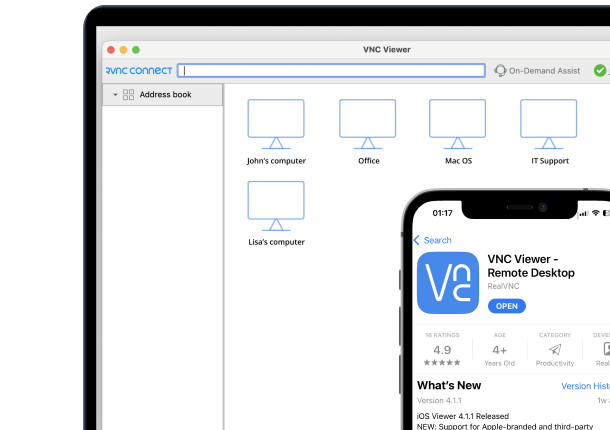
P.s. For distributed signage networks, remote troubleshooting becomes a practical consideration alongside the above-mentioned aspects. For example, REJI, a company providing software for the quick service restaurant and convenience industries, uses RealVNC Connect to monitor digital signage and kiosk devices across locations in Texas, Alabama, Illinois, Florida, and Mississippi.
How Does the Best Digital Signage Software Compare?
Organizations mostly compare three buying paths:
- Cloud platforms
- Self-hosted software
- Hardware-led systems
| Platform type | Key advantages | Costs / examples | Main trade-offs | Best suited for |
|---|---|---|---|---|
| Cloud platforms | Vendor manages infrastructure, automatic updates, centralized administration, rapid multi-location deployment and remote content updates. | ScreenCloud Core plan starts at $20/month per screen. | Costs compound at scale. SSO, proof-of-play reporting and API access may require more expensive plans. | Distributed organizations that prioritize fast deployment and simple administration. |
| Self-hosted platforms | Full data control and potentially no per-screen fees. | Licensing costs may be low, though you must budget for servers, patching, backups, monitoring and maintenance. | Requires internal IT capacity. Ongoing maintenance costs are underestimated. | Organizations with strict data-residency requirements and established IT resources. |
| Hardware-led platforms | Purpose-built hardware and operating systems reduce troubleshooting variables and simplify support. | Higher initial hardware investment and potential ecosystem-specific costs. | Less hardware flexibility and higher switching costs if requirements change. | Organizations prioritizing reliability, support consistency and standardized deployments. |
| Broad device-support platforms | Compatible with existing devices and multiple operating systems, reducing hardware restrictions. | Look Digital Signage pricing ranges from $13.50 per screen/month at low volumes down to $5.40 per screen/month at 200+ screens. | Performance and support may vary across device types and operating systems. | Organizations with mixed hardware environments or existing device fleets. |
We advise asking vendors several operational questions before committing. Ask questions like:
- Where is data stored, and does that location comply with your data residency requirements?
- What access controls are available, and can you enforce least-privilege permissions across content teams?
- Is single sign-on supported on your selected plan, or does it require an upgrade?
- Are audit logs available for compliance reporting?
- Can the platform operate if your internet connection fails, or does cloud dependency create a single point of failure for the entire digital signage network?
If you’re inclined to commit to a hardware strategy, we advise validating several operational details with the vendor, like:
- What warranty coverage applies, and what is the replacement process for failed devices?
- How are OS updates delivered and scheduled, and can you defer updates during critical business periods?
- What resolutions and refresh rates are supported across your target display inventory?
- Does offline playback cache the full playlist or only fallback content, and how long can devices operate without connectivity before requiring manual intervention?
Many platforms offer modular architectures that allow organizations to add screens, locations, or features without re-platforming. The most effective digital signage implementations we have seen combine content creation efficiency with remote device management, proof-of-play verification, and third-party integrations that keep screens current without requiring manual updates for every change.
Real-World Examples of Digital Signage Platforms
The examples below illustrate how QSR, education, and enterprise environments differ in their signage demands.
QSR environments
These specific environments require platforms that integrate with existing restaurant systems and handle location-specific content across thousands of screens. A top example in this space is Coates Group, which serves as McDonald’s single global Digital Menu Board CMS provider supporting tens of McDonald’s markets including the US, Canada, Australia, France, and the UK.
The Switchboard CMS connects menu boards with POS systems, inventory databases, and promotional calendars to display dynamic content based on real-time data such as time of day, weather conditions, and stock availability.
If you’re a business leader evaluating platforms, you should assess dayparting depth, location tagging, POS integration capability, and how quickly pricing changes propagate across the network.
Education environments
They require platforms that handle campus-wide communication, classroom screen sharing, and emergency alerting through established safety infrastructure.
A prime example here is Rise Vision, which serves thousands of schools and combines digital signage, screen sharing, and emergency alerts in one platform. The system connects to CAP-based alerting providers, including InformaCast, Alertus, Raptor, and CrisisGo, to send emergency messages that override scheduled content instantly.
If you’re in this space, make sure to evaluate template governance, approval workflows, Google Calendar integration for automatic schedule updates, and OS support for your school’s infrastructure.
Enterprise and manufacturing environments
This high-level environment requires platforms that integrate with operational systems and display real-time performance data to distributed teams.
For example, Omnivex handles production floor KPI dashboards, SQDC boards tracking safety, quality, delivery, and cost metrics, emergency notifications, and visitor wayfinding from one platform.
In this space, buyers should assess data integration depth, multi-zone scheduling for different areas of the facility, and shift-based content rules.
The main takeaway?
Across all three environments, we observe a common operational challenge that the CMS alone cannot fully address. Screens in remote or distributed locations occasionally require troubleshooting that goes beyond dashboard monitoring, e.g. a player application crash or an OS-level problem.
Future Trends in Digital Signage Platforms
Note that the trends below represent directions the industry is moving rather than digital signage solution features that should drive purchasing decisions today.
AI-assisted content creation
This trend is appearing across signage platforms, though implementations vary significantly in maturity. At ISE 2025, Invidis observed that manufacturers and software developers are integrating AI features for content automation, with companies such as Intuiface and Livesignage developing apps that automate content creation through LLMs (invidis, February 2025).
Software dominance
This trend is reshaping vendor positioning. Thought leaders from large global companies are confirming that software is starting to sell the hardware, and that almost all hardware providers now offer remote device management solutions, with Vestel and Sony showing their platforms for the first time at ISE 2025. Manufacturers are pursuing subscription and license models to generate recurring revenue after the initial display purchase.
Real-time data integrations
This direction is becoming standard for dashboards, stock levels, transport updates, calendars, news feeds, and BI screens. Even Samsung notes that end users need an application programming interface built into the CMS to benefit from networks that use real-time data and integrate with other business systems. IoT integration is also accelerating this trend.
Interactive signage
This trend is growing in kiosks, touch tables, wayfinding, retail, hospitality, and public information settings. However, interactive deployments involve different evaluation criteria, like:
- Hardware durability
- Touch responsiveness
- Content designed for user interaction
The software should support various media formats including images, live HTML, social media feeds, and video walls for content flexibility across these use cases.
Analytics (engagement metrics, QR interactions, business-system reporting) is a competitive advantage in this space, and it must be evaluated carefully.
What Are the Risks of Digital Signage Software?
Digital signage screens can become public-facing security and reputational risks if admin accounts, player devices, or content approvals are poorly managed.
Naturally, we see this risk materialize in ways that generate unwanted attention, affecting organizations of all sizes.
The top digital signage security threats, as documented by AVIXA, include:
- Physical tampering
- Network vulnerabilities
- Malware and ransomware
- Weak credentials
- Outdated software and firmware
- Social engineering and phishing
Common situations to pay attention to include:
- Media players tucked behind displays or mounted under counters, which are vulnerable to USB drives introducing malicious code.
- Unsecured Wi-Fi, weak firewalls, or open ports which invite attackers to pivot from a compromised player into larger corporate environments.
- Default usernames and simple passwords that can be tested by automated tools in minutes.
How to Secure Your Digital Signage, RealVNC Experts Answered
- For network security, we recommend placing digital signage on its own VLAN or subnet to contain breaches so attackers cannot move into point-of-sale systems, HR databases, or other sensitive areas. Use strict firewall rules, secure Wi-Fi with WPA2 or WPA3 encryption, and disable inactive switch ports to reduce attack surfaces.
- For device hardening, house media players in tamper-resistant enclosures and limit access to authorized personnel. Shut down unused USB or HDMI inputs. Select enterprise-grade devices with secure boot and hardware encryption where available. High-performance players from vendors such as BrightSign include built-in security features alongside their processing capabilities.
- For software and CMS security, replace all factory usernames and passwords immediately. Enforce strong password policies and require multi-factor authentication. Implement role-based access control so users have only necessary privileges. Keep the OS, CMS, and player firmware updated with vendor security patches. Many digital signage platforms provide user-friendly interfaces that allow businesses to create and manage content without extensive technical knowledge, but this accessibility must be balanced with proper access controls.
- For content management, use HTTPS, TLS, or SFTP when transferring content between CMS and players. Standardize approval workflows so all content passes through review before publication. Monitor logs for unusual activity such as off-hours uploads or multiple failed login attempts.
For example, RealVNC Connect is ISO 27001:2022 certified and provides 256-bit AES-GCM encryption with Perfect Forward Secrecy, MFA enforcement, SSO support, role-based access controls, session logging and audit trails, and session recording for compliance documentation.
How to Choose the Best Digital Signage Software (from Small Business to Enterprise)
We recommend approaching digital signage selection as a structured evaluation process rather than a feature comparison. Here’s how to evaluate options:
Define the screen network first
Document screen count, locations, screen types, network conditions at each site, and content ownership. Small business operators may start with one or two screens and need a platform that scales as they grow without requiring migration to a different system. Clarify if content will be managed centrally or whether regional teams need local publishing permissions.
Confirm hardware compatibility
Verify that the platform supports your existing displays and media players across Android, Windows, macOS, Linux, Chrome OS, webOS, Tizen, Raspberry Pi, or proprietary players. Platforms supporting broad OS compatibility accommodate diverse hardware inventories without forcing upgrades.
Ask vendors specifically about the devices you plan to use rather than accepting general compatibility claims. For high performance requirements such as 4K video walls or interactive kiosks, verify that the platform and player combination can handle the processing load.
Map content workflows
Document how content will be created, approved, scheduled, localized, and audited. If multiple teams contribute content, confirm that the platform supports role-based permissions, approval chains, and audit trails. For employee engagement applications, verify that the platform integrates with internal communication tools and supports the dashboard.
Compare must-have features versus unique features
Digital signage software must include a user-friendly interface that allows for easy content creation and management. Template libraries are another great feature, as they save time and reduce the need for graphic design resources. The software should also support various media formats including images, live HTML, social media feeds, and video walls for content flexibility.
Core capabilities to evaluate include CMS usability, templates and ready-made templates for brand consistency, playlists, scheduling including dayparting, offline playback during connectivity interruptions, proof-of-play reporting, analytics, remote device management, and user roles.
However, larger organizations may also need SSO, multi-location controls, and compliance features. Each platform has a unique feature or specialization.
Review security controls
Evaluate MFA availability, SSO support, role-based access, approval workflows, audit logs, device lockdown capabilities, encryption claims, and compliance documentation. For regulated industries, verify whether vendors hold relevant certifications such as ISO 27001 or SOC 2 Type II.
Calculate total cost from single screen to scale
Per-screen monthly pricing is common for cloud platforms, but costs compound at scale. Factor in media players, installation, support, storage limits, user seats, implementation services, replacement devices, and premium feature tiers.
Note that cloud-based systems usually charge by device monthly, while on-premise systems usually require front-loaded one-time costs. Some digital signage platforms offer a free version that allows limited access to features, so you can create and manage content without any cost.
Plan how IT will support the network
Document how IT will diagnose offline screens, update players, verify firmware versions, document fixes, and support devices in locations that are difficult to access physically.
The CMS provides content management and device status, but troubleshooting at the device level may require remote access to the underlying operating system.
PS: You can try RealVNC Connect free for 14 days to evaluate this workflow alongside your signage platform pilot.
Frequently Asked Questions
What is the best digital signage software for small business?
The best digital signage software for small business depends on your hardware environment, screen count, budget, content workflow, and requirements for features such as scheduling, templates, analytics, and remote management. Small business operators should prioritize platforms with user-friendly interfaces that allow content creation without extensive technical knowledge, template libraries that reduce design resource needs, and affordable pricing that works for a single screen or small network.
How much does digital signage software cost for a single screen?
Pricing for a single screen deployment varies by platform and pricing model. Many digital signage software providers offer free trials, allowing you to test the software before making a financial commitment, with ranges from 14 days to 30 days.
What features should digital signage software have for employee engagement?
For employee engagement applications, digital signage software should include dashboard integrations with BI tools such as Power BI, real-time KPI displays, internal communication capabilities, and scheduling features that support shift-based content changes. Core features include a content management system, customizable templates for brand consistency, playlists and dayparting, remote device management, offline playback, and user roles controlling who can publish content. Template libraries are also a must-have, as they save time for HR and communications teams without graphic design resources.
Does digital signage software work with single screen or any screen media players?
Most digital signage software works with a single screen deployment and scales from there. Many platforms provide user-friendly interfaces accessible for users of all skill levels, while some platforms run browser-based players on any device with a modern web browser. High performance requirements such as 4K video walls may require specific player hardware.
Is cloud-based digital signage or on-premise digital signage better for small business?
For small business operators, cloud platforms are easier to deploy and manage, as they handle infrastructure, updates, and backups, reducing operational burden. Some platforms offer a free version with limited features to help you create content without cost. On-premise options suit organizations with strict security or data residency requirements but shift maintenance responsibility to internal teams.