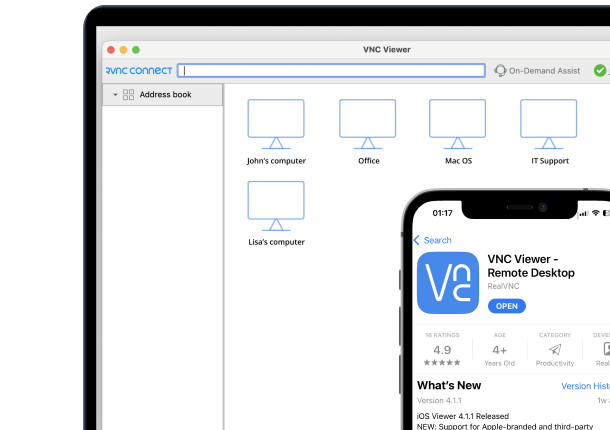




A remote engineer connects to investigate a plant issue, but the session reaches an engineering workstation with authority over a live process. Operations must then decide whether the connection is helping restore service or creating an unaccounted route into equipment that production teams depend on.
SCADA remote access security governs how employees, contractors, and service providers connect to supervisory control and data acquisition systems from outside the plant. It requires a controlled route, verified identity, permissions limited to the approved task, and session evidence that lets leaders preserve operational availability and keeps authority away from controller-adjacent systems except when it is explicitly justified.
That discipline is difficult in many operational technology (OT) environments combine modern corporate connectivity with legacy industrial assets. A conventional IT access policy may not reflect proprietary protocols, limited endpoint identity functions, or the uptime constraints that shape maintenance decisions. The security boundary needs to sit around the session and its route, rather than rely on every endpoint to enforce modern controls itself.
This article maps the Exposure Path from remote user to operational asset, the Control Boundary that mediates access, and the Operational Permission that determines what a session may do. It then covers access inventories, multi-factor authentication (MFA), read-only and write authority, network separation, vendor and emergency sessions, and audit evidence. The aim is a remote-access model where plant teams can support critical systems and leaders can identify the owner, purpose, scope, and record for every consequential connection.
Why Does SCADA Remote Access Security Need OT Governance?
Remote connectivity into industrial control systems needs explicit operational ownership: the same session can affect a business process, not merely a business application. SCADA remote access security sets the decision rights around who reaches an operational technology (OT) asset, what authority they receive, and how the organization verifies the session afterward. It preserves remote engineering support and respects safety, availability, and service criticality.
Visibility is often the first constraint. Only 5% of organizations reported complete visibility of OT activity within central cybersecurity operations in Fortinet’s 2024 State of Operational Technology and Cybersecurity Report (2024). When security teams cannot see a remote route, plant leaders cannot confirm its owner, purpose, or permitted scope.
Think of a remote route as a controlled maintenance entrance, rather than an ordinary office login. Someone must authorize entry, define where the visitor may go, and retain a record of the work. A device-by-device approach leaves those decisions scattered between engineering, IT, and suppliers.
Which pressures make remote access consequential?
- Safety consequences: A remote session that reaches a human-machine interface (HMI) or engineering workstation requires controls that account for physical process impact.
- Availability dependence: Industrial operations have limited tolerance for unplanned interruption, so security changes need OT review before deployment.
- Legacy architecture: Older assets may lack modern identity functions and require an intermediary control layer.
- Distributed accountability: Plant operations, central IT, and external maintainers may each own part of the access decision.
| Legacy connectivity assumption | OT governance question | Executive consequence |
|---|---|---|
| A password is sufficient | Who verifies identity and approves the session? | Weak accountability for privileged work |
| Network reachability equals authorization | Which assets and actions are permitted? | Access expands beyond the maintenance task |
| IT owns every security decision | Who accepts operational interruption risk? | Controls may conflict with plant requirements |
| Vendor access is routine | Who sponsors and reviews each route? | Exceptions become permanent and unreviewed |
This is not theoretical. FBI, CISA, and partner guidance documented pro-Russia hacktivists using VNC on port 5900 to reach HMIs with default or weak credentials and no multi-factor authentication (MFA) in 2024. Governance gives leaders a way to prevent convenience connections from becoming uncontrolled routes into OT.
Which Architecture Model Fits Industrial Remote Access?
A defensible architecture makes the path into OT visible, mediated, and proportionate to the work being performed. Leaders should assess three connected elements: Exposure Path, Control Boundary, and Operational Permission. Together, they show whether a user reaches a data view, an engineering asset, or a controller-adjacent system, and what the user may do once connected.
This model avoids treating the Purdue Model or IEC 62443 zones and conduits as a diagram to copy unchanged. The Purdue Model helps teams discuss separation between enterprise and industrial layers. IEC 62443 zones and conduits help define security boundaries and the controlled communications between them. Both are design references; the final architecture must reflect the process consequence and maintenance need at each site.
How should leaders evaluate the exposure path?
Start with the asset the session actually reaches. Read-only monitoring of a data replica usually carries a different operating consequence than write access to an engineering workstation. CISA and U.S. government partners advised in 2024 that OT connections should be denied by default except when explicitly permitted for defined system functionality, using unidirectional boundaries and remote access where appropriate for consequential systems.
- Exposure Path: Identify whether the route reaches a data replica, HMI, engineering workstation, or controller-adjacent asset.
- Control Boundary: Identify the jump host, OT demilitarized zone (DMZ), broker, or enclave that enforces policy.
- Operational Permission: Define read-only, supervised, time-bounded, or exceptional write access before the session begins.
Where should the control boundary sit?
The control boundary belongs between the remote user and the operational asset, where it can authenticate, constrain, and observe the connection. A jump host implementation provides that intermediary point; an OT DMZ separates enterprise-facing services from plant-floor systems. Direct endpoint connections remove the place where policy can be consistently enforced.
Chris Warner, Senior Security Consultant at GuidePoint Security, wrote in Hardening Remote Access a Must for OT: “Use firewalls and access control lists (ACLs) to enforce strict traffic control between network segments. Further, develop micro-segmentation designs and work to build enclaves and safe-restart zones.”
| Architecture option | Exposure Path | Control Boundary | Operational Permission | Best-fit context |
|---|---|---|---|---|
| Direct device connection | HMI or engineering endpoint | Minimal | Broad, difficult to constrain | Exceptional legacy case requiring remediation plan |
| OT DMZ with jump host | Mediated engineering route | DMZ and jump host | Approved task scope | Planned support and engineering work |
| Data-collection or edge-access pattern | Data replica or edge server | Edge layer and segmented route | Read-only monitoring | Distributed performance monitoring |
The architecture decision is a service decision. Where viewing data is enough, keep the path read-only and separate it from control activity; where engineering access is justified, require a mediated route with explicit permission.
What Controls Make SCADA Remote Access Defensible?
)
Controls are defensible when leaders can show that access is known, identity is verified, permissions match the task, and evidence explains what occurred. MFA matters, but it does not compensate for an unapproved route or unrestricted engineering authority. The control set must work as a system around legacy programmable logic controllers (PLCs), engineering workstations, and the people who maintain them.
MFA adoption shows progress, yet coverage is only one signal. SANS Institute’s 2024 State of ICS/OT Cybersecurity Survey found that 75% of respondents had implemented MFA for remote access to industrial sites. Dale Peterson, ICS Security Catalyst, wrote in A Year in OT Security: “This week’s task is to identify through interview and inspection all remote access methods to your OT environment. And then confirm each OT remote access method requires MFA.”
- Complete access inventory: Record every remote path by user group, device class, protocol, and business owner. VPN records alone rarely describe every engineering, vendor, or emergency route.
- Strong identity assurance: Measure MFA coverage and assign an owner to every exception. A password-protected legacy endpoint is not equivalent to MFA-protected access through an intermediary layer.
- Least-privilege session scope: Define approved roles, actions, and read-only versus write authority. Routine viewing does not justify broad engineering privileges.
- Segmented, mediated connectivity: Confirm that remote users cross an approved OT DMZ, jump host, or equivalent boundary before reaching a critical endpoint.
- Reviewable session evidence: Retain usable logs and recordings that connect identity, approval, time, target asset, and session activity.
| Control criterion | Leadership signal | Decision supported | Common misread |
|---|---|---|---|
| Access inventory | Known routes have named owners | Which paths require retirement or review | VPN logs show every route |
| MFA coverage | Identity assurance has measurable exceptions | Where compensating controls are needed | Passwords provide equivalent assurance |
| Session scope | Permissions map to approved work | Whether write access is justified | Engineering roles need unrestricted access |
| Mediated connection | Policy is enforced before OT access | Where a jump host or DMZ is required | Segmentation alone governs user actions |
| Session evidence | Investigations can reconstruct activity | Whether controls are operating as intended | Connection events explain the work performed |
NIST Special Publication 800-82 frames least privilege, authentication, authorization, and privileged-account protection as core industrial control system practices. For assets that cannot support modern identity functions directly, place the stronger identity check and permission boundary in front of the asset. That keeps necessary maintenance possible without treating the legacy endpoint as the security decision point.
How Do You Govern Vendor and Emergency Access?
Vendor and emergency access need a defined route before the maintenance window or production event begins. Original equipment manufacturers, systems integrators, managed service providers, and internal responders may have legitimate reasons to connect. The governance task is to make each exceptional session sponsor-owned, time-bounded, and reconstructable.
Tool sprawl makes that harder. SecurityBrief’s report on Claroty remote-access findings reported in 2024 that 79% of organizations had more than two non-enterprise-grade tools installed on OT network devices. Treat that figure as a prompt to review ownership and routes, rather than as a universal benchmark for every plant.
- Step #1 – Assign access sponsorship: Name the plant or system owner who approves standing or approved-on-demand access. Every vendor route needs a sponsor who understands asset criticality and the maintenance contract.
- Step #2 – Define permitted work: Tie permission to the approved task and affected system. The work order should distinguish read-only viewing, supervised activity, and controlled write access.
- Step #3 – Set session conditions: Define identity checks, service window, connection route, and the break-glass process for urgent work. Exceptions must expire and undergo review.
- Step #4 – Review evidence and exceptions: Review approvals, logs, recordings, and incidents at a regular cadence. Owner attestation turns access evidence into a governance record.
| Access scenario | Required governance condition | Implication |
|---|---|---|
| Planned OEM maintenance | Named sponsor and approved work window | Access aligns with contracted work |
| Urgent plant outage | Defined break-glass approval and later review | Speed does not erase accountability |
| Remote engineering support | Scoped permissions through a mediated route | Routine support avoids standing broad access |
| Third-party software update | Change approval and session record | Supplier work remains traceable |
CISA’s OT remote-maintenance guidance states: “Organizations should establish clear expectations and requirements regarding the security of remote access and maintenance.” The practical test is simple: if a leader cannot identify the sponsor, purpose, expiry, and evidence for a vendor route, that route is not fully governed.
Where Do Audit Gaps Undermine OT Resilience?
Audit gaps appear when an organization can show that someone connected but cannot explain why that person had authority, what system they reached, or whether the session stayed within scope. That weakens incident investigation and makes recovery decisions slower, forcing the team to assemble evidence from disconnected records.
Evidence correlation remains limited. Only 25% of facilities collected and correlated remote-access events, security logs, and data-transfer activity in SANS Institute’s ICS/OT Cybersecurity Survey: 2023’s Challenges and Tomorrow’s Defenses (2023). The gap matters: access logs without activity context cannot reliably show whether an approved session exceeded its purpose.
- Fragmented logs: Evidence sits across identity, network, and endpoint systems without a common review process.
- Unowned exceptions: Legacy and emergency routes remain active without periodic owner attestation.
- Unsafe assessment cadence: Vulnerability assessment schedules ignore downtime constraints or fail to document compensating controls.
- Unrehearsed recovery access: Incident-response routes are undefined until a production event requires immediate action.
CISA, FBI, NSA, MS-ISAC, and the Israel National Cyber Directorate advise: “Review logs with complete data, including executing binary, request types, IP addresses, and date/time, for execution of remote access software to detect abnormal use.” The NIST Cybersecurity Framework provides a useful organizing lens: govern access ownership, protect approved paths, detect unusual activity, respond with evidence, and recover through rehearsed procedures.
How RealVNC Closes the SCADA Remote-Access Gap
)
Engineering workstations, supervised vendor maintenance, and incident investigation all depend on a remote-session workflow with explicit identity, limited authority, and usable evidence. That requirement becomes harder when distributed sites rely on legacy endpoints that cannot host every modern security control. CISA’s ICS remote-access guidance calls for physical and logical DMZs, separate authentication services for vendor and integrator roles, and a security-assurance policy for remote access.
RealVNC Connect supports the remote-session control layer around approved operational workflows. Multi-factor authentication and single sign-on (SSO) with Microsoft Entra ID or Okta strengthen user assurance before a session begins. Role-based access controls (RBAC) and granular action-based permissions let organizations limit keyboard, mouse, and file-transfer capability by role. Session monitoring, session recording, and detailed audit logs provide administrators and auditors with reviewable evidence of who connected, when they connected, and what permissions were granted. For ad-hoc third-party support, Code Connect uses single-use 9-digit session codes that are valid for a short, configurable window, allowing access without issuing standing credentials.
Those controls create clearer approval paths, bounded sessions, and evidence that supports review across remote support activity. They complement rather than replace OT segmentation, safety engineering, asset ownership, and vulnerability-management disciplines. The result is a more governable remote-access workflow: plant teams retain the ability to support operational systems, and leaders maintain oversight of the authority granted around each connection.
Final Words
Every remote connection into a SCADA environment needs to earn its place. SCADA remote access security starts by tracing the Exposure Path, placing a Control Boundary between the user and operational assets, and setting Operational Permission that fits the approved task. From there, vendor and emergency routes need a named sponsor, a defined window, and evidence that shows what authority was granted. When those decisions remain scattered, plant teams lose time reconstructing sessions, and leaders lack a clear basis for risk and recovery decisions.
RealVNC Connect supports the remote-session layer within that wider OT model. Multi-factor authentication (MFA) and single sign-on (SSO) establish user assurance, and role-based access controls (RBAC) and granular action-based permissions limit what a session permits. Session monitoring, recording, and detailed audit logs give operational and security teams evidence for review. These controls sit alongside OT segmentation, asset ownership, safety engineering, and vulnerability management; they give your teams a governed way to provide support without leaving authority or accountability unclear. Arrange a meeting to assess how RealVNC Connect supports governed, audit-ready remote access workflows for your operational teams.
Frequently Asked Questions
What is the framework for governing remote ICS access?
A practical framework evaluates the Exposure Path, Control Boundary, and Operational Permission for each remote connection. This means identifying which asset the route reaches, where access is authenticated and monitored, and what actions the user may perform. CISA and U.S. government partners recommend denying OT connectivity by default and permitting it only for explicitly authorized defined functionality.
What is the difference between a jump host and direct access?
A jump host places a controlled intermediary between the remote user and the HMI or engineering workstation. It creates a point where identity, permissions, network routes, and session activity can be governed before the user reaches an operational asset. Direct access removes that shared enforcement point and makes consistent oversight more difficult. CISA recommends physical and logical DMZs in ICS remote-access designs (CISA, 2023).
How do IEC 62443 and NIST apply to OT connectivity?
IEC 62443 helps organizations structure industrial cybersecurity around zones, conduits, security levels, and responsibility boundaries. NIST guidance for industrial control systems supports risk-managed security programs that account for safety and availability constraints across SCADA, distributed control systems, and programmable logic controllers. Neither framework prescribes one remote-access product or topology, so organizations must map the guidance to their operational setting and sector obligations.
Is SCADA still used today?
SCADA remains used to monitor and control physical processes across industrial operations and critical infrastructure. Many environments combine newer connectivity with engineering workstations and legacy control assets, which makes remote support useful but difficult to govern uniformly. The key leadership question is whether each connection has a defined owner, approved purpose, and route that respects operational consequences.
What is the biggest cyber threat to SCADA systems?
Unmanaged remote access is one of the most consequential threat paths: it can connect enterprise users or third parties to systems that influence physical operations. Weak credentials, missing multi-factor authentication (MFA), direct endpoint access, and permanent vendor routes each increase uncertainty around who may act and under what authority. The answer is a layered control model that combines identity assurance, segmentation, scoped permissions, and reviewable session evidence.
How does RealVNC support SCADA remote access security?
SCADA remote access security is supported by RealVNC Connect through identity assurance, role-scoped permissions, monitored sessions, and usable access records. Multi-factor authentication, single sign-on (SSO) with Microsoft Entra ID and Okta, role-based access controls (RBAC), and granular action-based permissions help limit access by user and task. Session monitoring, session recording, detailed audit logs, and Code Connect’s time-bound session codes support oversight of third-party and operational sessions and complementing OT segmentation and broader security governance.