



Remote IT support gives organizations a faster way to diagnose and resolve technology issues without waiting for a technician to travel.
For IT managers, system administrators, MSPs, and small-business leaders, its value rests on the operating model around each connection: clear ticket intake, verified identities, controlled permissions, skilled troubleshooting, documentation, and measurable service levels.
What Is Remote IT Support?
Remote IT support is a technical assistance service model that lets technicians troubleshoot, manage, configure, and maintain devices or systems without being physically present.
Common activities include application support, account assistance, software configuration, patch coordination, endpoint maintenance, server administration, file transfer, and after-hours response.
Support may begin through a ticket, call, chat, monitoring alert, or scheduled request. The technician verifies the user or asset, performs the work, records the outcome, and closes or escalates the ticket.
Remote access is the connection layer that allows a technician to view or control an approved device. Remote IT support includes the people, policies, workflows, service commitments, and records around that connection. A remote desktop protocol session is one possible access method, not a complete support operation.
MSPs apply the model across customer environments with separate roles and access boundaries. Internal teams use it for employees, branches, servers, kiosks, Raspberry Pi devices, and other endpoints.
How Does Remote IT Technical Support Work?
Reliable remote support follows a consistent process from the initial request all the way through final documentation to deliver consistent results and customer satisfaction.
Ticket intake and verification
A useful ticket identifies the affected user, device, symptoms, business impact, urgency, prior troubleshooting, and expected service level; in remote IT support, excellent communication skills help capture those details accurately during intake.
Strong intake helps teams distinguish a minor inconvenience from a productivity blocker, outage, security event, or sensitive-system issue.
Before connecting, the support positions confirm who requested help, which device is involved, and which technician has permission to work on it. Named technician accounts provide stronger accountability than shared credentials.
Sensitive work may require approval, multi-factor authentication, a maintenance window, or temporary elevated access.
Attended and unattended access
Attended access is user-approved advanced technical support. The person receiving help authorizes the session, making it suitable for live application errors, account problems, or cases where the technician needs the user to demonstrate what happened.
Unattended access is pre-authorized access to managed devices. Teams can use it to maintain servers, kiosks, branch devices, or endpoints outside business hours.
Access should be limited to approved systems, assigned to named roles, logged, reviewed regularly, and removed when staff, clients, or devices change.
Troubleshooting and closure
Once connected, the technical support specialist may review logs, inspect settings, restart a service, install an approved update, transfer a file, change a configuration, or guide the user through a task while solving technical issues during the session.
The goal is to troubleshoot complex issues to deliver high-quality support to the broader organization.
Cross-platform coverage is important when one team supports Windows, macOS, Linux, mobile devices, embedded systems, and Raspberry Pi hardware.
Automation can handle ticket categorization, scripted checks, patch coordination, and status updates. Experienced technicians still need to assess unusual failures, validate results, and solve problems that automated checks cannot resolve, then decide when escalation is required.
The ticket should record the cause, diagnostic work, changes, privileges used, user confirmation, and follow-up actions for hardware and software issues.
Advanced technical support teams can measure response time, resolution time, first-contact resolution, reopen rates, backlog health, and SLA performance. Fast acknowledgment is useful, but restored productivity is the stronger measure.
Remote Access and Technician Workflows
Secure remote access should authenticate the technician, authorize the target device, and protect the connection. MFA, role-based permissions, encryption, device approval, and session records support that goal.
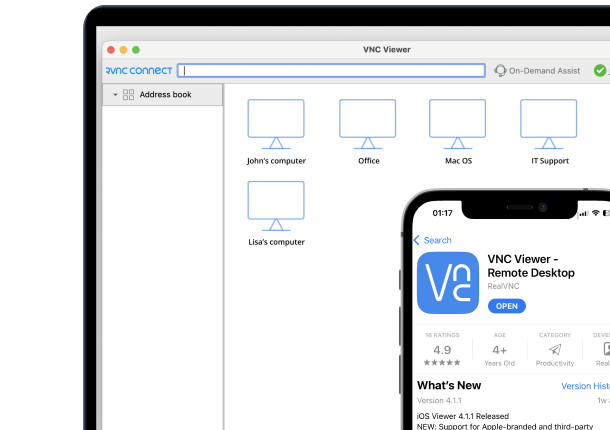
RealVNC Connect fits into this layer as a secure remote access platform for supported devices. Teams can use controlled connectivity, attended and approved unattended sessions, cross-platform access, MFA, role-based permissions, audit logging, and session recording where available.
Its architecture is cloud-brokered, meaning that the software runs locally on devices, while cloud services broker the connection between them.
Ticketing gives technicians context about the user, asset, severity, SLA, and prior work, and it also supports service desk workflows for routing, prioritization, and assignment. Training should cover approved tools, verification, consent, elevation, documentation, and incident reporting.
How Does Remote Support Compare to On-Site IT?
Remote tech support is usually faster for software problems, access issues, application configuration, log review, and user guidance because travel isn’t required. MSPs can provide wider coverage hours without placing technicians at every customer site.
On-site IT remains necessary to resolve technical problems for failed hardware, damaged cables, physical inventory, network closets, power issues, and secure-facility tasks. Local staff may also be needed when a device can’t connect or policy requires physical presence.
Potential savings for advanced support depend on the project scope. Remote service may limit travel and downtime, but vague responsibilities and unmanaged extra work can increase overall costs.
For many organizations, a blended model often works best. A remote support technician reviews logs, attempts a fix, and confirms that hardware work is required, while a field technician completes the repair, then hands the system back for remote validation. The shared ticket records both parts of the job.
What Does Remote IT Support Look Like in Practice?
An MSP might receive an early-morning alert that a particular service has stopped on a client’s Windows server.
An authorized support engineer signs in with MFA, opens the incident ticket, uses approved unattended access, reviews the logs, corrects the configuration, restarts the service, confirms availability, and documents the work as part of the support flow for resolving IT issues before the client’s business day begins.
A small business may need help when an employee cannot save files correctly in one business application but can in another, creating one of the more common software issues support teams handle.
During an attended session, the technician observes the error, checks the printer and driver, corrects the configuration, tests the result with the user, and closes the ticket. The employee returns to work without waiting for a visit.
An enterprise may require a privileged change on a sensitive server. An approved ticket, named account, MFA, scoped access, session logging, change notes, and post-change validation create a usable record of who connected and what work was completed.
Where Is Remote Support Used by IT Teams?
Small businesses often use remote support to gain faster access to specialist skills and reduce downtime without staffing every discipline internally. Buyers should compare per-user, per-device, per-technician, retainer, and incident-based pricing models.
A low monthly fee may exclude after-hours support, server administration, cybersecurity work, project hours, or patching. Buyers should ask what the agreement includes, which SLAs apply, how unattended access is approved, and how access is removed when a contract or employment relationship ends.
MSPs use remote support for help desk work, network operations, endpoint maintenance, server administration, and after-hours response. Separate client environments, named accounts, MFA, and access reviews reduce the concentration risk created when one provider can reach many customers.
Enterprises, healthcare, finance, public-sector, education, and manufacturing teams may need stronger session evidence and stricter approval rules.
Audit-ready support can include identity verification, scoped access, connection logs, change notes, retention policies, and periodic reviews. A remote support tool alone doesn’t make an organization compliant.
What Is Changing in Remote Help Desk Support?
Automation is taking a larger role in ticket routing, knowledge retrieval, patch coordination, and diagnostics. Human judgment remains central when incidents are unusual, sensitive, or complex.
Zero Trust principles are also shaping remote help desk support. Each session should verify the technician, confirm the target device, limit permissions, monitor activity, and revoke access when it’s no longer needed.
Broader device coverage is another shift, spanning laptops, servers, mobile endpoints, kiosks, embedded devices, and systems near operational technology environments.
What Are the Security Risks?
Compromised credentials can give an attacker direct access to managed systems, but MFA, named accounts, account monitoring, and prompt offboarding reduce that risk.
Excessive privileges may let technicians reach systems or actions outside their assigned role. Role-based permissions, device groups, temporary elevation, and regular access reviews keep access narrower.
Unmanaged unattended access can remain active on former employees’ devices, retired assets, or expired client accounts. Asset inventories and scheduled recertification help teams remove stale entries.
Shadow IT creates another problem to be aware of, as unapproved tools may lack consistent authentication, patching, logging, or oversight. Formal tool governance makes activity much easier to review.
Poor session visibility can leave the organization unable to reconstruct who connected to the network or what changed. Connection logs, ticket references, change notes, and policy-aligned recording provide stronger evidence.
How Do You Implement Remote IT Support?
Start with the service scope: define supported users, devices, applications, servers, locations, service hours, priority levels, exclusions, and escalation routes before choosing a platform.
Next, inventory devices by owner, operating system, location, sensitivity, and support method. Decide which assets need attended support and which qualify for approved unattended access.
Choose tools that support encryption, MFA, named accounts, role-based permissions, logging, cross-platform coverage, and controlled deployment. RealVNC Connect can serve as an example of the secure connection layer within the wider process.
Carefully document the workflow for intake, verification, approval, connection, elevation, troubleshooting, escalation, and closure.
Pilot it with a limited device group, then test access revocation, low-bandwidth performance, and reporting. Before granting production access, validate each technician’s ability through a technical assessment.
Measure service and security together for remote tech support jobs. Response time and resolution time are useful, though access reviews, inactive devices, unauthorized tools, incomplete records, and after-hours activity also deserve attention.
Build a Secure Remote IT Support Strategy
Remote IT support can improve response times, extend coverage, and reduce avoidable site visits when it’s built around secure access, disciplined workflows, and clear service expectations.
Organizations should compare providers and tools using platform coverage, pricing transparency, SLAs, attended and unattended access controls, MFA, logging, and technician governance.
RealVNC Connect can support the secure remote access part of that model, helping authorized teams reach distributed devices with connection-level controls. Review current workflows, identify access and documentation gaps, and shortlist tools or MSP partners that support secure, cost-predictable growth.
Frequently Asked Questions
What is remote IT support?
Remote IT support lets technicians troubleshoot, manage, and maintain devices without visiting the location. Remote IT support includes technical support delivered through remote access, ticketing, file transfer, patch coordination, configuration, and user assistance.
How does secure remote IT support work?
Secure support combines encryption, MFA, named technician accounts, least-privilege permissions, approved devices, and session records. Sensitive environments may add approvals, temporary elevation, recording, and stricter retention rules.
What should small businesses look for in pricing?
Compare the pricing unit, included service hours, SLAs, after-hours coverage, server support, unattended access, patching, cybersecurity exclusions, and project fees. A predictable monthly price is useful only when the scope and escalation process are clear.
Is remote IT support safe?
Remote support can be safe when organizations use strong authentication, encryption, limited permissions, current software, software applications, approved tools, and detailed monitoring. Common weaknesses include poor credential protection, stale unattended access, excessive privileges, and unapproved applications.
How do MSPs handle unattended device access?
MSPs should pre-authorize specific devices, assign access through named support technician roles, and, where policy allows, use unattended access as part of front-line technical support before escalation.
They should also require MFA, separate customer environments, log activity, and review access regularly. Access should be removed promptly when a device, contract, or employment relationship changes.