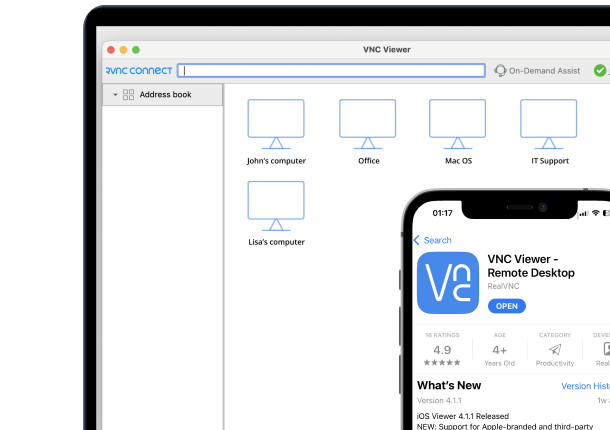




If your day-to-day machine runs Windows but a Linux computer also has files, apps or a project you need to reach, RealVNC Connect lets you view and control it from any Windows PC, over the internet or your local network, in a few minutes of setup.
Why access a Linux computer from Windows
This comes up when reaching a Linux development box, a home server, or a colleague’s workstation from a Windows machine. Because RealVNC Connect works the same way across platforms, you’re not limited to same-OS remote desktop tools.
What you’ll need
- A Linux computer to control, either on the same network as your Windows PC or reachable over the internet
- A Windows PC to connect from
- A RealVNC Connect account and licence – a free trial is available
- About 10 minutes to complete setup on both devices
Step 1: Set up RealVNC Server on your Linux computer
On the Linux computer you want to control:
- Download the RealVNC Connect setup app from the RealVNC website.
- Click Download for Linux.
- Extract the installer in your Downloads folder using your file manager, then run it by double-clicking the RealVNC Connect installer icon.
- Click Accept and Install, and follow the on-screen instructions. If prompted to disable Wayland, accept – this is needed for RealVNC Connect to function correctly.
- Once installation completes, choose Start my free trial if you’re new to RealVNC Connect, or Sign in to continue if you already have an account.
- Your browser will open automatically. Follow the on-screen prompts, then click Open to return to the RealVNC Connect Setup app.
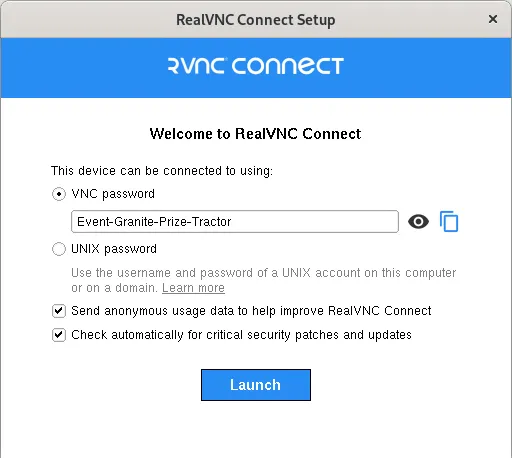
- Review the settings shown, then click Launch. If you keep the default VNC Password, make a note of it – you’ll need it when you connect from another device.
Step 2: Install RealVNC Viewer on your Windows PC
On the Windows PC you’ll be connecting from:
- Download the RealVNC Connect setup app.
- Click Download for Windows.
- Click Accept and Install.
- Choose Start my free trial or Sign in to continue, using the same RealVNC account you used on the other device.
- Your browser will open automatically. Follow the on-screen prompts, then click Open to return to the RealVNC Connect Setup app.
- Review the settings shown, then click Launch.
Your Linux computer will now appear automatically as a connection in RealVNC Viewer, listed under your team.
Step 3: Connect to your Linux computer for the first time
In RealVNC Viewer, double-click the Linux computer you want to connect to.
Verifying the connection with Identity Check
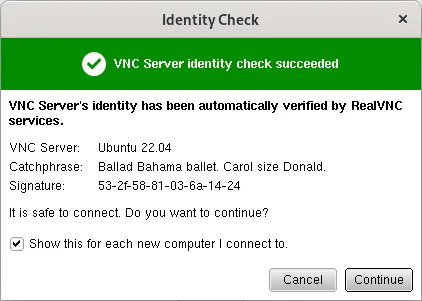
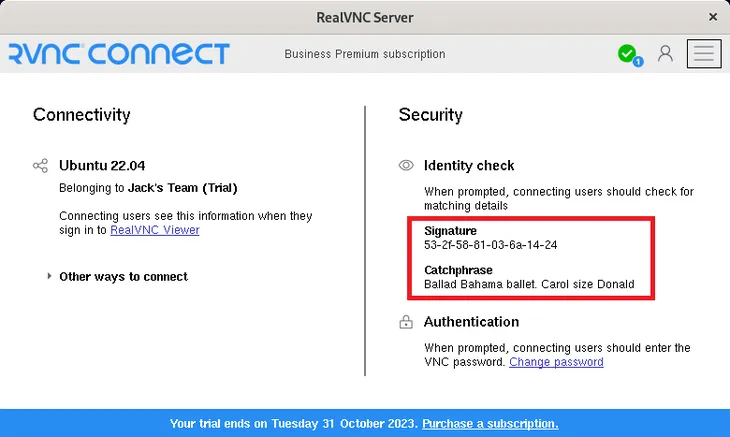
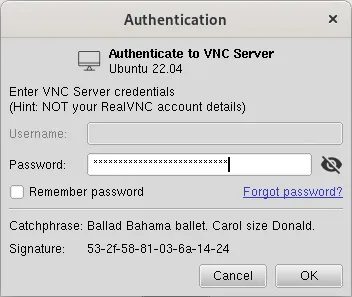
The first time you connect, RealVNC Viewer shows an Identity Check screen with a Catchphrase and Signature. Compare these against the values shown in RealVNC Server on the remote computer to confirm you’re connecting to the right machine. RealVNC Viewer remembers this identity and will warn you if it ever changes on future connections.
Authenticating
Enter the VNC Password you noted during setup. If you chose Unix Password authentication instead, use the username and password of an account on the Linux computer.
Troubleshooting common issues
- Linux computer doesn’t appear in RealVNC Viewer: confirm both devices are signed in to the same RealVNC Connect account and team.
- Can’t authenticate: verify you’re using the VNC Password noted at setup, or valid Unix account credentials.
- Connection blocked on a corporate network: check with IT that outbound access for RealVNC Connect isn’t restricted by a corporate firewall.
Keeping your connection secure
RealVNC Connect encrypts cloud connections end-to-end, and every new connection is verified using the Identity Check described above. For extra protection, turn on two-factor authentication on your RealVNC account and use session permissions to control exactly who can view or control the Linux computer.
Start controlling your Linux computer from Windows with RealVNC Connect
RealVNC Connect offers a free trial with no credit card required, so you can test remote access between your Windows PC and Linux computer before subscribing.
FAQs
Can I access a Linux computer from a Windows PC?
Yes. Install RealVNC Server on the Linux computer and RealVNC Viewer on the Windows PC, then connect using your RealVNC Connect account or a VNC Password.
Does the Linux computer need to be switched on?
Yes – it needs to be powered on and logged in to a graphical desktop session, with RealVNC Server running.
Do I need a static IP address to connect?
No. A cloud connection through your RealVNC Connect account works over the internet without any router or firewall configuration.
Which Linux distributions does RealVNC Server support?
RealVNC Connect supports a range of popular Linux distributions. Check the download page on the RealVNC website for the current list of supported versions.