



A production line pauses, an engineer cannot confirm the state of a controller, and a supplier-support connection has no clear owner. Operations teams feel the disruption first, but delivery commitments, customer confidence, and executive oversight soon follow.
NIST framework manufacturing compliance gives manufacturers a practical way to govern cyber risk across enterprise IT and operational technology (OT). It uses NIST CSF 2.0 to organize risk decisions, applies NIST SP 800-171 Rev. 3 where controlled unclassified information (CUI) is in scope, and tailors controls to plant reliability, performance, and safety requirements.
The difficulty is that factory systems rarely behave like office technology. Legacy controllers, proprietary protocols, engineering workstations, and remote-maintenance routes need controls that protect information without interrupting deterministic processes. A policy does not answer who approved access, which systems carry CUI, or whether recovery will work under production conditions.
This guide explains how NIST CSF 2.0, NIST SP 800-171 Rev. 3, and NIST SP 800-82 Rev. 3 fit together in a manufacturing environment. It covers defining a defensible CUI boundary, mapping controls to plant-floor risk, retaining audit evidence through normal operations, testing response and recovery, and reviewing exceptions before they become an assessment-week problem.
Why does NIST framework manufacturing compliance matter?
NIST framework manufacturing compliance is a coordinated way to manage cyber risk, controlled unclassified information (CUI) obligations, and production continuity across enterprise IT, operational technology (OT), suppliers, and third-party support. It turns compliance from a late audit exercise into daily decisions about assets, access, response readiness, and operating evidence.
That change reflects the pressure on industrial operations. Dragos’s 8th Annual OT Cybersecurity Year in Review documented 1,693 ransomware incidents affecting industrial organizations during 2024, an 87% year-over-year increase (Dragos, 2025). The figure matters because production availability sits alongside information protection. NIST’s Manufacturing Profile aligns cyber-risk reduction with manufacturing goals and practices, providing a roadmap rather than a certification (NIST, 2025).
Consider a shift handover where an engineering workstation connects to a controller and a vendor begins remote maintenance using an account nobody has reviewed. If that connection lacks a defined owner, asset record, and session evidence, teams must first establish what happened before they can contain the disruption. A NIST-aligned factory cyber program makes those answers available before the next production change.
Which pressures make plant-floor assurance urgent?
- Ransomware disruption: Industrial incidents can interrupt production availability as well as place business information at risk. Leaders need to fund recovery planning around the systems that keep a line operating.
- Connected legacy equipment: Older controllers and proprietary protocols often limit patching or modern authentication. Asset owners need approved maintenance windows and compensating controls.
- CUI and contract conditions: Defense work may place CUI protection requirements on systems that process, store, or transmit covered data. Leaders need a defensible scope before committing resources.
- Supplier and remote-maintenance dependencies: External access crosses identity, network, and accountability boundaries. Governance must define who approves access and what evidence remains afterward.
NIST SP 800-82 Rev. 3 states that OT has distinct performance, reliability, and safety requirements from conventional IT (NIST, 2024). Controls therefore need plant-aware design, not a copied office-security policy.
| Legacy audit posture | NIST-aligned operating posture | Executive consequence |
|---|---|---|
| Evidence gathered near the assessment date | Evidence retained through normal control operation | Fewer gaps discovered during audit preparation |
| Corporate assets tracked separately from plant systems | IT, OT, supplier, and CUI flows mapped together | Clearer accountability for production-adjacent risk |
| Remote support treated as an operational exception | Remote sessions governed as a control workflow | Better oversight of third-party access |
| Recovery plans focused on business applications | Recovery tested against production constraints | Restoration decisions reflect operational priorities |
Which NIST frameworks fit a manufacturing operation?
Manufacturers rarely need to select a single NIST publication. NIST CSF 2.0 provides the enterprise structure for cyber-risk management, NIST SP 800-171 defines CUI protection requirements for relevant nonfederal systems, and NIST SP 800-82 guides OT-specific tailoring. CMMC is the Department of Defense program that assesses specified contractor obligations.
Start with the information, contract terms, and systems in scope. A factory may use CSF 2.0 across its wider organization while applying SP 800-171 to a defined CUI boundary that includes engineering data, supplier exchanges, or connected support services. That distinction prevents a broad risk framework from being mistaken for a contract assessment requirement.
What does each framework govern?
NIST CSF 2.0 organizes cybersecurity outcomes under six functions: Govern, Identify, Protect, Detect, Respond, and Recover. The NIST Cybersecurity Framework (CSF) 2.0 presents these functions as outcomes that organizations tailor to their own context (NIST, 2024).
Think of the publications as different documents used to run the same facility: CSF sets the management agenda, SP 800-171 defines CUI safeguards where they apply, and SP 800-82 explains how OT constraints change the work. NIST SP 800-82 Rev. 3 addresses the distinct reliability, performance, and safety requirements of OT while aligning with CSF outcomes (NIST, 2024).
- NIST CSF 2.0: Organizes enterprise and plant-floor cyber-risk decisions.
- NIST SP 800-171 Rev. 3: Defines security requirements for CUI in covered nonfederal systems.
- NIST SP 800-82 Rev. 3: Guides security design for OT and industrial control systems.
- CMMC: Assesses Department of Defense contractor requirements when a solicitation makes them applicable.
NIST SP 800-171 Rev. 3 organizes CUI protection requirements into 17 security requirement families (NIST, 2024). That structure informs a CUI protection program; it does not mean every plant system belongs within the boundary.
| Framework or program | Primary purpose | Trigger | Manufacturing scope | Leadership decision |
|---|---|---|---|---|
| NIST CSF 2.0 | Manage cybersecurity outcomes | Enterprise risk-management need | IT, OT, suppliers, and services | Set target outcomes and ownership |
| NIST SP 800-171 Rev. 3 | Protect CUI | Covered nonfederal CUI systems | Systems handling CUI and relevant connections | Define and justify the CUI boundary |
| NIST SP 800-82 Rev. 3 | Tailor security for OT | OT or industrial control use | Plant networks, controllers, and engineering systems | Approve plant-aware control design |
| CMMC | Assess specified DoD obligations | Applicable solicitation or contract | Contractor systems within the required scope | Confirm obligations with contracting and legal teams |
How should CUI scope shape the compliance boundary?
CUI scope starts with the route information takes through design, engineering, quality, suppliers, cloud services, and managed support. Leaders need to identify where the data is stored, processed, and transmitted, then document the systems and identities that touch it. A properly justified boundary may leave out systems with no CUI access, while connected systems that transmit or handle CUI require documented treatment.
The Department of Defense states that CMMC Level 2 applies to contractors that process, store, or transmit CUI (Cybersecurity Maturity Model Certification Program Final Rule, 2024). DFARS 252.204-7019 requires a current NIST SP 800-171 DoD Assessment for each covered contractor information system relevant to the offer or contract. The assessment is generally no more than three years old unless a solicitation sets a shorter period (U.S. Department of Defense, 2026). Contracting and legal stakeholders must confirm applicability.
How do leaders map controls to plant-floor risks?
)
Control mapping turns framework outcomes into plant-specific decisions about systems, data, identities, network zones, operating limits, and evidence. A policy alone does not establish an operating control. Each control needs an accountable owner, proof of recurring execution, and a documented path for risk-based exceptions.
Asset visibility comes first because every later decision depends on knowing what exists and who operates it. Foundations of Operational Technology Cybersecurity Asset Inventory Guidance advises OT owners to maintain an asset inventory and taxonomy with scope, governance, roles, and validation processes (CISA et al., 2025). Production engineering and operations must shape that inventory alongside IT and security.
- Define the protected scope: Inventory IT, OT, engineering, supplier, remote-access, and CUI-handling assets and data flows. Record the owner and business purpose for each material connection.
- Map risk to a control objective: Translate unauthorized maintenance access or flat networks into access-control, segmentation, logging, and configuration-management outcomes.
- Tailor for safety and availability: Assess compensating controls where patching, scanning, or authentication changes could interrupt real-time operations.
- Design evidence into the workflow: Retain access reviews, configuration records, incident material, test results, and approved exceptions as work occurs.
| Control-mapping component | Plant-floor signal | Decision supported | Common interpretation error |
|---|---|---|---|
| Asset and data-flow scope | Unknown engineering device or supplier connection | Assign ownership and assessment boundary | Treating an inventory as a one-time spreadsheet |
| Risk-to-objective mapping | Remote maintenance crosses network zones | Select controls that address the actual exposure | Starting with a preferred technology |
| OT tailoring | Patch activity could affect a deterministic process | Approve a compensating control and maintenance window | Applying enterprise defaults unchanged |
| Workflow evidence | Access approval lacks reviewable records | Test whether the control operates | Treating policy language as evidence |
This approach gives leaders a usable gap assessment: it shows which weaknesses affect production, which require an exception, and who must decide. The next task is to turn those decisions into a repeatable assurance cycle.
What sequence builds audit-ready manufacturing assurance?
A managed assurance program moves from scope to prioritized remediation, tested response, and recurring evidence review. The sequence avoids a plant-wide rush to deploy controls and gives remote maintenance, supplier pathways, and recovery dependencies the same governance attention as corporate systems.
- Establish scope and decision rights: Confirm the CUI, plant, supplier, and remote-support boundary using asset inventories, data-flow maps, contracts, and network diagrams. Decide who owns IT, OT, and supplier exceptions. The success check is one approved system boundary and a responsibility matrix; leaving vendor pathways outside the scope is the recurring failure.
- Prioritize consequential control gaps: Rank remediation against safety, production effect, CUI exposure, and contractual significance. Decide whether segmentation, identity, logging, or recovery receives initial funding. A funded remediation portfolio with named owners is stronger than a list of easily measured controls.
- Exercise response and recovery: Test containment and restoration under production conditions using the incident plan, backups, escalation routes, and a tabletop scenario. Decide who may isolate systems or suspend remote maintenance. Office-IT-only exercises leave the plant team without a tested decision path.
- Operate continuous evidence review: Keep assessments, access decisions, exceptions, and control tests current through logs, access reviews, configuration records, and supplier attestations. Decide when an exception is accepted, remediated, or retired. A quarterly governance review keeps evidence from becoming an audit-week scramble.
Remote access belongs in this roadmap because it joins identity, maintenance, segmentation, logging, and supplier governance. Emerging Threats in Remote Access Security 2026 found that 47% of 323 IT professionals reported a remote-access incident in the preceding 24 months (RealVNC, 2026). The finding supports focused oversight of remote-support pathways, not an assumption that every environment has the same exposure.
| Program step | Executive output | Evidence of progress |
|---|---|---|
| Establish scope and decision rights | Approved boundary and accountability model | Current asset, data-flow, and responsibility records |
| Prioritize control gaps | Funded remediation decisions | Risk register with named owners and dates |
| Exercise response and recovery | Revised plant-specific runbooks | Exercise findings and documented follow-up |
| Review evidence continuously | Current assurance view | Access reviews, exceptions, and control-test records |
NIST SP 800-82 Rev. 3 guides OT security design by addressing performance, reliability, and safety requirements instead of applying IT practices without tailoring (NIST, 2024). That principle keeps assurance aligned with the operating conditions leaders are responsible for protecting.
The two audit traps that undermine factory controls
Audit readiness fails when documentation becomes a substitute for operating proof. It also fails when security teams assume a control that works in office IT will work unchanged in a production network. Both errors obscure decision rights until a disruption or assessment forces the issue.
- Paper control, absent operating evidence: Policies, system security plans, and assessment narratives may exist, yet access reviews, configuration records, supplier attestations, and incident exercises do not show recurring execution. Boards need evidence that controls operate between formal assessments.
- Uniform control rollout across IT and OT: A mandated control may overlook deterministic processes, unsupported equipment, maintenance windows, safety requirements, or recovery dependencies. Plant engineers need to approve how a control is applied and what compensating measure supports it.
The cost of treating response as a paperwork exercise becomes visible during disruption. Cybersecurity Dive’s report on Johnson Controls stated that the company reported approximately $23 million in response and remediation spending, with a reported total effect of $27 million after a ransomware incident (Cybersecurity Dive, 2024). This is a specific incident, not a benchmark for other manufacturers.
A second example shows why response plans must account for operational continuity. Cybersecurity Dive reported that Tempur Sealy activated incident-response plans to contain a cyberattack that disrupted operations (Cybersecurity Dive, 2023). Leaders should ask whether their records show the control owner, the latest test, the current exception, and the recovery decision for each production-critical service.
What RealVNC Adds to Manufacturing Compliance Evidence
)
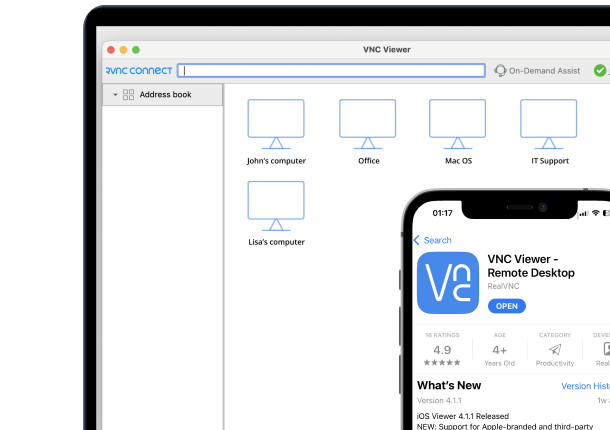
Asset inventories, CUI boundaries, and incident plans lose assurance value when a manufacturer cannot show who entered a production-adjacent system, under which identity and role, and what occurred during a support session. This gap often appears when external technicians, internal engineering teams, and IT administrators use different access routes. Controlled remote support needs the same ownership and evidence standards as any other part of a manufacturing cyber control map.
RealVNC Connect provides a controlled-access component for those workflows. It supports identity assurance, action restrictions, and reviewable session evidence without claiming to replace a manufacturer’s NIST mapping, OT segmentation, or wider incident-response program.
- Multi-factor authentication (MFA) and single sign-on (SSO) with Microsoft Entra ID or Okta: Strengthen identity assurance for internal and third-party remote access.
- Role-based access controls (RBAC) and granular action-based permissions: Limit keyboard, mouse, and file-transfer activity according to the approved support workflow.
- Session monitoring, recording, and detailed audit logs: Provide reviewable records for access investigations, control testing, and audit preparation.
- Code Connect: Uses single-use nine-digit session codes for controlled, time-bound third-party support access.
These capabilities help teams connect a remote-maintenance approval to the session that followed and to the evidence an auditor needs to review. RealVNC Connect therefore supports controlled production access alongside the manufacturer’s broader assurance program. It does not independently deliver NIST, CMMC, or certification compliance.
Final Words
NIST framework manufacturing compliance becomes credible when the framework choice reflects the systems and information your business actually relies on. Use NIST CSF 2.0 to organize enterprise and plant-floor risk. Apply NIST SP 800-171 where controlled unclassified information (CUI) creates a contractual obligation, and tailor controls through NIST SP 800-82 Rev. 3 so production safety, reliability, and performance remain part of every decision. From there, asset ownership, risk-based exceptions, tested recovery plans, and recurring evidence reviews turn a point-in-time assessment into an operating discipline.
That discipline must extend to remote maintenance. When internal engineers, IT teams, and external technicians reach production-adjacent systems through different routes, you need a clear record of who received access, what they were permitted to do, and what occurred during the session. RealVNC Connect supports that record through multi-factor authentication (MFA) and single sign-on (SSO), role-based access controls with granular action permissions, plus session recording and detailed audit logs. These controls reinforce audit-ready support workflows while your wider program governs CUI scope, OT segmentation, and incident response. Start a free trial of RealVNC Connect to establish controlled, auditable remote-support workflows alongside your manufacturing compliance program.
FAQs
These answers distinguish the NIST frameworks, contract obligations, OT guidance, and evidence requirements that matter to manufacturers.
What is the right framework model for factory cyber risk?
NIST framework manufacturing compliance is a layered approach: NIST CSF 2.0 structures enterprise and OT risk management, while NIST SP 800-171 and CMMC apply when CUI and defense-contract conditions create specific obligations. The NIST Manufacturing Profile tailors CSF outcomes to manufacturing priorities and practices (NIST, 2025), while SP 800-82 Rev. 3 guides OT-specific design.
What is the difference between NIST CSF and CMMC?
NIST CSF is a flexible risk-management framework, while CMMC is a Department of Defense assessment and certification program for applicable contractors. CSF 2.0 helps organize cybersecurity outcomes across an enterprise; CMMC Level 2 requirements apply to contractors that process, store, or transmit CUI (U.S. Department of Defense, 2024). Contract terms and solicitation language determine whether CMMC applies.
Which NIST guidance applies to OT and CUI systems?
NIST SP 800-82 Rev. 3 applies to OT design and tailoring, while NIST SP 800-171 Rev. 3 addresses CUI protection in covered nonfederal systems. NIST SP 800-171 Rev. 3 organizes its requirements into 17 security requirement families (NIST, 2024). Manufacturers need a documented boundary where CUI flows through production, engineering, supplier, or support environments.
Is NIST SP 800-53 a compliance standard?
NIST SP 800-53 is a catalog of security and privacy controls, not a universal compliance certification for every manufacturer. It may inform a control program when a contract, sector requirement, or organizational risk decision makes it relevant, but the applicable obligation must come from the governing contract or regulation. Do not treat a control catalog as proof that a plant meets CMMC or another required assessment.
Do manufacturers need NIST certification?
Manufacturers do not generally receive a universal NIST certification because NIST frameworks and publications serve different risk-management and control purposes. NIST’s CSF 2.0 guidance describes a flexible framework rather than a fixed certification checklist (NIST, 2024). A manufacturer may need an assessment or certification when a contract, such as an applicable CMMC requirement, explicitly requires it.
How does RealVNC support controlled maintenance workflows?
RealVNC Connect supports controlled maintenance through multi-factor authentication (MFA), single sign-on (SSO) with Microsoft Entra ID or Okta, role-based access controls, and granular action-based permissions. Session monitoring, recording, and detailed audit logs provide reviewable evidence of remote activity, while Code Connect supports time-bound third-party sessions. These features strengthen access-governance evidence but do not independently certify NIST or CMMC compliance.