


A remote IT team hits the same snag every week: a technician needs a past decision, a known workaround, or the owner of a system, and the answer lives in someone’s chat history or memory. Work pauses as the team searches or waits for a reply.
Knowledge management in IT teams is the disciplined practice of capturing, organizing, reviewing, and sharing operational know-how so people can find reliable answers when they need them. Think of it as a shared service manual that stays current, rather than a collection of personal notebooks spread across the company.
This article explains what an effective program needs, from documenting tacit expertise and assigning content owners to measuring search success, onboarding progress, and reduced repeat work. The article covers the governance habits that keep technical knowledge accurate as teams, systems, and working locations change.
Why Does Knowledge Management in IT Teams Matter Now?
The first warning rarely arrives as a documentation complaint. It arrives when a service owner needs the reasoning behind a past change, an incident lead cannot locate a validated recovery step, or a remote engineer waits for the one person who remembers how a system behaves.
Knowledge management in IT teams governs how technical context is captured, organized, reviewed, and used, so distributed staff can make reliable decisions without relying on individual experts. It protects both the reasoning behind operational work and the procedure itself, which matters when teams work across time zones and service boundaries.
The cost begins as search friction, then spreads into delayed handoffs and repeated investigations. As directional vendor-survey context, Slite’s Enterprise Search Survey Report 2026 reported that workers spend an average of 3.2 hours a week searching for information (Slite, 2026). The figure is not a universal benchmark, but it shows why fragmented context deserves leadership attention.
Hybrid work makes informal knowledge transfer less dependable. Chat threads, tickets, code repositories, and personal notes each hold part of the story, yet none necessarily establishes the authoritative record. A durable operating model must preserve critical context, make it discoverable, and show whether people used current guidance when it mattered.
When Do IT Teams Need a Knowledge Strategy?
IT teams need a knowledge strategy when critical decisions, recovery steps, and system rationale are difficult to locate, validate, or transfer across people and time zones. The issue has moved beyond scattered files when experts become the default search engine for routine work and service decisions depend on memory.
The informal “ask the expert” model works for small, stable teams. It starts to strain when an incident crosses teams, a new hire needs system context, or a senior engineer changes roles. GitLab’s Guide to All-Remote makes the practical principle plain: “Writing down and recording knowledge (over verbal explanations)” supports work that cannot wait for a colleague to come online (GitLab, accessed 2025).
A strategy does not always require replacing a repository. Sometimes the missing element is a service owner, a review trigger, or an agreed place to record decisions. Diagnose the operating gap before buying more tooling.
Which signals show that context is becoming a risk?
The signals are visible in daily delivery. They show that technical context is no longer transferring reliably between people, systems, and shifts.
- Repeated expert escalation: Routine questions repeatedly reach the same specialist.
- Slow incident reconstruction: Teams rebuild prior decisions during an active event.
- Long onboarding dependency: New staff need constant guidance for common tasks.
- Untrusted search results: People find several answers but cannot identify the current one.
| Operational signal | Underlying knowledge failure | Executive consequence |
|---|---|---|
| Repeated escalation | Expertise remains with one person | Capacity becomes constrained by interruption |
| Slow reconstruction | Decision rationale is missing | Recovery work takes longer to coordinate |
| Dependent onboarding | Runbooks lack context or ownership | Experienced staff carry avoidable coaching load |
| Untrusted search | Versions and sources are unclear | Teams revert to chat and informal approval |
What Framework Governs Technical Knowledge?
)
An effective framework governs the full knowledge lifecycle, from identifying critical expertise to confirming that users can find and apply current guidance. This article’s Technical Knowledge Continuity Framework gives leaders six connected decisions: what matters, how it is captured, who governs it, and whether it works in operations.
Think of a knowledge base as a service map during an incident. A map is of little use if it lacks a named owner, a revision date, and trusted routes to the systems a team needs. The UK Government Office for Science and Government Office for Technology Transfer’s Knowledge Asset Management Strategies Checklist states: “State who owns the KAs generated by your organisation” (2024). Ownership turns stored material into an accountable operational asset.
- Criticality – identify context whose loss affects services, security obligations, compliance duties, or customer commitments.
- Capture – turn tacit expertise and operational lessons into reusable records.
- Classification – apply taxonomy, service context, ownership, and sensitivity labels.
- Control – govern access, approval rights, and authoritative-source status.
- Currency – set review triggers, versioning, and archival rules.
- Consumption – measure whether teams find and apply trusted guidance in work.
| Framework dimension | Leadership question | Evidence artifact | Operating owner | Common misread |
|---|---|---|---|---|
| Criticality | Which knowledge affects essential services? | Service context record | Service owner | Treating all documents equally |
| Capture | What expertise exists only in practice? | Decision record or runbook | Domain steward | Recording steps without rationale |
| Classification | How will users locate and assess it? | Taxonomy and labels | Knowledge steward | Assuming folders create meaning |
| Control | Who may view or approve it? | Access and approval rules | Service owner | Equating availability with authority |
| Currency | When is review required? | Version history and review date | Content owner | Leaving updates to goodwill |
| Consumption | Does guidance change work? | Search and reuse evidence | Team lead | Counting pages instead of use |
Who Owns Knowledge Across Its Lifecycle?
Executive sponsors set direction and resolve cross-team priorities. Domain stewards own the accuracy of technical assets, and platform administrators maintain discovery, permissions, and workflow rules. Contributors record the decisions and lessons created in daily delivery.
Ownership means lifecycle accountability, not possession. The UK Central Digital & Data Office’s Data ownership model explains that ownership formalises the roles responsible for management throughout an asset’s life cycle (2023). International Institute of Business Analysis guidance places documentation updates inside delivery work, including the Definition of Done. A central knowledge manager coordinates standards and exceptions; that role should not become the sole author of engineering reality.
- Executive sponsor: owns strategic direction and decision rights.
- Domain steward: validates service-specific context and review dates.
- Platform administrator: manages access, structure, and publishing workflow.
- Contributor: records decisions, changes, and lessons when work is current.
How Should Teams Capture Tacit Expertise?
Tacit expertise is the judgment behind a procedure: the failure signals an experienced engineer notices, the trade-off behind an architecture choice, and the boundary where escalation becomes necessary. A runbook records what to do; a decision record explains why the team chose that route.
Capture this context through expert interviews, paired troubleshooting, shift handoffs, and post-incident reviews. As a bounded example, Construction Management reported that Heathrow Airport/Balfour Beatty Vinci JV used structured, time-stamped operational records to improve weekly plan adherence (2026). The setting differs from IT operations, but the principle transfers: record context promptly, then assign someone to validate it.
- Decision rationale: the constraint, option considered, and agreed choice.
- Failure signals: the observable conditions that indicate a known problem.
- Validated recovery steps: the sequence that restored normal service.
- Escalation boundaries: when the procedure ends and specialist judgment begins.
Which Measures Prove Knowledge Is Working?
Leaders should measure knowledge performance through findability, trust, freshness, transferability, and reuse rather than content volume alone. The useful question is whether a person can reach a validated answer quickly enough to complete work safely, especially during onboarding or service recovery.
Page views and document counts often reward publication rather than usefulness. Accountability is the starting point: Docsio’s Internal Knowledge Base: The Practical 2026 Guide recommends that every category have a directly responsible individual who keeps it accurate (Docsio, 2026). That ownership makes freshness measurable instead of aspirational.
- Search success rate – the share of searches that produce a useful, trusted result.
- Time to trusted answer – elapsed time from question to validated operational guidance.
- Critical-content freshness – the share of priority assets reviewed by their due date.
- Onboarding independence – time until new hires complete common tasks without repeated intervention.
- Incident knowledge reuse – use of prior recovery guidance or decision records in later events.
| Measure | What it signals | Leadership decision supported | Interpretation risk |
|---|---|---|---|
| Search success rate | Discovery quality | Improve taxonomy or search coverage | A result may be found but unusable |
| Time to trusted answer | Operational friction | Prioritise critical knowledge gaps | Speed without validation creates error |
| Content freshness | Governance discipline | Assign review capacity | Equal review cycles ignore criticality |
| Onboarding independence | Transfer quality | Improve learning paths | Task complexity varies by role |
| Incident reuse | Learning retention | Strengthen review practices | Reuse must remain context-aware |
Track trends by service criticality and team. A change in a payment service runbook carries a different consequence from a change in a local tooling guide, so one universal threshold obscures the decision leaders need to make.
How Should IT Leaders Balance Knowledge Trade-Offs?
The right operating model balances consistency with contribution speed. Regulated enterprises may need stronger traceability, and product engineering groups may need lightweight routes for recording decisions; both still need clear ownership and a way to identify authoritative guidance.
Centralisation works best when it establishes common rules without forcing every domain into identical language. Stravito’s enterprise knowledge-management guidance links central repositories, permission controls, and planned knowledge transfer to continuity for sensitive enterprise information (2024). The repository matters, but governance determines whether people trust what they find.
- Set a minimum common taxonomy and allow domain-specific extensions. Teams need shared fields for service, owner, sensitivity, and review date.
- Classify by service criticality and sensitivity rather than treating every technical record the same. Permission rules must match the information and the operational role.
- Embed update work in operational workflows instead of relying on periodic documentation campaigns. Record changes when the decision, incident, or handoff happens.
- Use AI retrieval as a discovery layer, not an authority layer. Answers need visible sources, dates, and owners so users can assess whether the result remains current.
The trade-off is practical: more controls can slow contribution, but fewer controls can leave teams unable to distinguish draft guidance from a validated record. Define the minimum evidence required for each knowledge class, then keep contribution simple inside those boundaries.
Where Do Knowledge Programs Commonly Break Down?
)
Knowledge programs usually decline through predictable operating-model gaps, rather than employee reluctance to share. A launch creates initial enthusiasm, but trust falls when content has no owner, decisions remain in chat, or access rules do not reflect sensitivity.
The UK Government knowledge-asset checklist requires an accountable owner to keep the strategy current (2024). Without that role, a repository becomes a dumping ground and people return to asking whoever happens to be available.
- Unowned content: review dates lapse and conflicting guidance accumulates.
- Chat-only decisions: rationale disappears into unsearchable conversations.
- Unverified AI answers: stale material gains an appearance of authority.
- Overly broad access: sensitive operational context reaches people without a work need.
| Failure pattern | Operational effect | Governance response |
|---|---|---|
| Unowned content | Teams cannot identify the current record | Assign a domain steward and review trigger |
| Chat-only decisions | Context is lost after the immediate event | Publish a decision record in the agreed location |
| Unverified AI answers | Users act on uncertain guidance | Display source, owner, and currency details |
| Broad access | Sensitive context spreads unnecessarily | Apply role-based permissions by knowledge class |
The remedy is rarely a content-cleanup campaign alone. Put ownership, publishing rules, review events, and access decisions into the workflows where technical knowledge is created.
How RealVNC Closes the Knowledge Continuity Gap
Knowledge continuity is tested in the adjacent workflows where teams remediate systems, investigate incidents, and hand work between support staff. A current runbook has limited value if the organisation cannot show who reached a critical device, what permissions applied, or what occurred during a remote support session. Those records supply the context that incident reviews and future support decisions depend on.
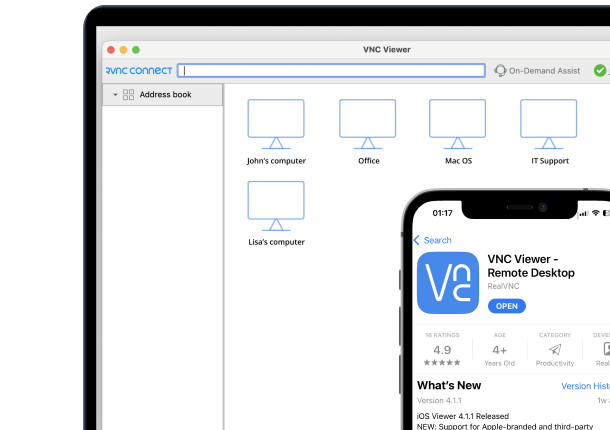
RealVNC Connect supports controlled remote-access workflows through four outcome-led capabilities:
- Multi-factor authentication (MFA) and single sign-on (SSO) with Microsoft Entra ID and Okta align remote support access with established identity controls.
- Role-based access controls (RBAC) and granular action-based permissions limit keyboard, mouse, and file-transfer permissions according to support responsibilities.
- Session monitoring, session recording, and detailed audit logs provide records that inform incident reviews, knowledge capture, and control testing.
- Cloud plus Direct deployment options accommodate different network, connectivity, and deployment requirements.
This does not replace an enterprise knowledge system or its content owners. It strengthens the controlled remediation activity around that system: access decisions are governed, session evidence is available for review, and teams have a more reliable record from which to update procedures and preserve operational context.
Final Words
Knowledge management in IT teams endures through ownership, review, and trusted use.
MFA, RBAC, and session records reinforce controlled support evidence. Start a free trial of RealVNC Connect to bring controlled, auditable remote access into the support and remediation workflows that sustain trusted operational knowledge.
FAQs
What is a technical knowledge continuity framework?
Knowledge management in IT teams is most durable when a continuity framework identifies critical expertise, preserves it, governs access, and tests whether people can use it. This article’s model covers Criticality, Capture, Classification, Control, Currency, and Consumption.
What is the difference between a wiki and a governed knowledge system?
A wiki stores information. A governed knowledge system adds ownership, taxonomy, verification, review triggers, access rules, and measures of use. Content becomes operationally trusted when teams know which version is authoritative and who maintains it.
Which governance controls protect sensitive technical context?
Permission-aware access, accountable ownership, review dates, and auditable workflows protect technical context according to its sensitivity and service criticality. Stravito’s enterprise knowledge-management guidance highlights centralized repositories and planned knowledge transfer during onboarding and offboarding.
What are the main types of knowledge management?
The main types are explicit knowledge, tacit knowledge, and embedded knowledge. Explicit knowledge appears in runbooks and records; tacit knowledge sits in experience and judgment; embedded knowledge lives in processes and systems.
How does RealVNC support knowledge continuity workflows?
RealVNC Connect supports controlled remote support through multi-factor authentication, single sign-on, role-based access controls, granular permissions, session recording, and detailed audit logs. These capabilities help teams preserve evidence from remediation and support work without replacing an enterprise knowledge system.