


The renewal invoice arrives. Cloud usage has climbed again, and nobody can say which services still earn their place. Across infrastructure, software subscriptions, and support operations, waste builds quietly. Finance asks IT to cut spend without disrupting the work the business depends on.
IT cost reduction strategies are a continuous way to remove unnecessary technology spend and protect service quality, security, and the capacity to grow. They begin with visibility: you need to know what each resource costs, who uses it, and which business outcome it supports before changing budgets or contracts.
This article explains how to find waste in cloud capacity and software licenses, consolidate overlapping tools, automate repeatable support work, and measure savings alongside service outcomes. These governance practices keep one-off reductions from returning at the next renewal cycle.
What Makes IT Cost Reduction Strategic?
Strategic cost reduction removes spending that no longer serves the business. It protects the services that carry revenue, compliance duties, and customer experience. The decision is not whether a line item looks large. It is whether the capability behind it still earns its cost and whether removing it would create a larger operational bill elsewhere.
That requires shared visibility. When finance sees one invoice, engineering sees consumption data, and procurement sees a renewal date, no one has the full picture. It is like a household receiving separate utility bills with no combined statement: each bill may look reasonable, yet the total stays unclear. The FinOps Foundation’s State of FinOps 2024 reported that 82% of organizations had adopted FinOps in 2024, showing how widely organizations are formalizing this cross-team work.
The pressures changing technology spend
- Cloud consumption volatility: Usage-based services can rise before leaders connect the increase to a product, team, or customer demand.
- SaaS subscription proliferation: Departmental buying often leaves overlapping tools, dormant seats, and unclear renewal owners.
- AI and automation investment: New workloads need cost attribution before leaders can judge the value they create.
- Persistent legacy maintenance: Older systems may remain necessary, but their support burden needs a conscious business decision.
| Approach | Primary decision basis | Likely organizational effect |
|---|---|---|
| Across-the-board reduction | Budget target | Service owners protect local priorities and hidden costs emerge later |
| Invoice review | Reported spend | Leaders see expenditure but miss utilization and dependency evidence |
| Procurement-led renegotiation | Contract price | Terms improve, while redundant demand can remain unchanged |
| Cost-to-value management | Usage, service criticality, and business outcome | Teams retire waste and preserve capabilities that matter |
Timothy Jenkins, Principal, Advisory, KPMG US, wrote in Taking Control of Cloud Costs: The FinOps Imperative: “While operating in the cloud may not always reduce IT costs, FinOps provides the governance, tools, and best practices that organizations need to control those costs, maximize the value of cloud investments, and align spending with business priorities.” That is the practical test: spend less where demand has disappeared, then protect capacity that keeps the business moving.
Which Framework Makes Savings Last?
Savings last when leaders review spending through the same four questions every quarter: can we see it, does it create value, who owns the decision, and when will we revisit it? Visibility, Value, Ownership, and Renewal turn an efficiency program into a repeatable management routine rather than a one-time response to budget pressure.
The operating model needs executive backing. Spending choices now cross cloud, software, private infrastructure, and AI services. The Finout State of FinOps 2026 Report found that 78% of FinOps practices report into the CTO or CIO organization in 2026. That reporting line reflects where the trade-offs sit: leaders must weigh financial discipline against service continuity and technical direction.
- Visibility: Bring cloud, SaaS, infrastructure, support, and contract data into one decision view.
- Value: Test each cost against use, service importance, customer effect, and replacement effort.
- Ownership: Give a named leader authority to keep, change, or retire material commitments.
- Renewal: Revisit demand and contract terms before commercial deadlines force a rushed choice.
| Framework dimension | Executive question | Evidence source | Decision owner | Common misread |
|---|---|---|---|---|
| Visibility | What do we pay for across all technology categories? | Invoices, usage data, asset records | CIO finance partner | A complete invoice list proves efficient use |
| Value | What outcome does this service produce? | Adoption, service data, dependency mapping | Service owner | Low use always means low value |
| Ownership | Who can change this commitment? | Decision-rights register | Business and IT owner | Invoice approval equals accountability |
| Renewal | When must demand be reassessed? | Contract calendar and forecast | Procurement with service owner | Renewal is only a price negotiation |
The FinOps Foundation’s State of FinOps 2026 Report shows that FinOps practice now extends across AI, SaaS, licensing, private cloud, and data center spending. The framework gives those broader conversations a common language.
How does Visibility and Value guide priorities?
Visibility brings cloud, SaaS, infrastructure, telecom, support, and vendor-contract costs into a common view. Inventory data alone does not tell you whether a cost is wasteful; a little-used service may still protect a regulated process or provide continuity-critical recovery capacity.
Value testing asks what would happen if the service changed. Assess utilization, business dependency, risk exposure, and switching cost together. A service with low adoption and no identified owner deserves scrutiny, and a low-volume customer-facing control may deserve protection.
Who owns Ownership and Renewal decisions?
Ownership means accountability for business value, not merely permission to approve an invoice. Technology owners, finance partners, procurement, security, and business-unit leaders need explicit decision rights when a commitment affects material cost, service delivery, or compliance obligations.
A shared services model reduces duplicated procurement and unmanaged departmental subscriptions by making demand visible before teams buy separately. Start renewal reviews early enough to compare actual usage, future demand, service criticality, and vendor lock-in exposure. A renewal without those facts is a deadline, not a decision.
How Do IT Cost Reduction Strategies Prioritize?
)
Effective it cost reduction strategies prioritize waste that is reversible, well evidenced, and unlikely to weaken a critical service. Start with inactive capacity and overlapping demand, then move toward architectural or contract decisions that need deeper dependency analysis.
This sequence prevents a familiar failure: retiring a visible cost only to recreate it through emergency purchases, manual work, or reduced service quality. The evidence must be strong enough for a service owner to explain why an action is safe, what changes for users, and how the result will be monitored.
- Create a spend baseline: Combine cloud, SaaS, infrastructure, telecom, support, and contract data. Match each material cost to an owner, service, and business purpose.
- Classify service criticality: Separate revenue, regulated, customer-facing, internal, and non-production workloads. This prevents low-cost but continuity-critical controls from being swept into broad reductions.
- Reclaim unused capacity: Address inactive SaaS seats, idle environments, unattached storage, obsolete assets, and redundant subscriptions. Help Net Security reported in 2023 that 53% of SaaS licenses remained unused, which makes license evidence a sensible early target.
- Right-size and consolidate: Match resource capacity to demand and retire overlapping tools with no differentiated business function. Confirm operational dependencies before changing a shared platform.
- Automate repeatable controls: Apply automated provisioning, shutdown policies, tagging checks, and lifecycle workflows only after ownership data is reliable. Otherwise, automation repeats confusion faster.
| Action | Evidence needed | Strategic signal | Common error |
|---|---|---|---|
| Reclaim licenses | Login, role, and assignment records | No active user or justified future need | Removing a seat needed for seasonal work |
| Retire idle resources | Utilization, dependency, and recovery data | Sustained inactivity with no service owner | Treating a short quiet period as abandonment |
| Right-size capacity | Demand trend and performance data | Consistent excess capacity | Sizing from a single low-usage week |
| Consolidate tools | Usage, capability overlap, and migration effort | No differentiated function | Comparing license price without transition cost |
| Automate controls | Clean tags, approvals, and exception routes | Repetitive decision with clear rules | Applying a policy to unclassified services |
The Intel case study, Achieving True Cost Efficiency in the Cloud, describes HCLTech identifying 34% cloud cost-saving potential and 30% immediate savings opportunities through cloud-resource optimization in 2024. Treat that as an illustrative case, not a benchmark. Directional improvement in waste, forecast variance, and service performance matters more than chasing one savings number.
Which Trade-Offs Protect IT Value?
Every cost decision trades one form of value for another. A commitment discount can reduce unit price but limit flexibility; vendor consolidation can reduce administration but increase dependency. Leaders need to make those choices against service criticality and stated risk tolerance, rather than treating all reductions as equal.
Automation deserves the same discipline. The Stonebranch 2026 Global State of IT Automation Report found that 64% of respondents invest in cloud automation and 49% invest in infrastructure automation. Investment signals intent, not a guaranteed outcome; results depend on sound data, clear approval rules, and workable exception handling.
- Commitment discounts versus demand flexibility: Assess reserved-capacity planning against workload stability and growth uncertainty. Stable, understood demand may justify a commitment; uncertain demand needs room to change.
- Vendor consolidation versus concentration risk: Evaluate integration effort, switching cost, security requirements, and exit options before reducing suppliers.
- Automation scale versus control quality: Connect workflow automation rollout to clean data, approval rules, exception handling, and service-level outcomes.
- Asset-life extension versus maintenance drag: Compare deferred refresh spending with security support, energy use, repair burden, and employee productivity.
| Decision tension | When the trade-off favors optimization | Implication |
|---|---|---|
| Commitment discount versus flexibility | Demand is stable and a service owner accepts the term | Review utilization throughout the commitment period |
| Consolidation versus concentration | Capability overlap is clear and exit terms remain workable | Document continuity and migration options |
| Automation versus control quality | Rules and exceptions are known and measurable | Monitor outcomes, not only task volume |
| Asset extension versus refresh | Support remains available and operating burden stays acceptable | Reassess before maintenance becomes disruptive |
Hypothetical: an automated non-production shutdown policy stops development environments outside working hours, but excludes approved testing windows and critical release periods. That design reduces idle consumption without interrupting delivery. PwC’s Technology-enabled CFO: The FinOps Transformation Journey frames FinOps maturity as a progression from basic tracking to automated monitoring and then advanced automation in 2025. Build controls in that order.
Where Do Cost Programs Commonly Fail?
Cost programs usually fail when leaders act on incomplete context. A reduction looks sound in a spreadsheet, but the affected service has undocumented dependencies, unclear ownership, or a compliance duty that surfaces only after the change.
The FinOps Foundation’s State of FinOps 2024 reported that 93% of respondents said FinOps improved cloud cost optimization in 2024. The finding does not prove that any one practice produces savings. It does show why organizations invest in a structured model rather than relying on isolated invoice reviews.
- Blind reductions: Removing a cost without understanding service dependencies, replacement effort, or compliance duties.
- Fragmented data: Reconciling invoices but not usage, ownership, asset-lifecycle, or service-criticality evidence.
- Premature automation: Automating provisioning, retirement, or rightsizing before tags, approvals, and exception paths are dependable.
- Savings without controls: Reporting a reduction without monitoring re-spend, service quality, security events, or budget variance.
Set a quarterly governance cadence to review exceptions, reassess demand, and document where released budget will be reinvested.
How RealVNC Closes the IT Cost Reduction Gap
)
A cost-governance plan loses value when the support work behind it remains inconsistent. During consolidation, migration, and remediation, distributed IT teams still need to reach endpoints and critical systems without adding unmanaged access, travel overhead, or weak evidence of who did what. Clear ownership depends on clear operational records.
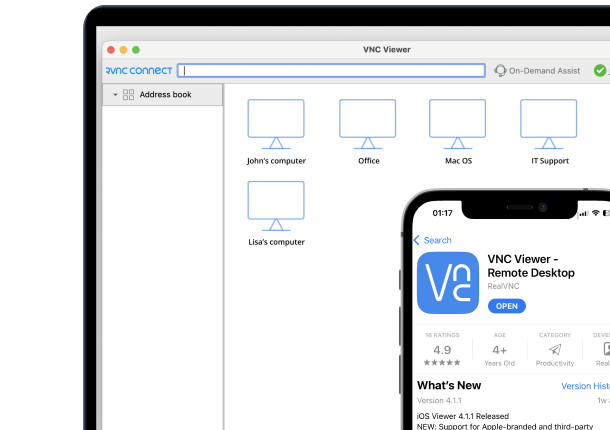
RealVNC Connect supports controlled remote operations through role-based access controls (RBAC) and granular action-based permissions, so administrators can limit what each user may do in a remote session. Multi-factor authentication (MFA) and single sign-on (SSO) with Microsoft Entra ID and Okta align access with enterprise identity governance. Session monitoring, session recording, and detailed audit logs give authorized administrators evidence of support activity. Cloud + Direct deployment options let organizations align remote-access architecture with network, data-residency, and operating requirements.
- Control access: Apply least-privilege permissions to remote support and remediation work.
- Document support activity: Retain session evidence for review, training, and compliance assurance.
- Align deployment to operating constraints: Choose Cloud or Direct deployment to fit organizational requirements.
RealVNC Connect does not replace FinOps, procurement, or asset-management processes. It supports the adjacent workflow where disciplined access matters: maintaining distributed operations as leaders consolidate services, review renewals, and retire avoidable technology spend. The result is lower operational friction, clearer decision rights, and auditable access discipline when change is underway.
Final Words
IT cost reduction strategies hold when Visibility, Value, Ownership, and Renewal guide each decision, so waste leaves without weakening mission-critical services.
RealVNC Connect adds controlled remote support through RBAC, MFA and SSO, and detailed audit logs. Arrange a meeting to map audit-ready access to your cost-governance work.
FAQ
What is a FinOps framework for enterprise IT?
IT cost reduction strategies use a FinOps framework to connect financial accountability with engineering decisions, operational data, and business value. The model covers cloud, SaaS, licensing, infrastructure, data platforms, and AI workloads rather than reviewing invoices alone.
What is the difference between cost management and optimization?
Cost management monitors, allocates, forecasts, and reports technology spending. Optimization uses that information to remove waste, right-size capacity, improve contract terms, and redirect budget toward higher-value outcomes.
What cost reduction strategies work best in procurement?
The strongest procurement strategies combine usage evidence, service criticality, renewal timing, and switching costs before negotiations begin. Vendor consolidation and contract changes work best when they reduce overlapping demand without creating concentration or continuity risk.
What IT costs should leaders protect in a downturn?
Leaders should protect security controls, compliance-critical services, resilience capabilities, customer-facing reliability, and initiatives with validated strategic value. Assess service criticality, risk exposure, and replacement cost before reducing any commitment.
How does RealVNC support cost-conscious IT operations?
RealVNC Connect supports cost-conscious operations with role-based access controls, multi-factor authentication, single sign-on with Microsoft Entra ID and Okta, and detailed session audit evidence. These controls help govern remote remediation while maintaining access accountability across distributed IT teams.