



A packaging line slows during a shift, orders begin to queue, and the answer is rarely visible from one machine screen. Operations loses throughput, maintenance works from partial signals, and leaders need to decide whether the constraint comes from equipment condition, product mix, or a recent process change.
A digital twin in manufacturing is a fit-for-purpose digital representation of an observable machine, process, or production line that stays synchronized with its physical counterpart. It gives teams a current view of operating conditions so they can test assumptions, examine variance, and inform defined production decisions with data that reflects the line as it runs.
The distinction is practical. A digital model helps teams test a proposed layout or control logic before deployment, while a digital shadow receives live information for observation. A production twin adds synchronization, model validation, and accountable decision use. Think of it as moving from a printed route map to a live traffic display that shows where the route no longer matches conditions on the road.
This article explains how twins differ from models and shadows, which production decisions justify the investment, and how to measure whether connected data improves downtime decisions. It also sets out a phased roadmap for data contracts, validation gates, and shared decision rights across IT, operational technology, engineering, quality, and operations. Finally, it examines model drift, context loss, and reviewed intervention boundaries that keep a factory representation credible after the pilot ends.
What makes a factory twin more than a simulation?
A production twin earns the name when it stays synchronized with an observable manufacturing element and informs an accountable operating decision. A static model supports design work, while a one-way shadow supports observation; neither carries the same responsibility for live production choices.
Dr. Guodong Shao, Computer Scientist at the National Institute of Standards and Technology, wrote in the Winter Simulation Conference proceedings. “According to the definition in ISO 23247, a digital twin in manufacturing is a ‘fit for purpose digital representation of an observable manufacturing element with synchronization between the element and its digital representation’.” Synchronization changes the leadership question from whether a plant has a visual replica to whether its data, model, and decision owner are trustworthy.
A packaging-line simulation resembles rehearsing a shift change from a fixed plan. A synchronized twin updates that rehearsal as conveyor speed, stoppages, and product mix change during the shift. Cloud computing and Internet of Things (IoT) foundations are widespread: Deloitte’s Digital Twin Strategy reports that 84% of respondents use cloud computing and 72% use IoT sensors, devices, and platforms (Deloitte, 2025). Those foundations support data ingestion; they do not prove model validity.
- Digital model: A static representation used to design, test, or explain a machine, layout, or process.
- Digital shadow: A representation that receives operational data for monitoring, without a synchronized feedback relationship.
- Production twin: A fit-for-purpose representation whose synchronized data and validated behavior inform defined operating decisions.
| Representation type | Data direction | Operational purpose | Leadership implication |
|---|---|---|---|
| Digital model | No live connection | Design and predeployment testing | Approve against planned assumptions |
| Digital shadow | Physical system to representation | Monitoring and analysis | Review current conditions without operational feedback |
| Production twin | Synchronized physical and digital relationship | Live analysis and governed decisions | Assign ownership for data quality, validation, and intervention |
The architectural choice should match the decision at hand. Simulation remains the right answer when teams need to test a proposed change before equipment enters service.
Which decisions justify a production digital twin?
A production digital twin belongs where acting earlier, or acting with better context, changes a material production decision. The strongest starting points are bounded use cases with named owners, measurable operating consequences, and a clear route from insight to reviewed action.
Leaders should assess four dimensions before funding broader coverage. The aim is not a plant replica for its own sake. It is a dependable way to decide whether to adjust a process, schedule maintenance, investigate quality variation, or validate automation logic.
- Decision value: Define the continuity, quality, safety, or economic consequence of a better decision.
- System observability: Confirm that the required signals are available, contextualized, and owned.
- Intervention safety: Set review and authorization boundaries before recommendations influence equipment.
- Scale pathway: Reuse interfaces, validation methods, and decision rights where they fit another line or site.
| Framework dimension | Leadership test | Evidence required | Typical use case | Common misread |
|---|---|---|---|---|
| Decision value | Does earlier insight change a material choice? | Baseline and accountable decision owner | Maintenance prioritization | Any visible metric justifies a twin |
| System observability | Do signals explain process conditions? | Data lineage and operating context | Quality analysis | Available data is automatically fit for purpose |
| Intervention safety | Who reviews action before production changes? | Change-control path and authority | Flow adjustment | A recommendation should control equipment directly |
| Scale pathway | Which patterns transfer without copying the model? | Shared interfaces and validation criteria | Multi-site commissioning | Scale means modeling every asset identically |
How do decision value and observability align?
Decision value measures what improves when a team acts with greater confidence. System observability measures whether the team has enough timely, contextualized signals to represent the process credibly. A maintenance use case may carry strong decision value, yet remain unsuitable if asset-state data lacks maintenance history or product context.
NIST’s Digital Twins for Advanced Manufacturing program places integration across machines, processes, and lifecycle stages alongside verification, validation, and uncertainty quantification (NIST, accessed 2026). In practice, that means teams need to know where a signal came from, what it represents, and where the model stops being reliable. Data availability alone is not data fitness.
Can the use case scale without copying the pilot?
Scale comes from reusable governance patterns, interfaces, validation criteria, and ownership models. It does not require one model to cover every asset class. Virtual commissioning may reuse controller-test practices across product families, while predictive maintenance needs asset-specific behavior and different response paths.
Cleveland Systems Engineering’s Siemens case study reports a 50% reduction in design and commissioning time from a machine-simulation and virtual-commissioning use case (Siemens, 2023). That result is specific to the case, not a benchmark for every initiative. A 2026 Sustainability review reports that 84% of industrial implementations lack standardized validation frameworks, which makes expansion without model assurance difficult (Sustainability, 2026).
The reusable asset is the decision pattern: what data enters, how the model is checked, who reviews the result, and what records remain after action. That pattern gives a pilot a credible route beyond one line.
How does a digital twin reduce line downtime?
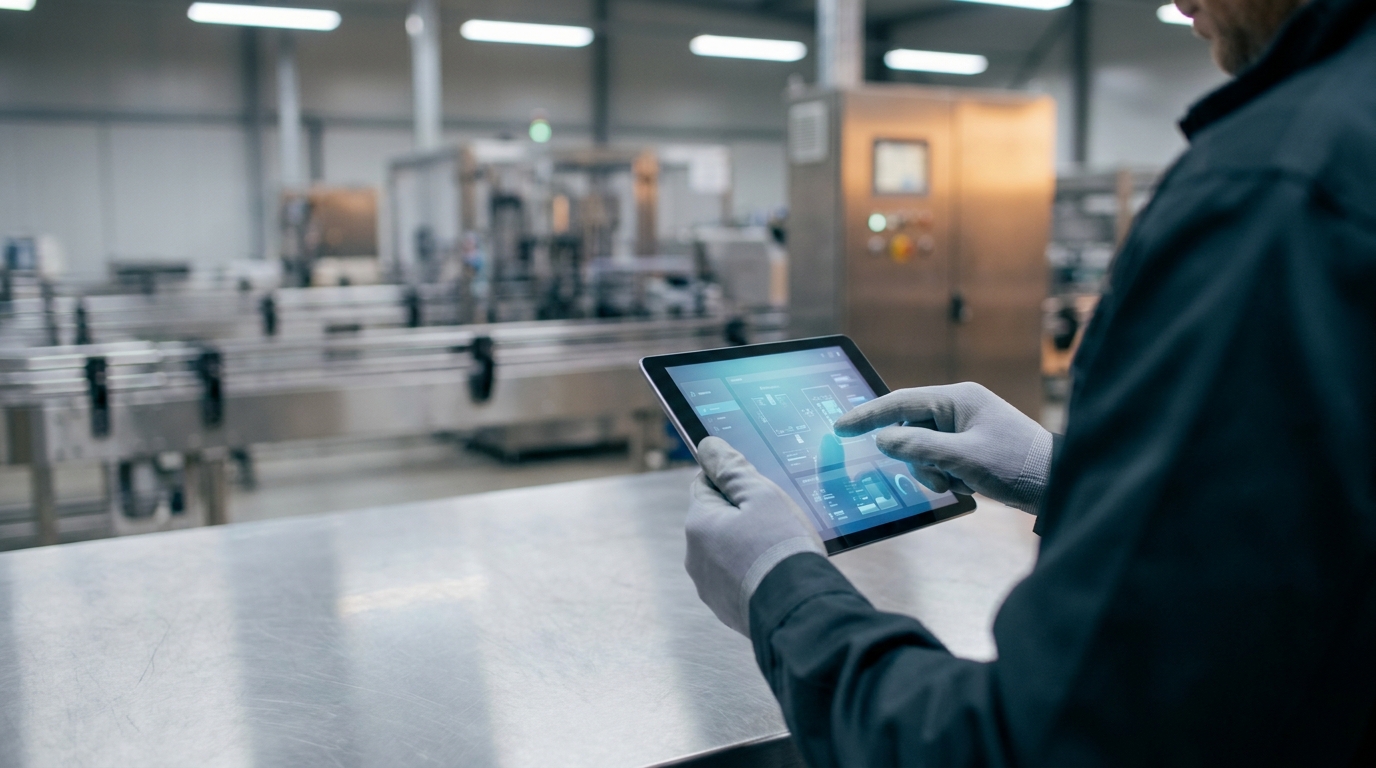)
A connected production-line model reduces downtime only when it closes a learning loop between equipment condition, process context, cause review, and an accountable response. It does not reduce stoppages simply by displaying more machine data. Leaders need measures that show whether the representation supports sound intervention decisions.
Start with the production event, then follow the decision trail. A line alert without product, batch, quality, and maintenance context still leaves crews guessing. Overall equipment effectiveness (OEE) is useful as an outcome measure, but it does not prove that the underlying model reflects current operating behavior.
- Asset-state coverage: Measure the proportion of relevant machine states and events represented. This shows whether the team sees the conditions needed to interpret a stoppage.
- Synchronization latency: Track the time from a physical event to a usable twin state. A delayed state limits the value of time-sensitive decisions.
- Model-validity variance: Compare expected and observed behavior. Growing variance signals that equipment condition, operating practice, or product mix has outgrown model assumptions.
- Decision-to-action cycle: Measure time from alert to reviewed operational response. This exposes delays in ownership, diagnosis, or approval.
- Outcome attribution: Maintain a traceable link between twin-informed decisions and downtime, scrap, throughput, or energy outcomes. This separates correlation from a defensible operating result.
| Component | Executive signal | Decision supported | Common interpretation error |
|---|---|---|---|
| Asset-state coverage | Relevant operating states are represented | Whether diagnosis has enough context | Counting connected devices instead of meaningful states |
| Synchronization latency | Physical events reach the model in time | Whether the insight remains actionable | Treating fast data as accurate data |
| Model-validity variance | Expected and observed behavior remain aligned | Whether the model needs review | Assuming a past validation remains valid indefinitely |
| Decision-to-action cycle | Alerts reach an authorized response path | Where operating handoffs delay action | Measuring alerts rather than completed reviews |
| Outcome attribution | Decisions connect to an operational baseline | Whether investment produced a defined result | Assigning every improvement to the model |
A 2026 study of a Ningbo smoke-alarm workshop describes an OPC Unified Architecture (OPC UA)-enabled production-line implementation with reported efficiency, quality, and labor-cost outcomes (2026). Its value here is architectural context: a bounded line can connect operational signals without assuming that every plant needs full-factory coverage.
Track trends against a defined baseline and review the operating context around each result. That keeps downtime analysis tied to decisions rather than universal performance thresholds.
How should leaders build a twin implementation roadmap?
A useful implementation roadmap starts with one material decision and builds the data, validation, and access rules needed to support it. Teams gain control by moving from simulation to monitored synchronization, then considering controlled feedback only where accountability and operating conditions justify it.
This is cross-functional work. Information technology, operational technology, engineering, quality, and operations need explicit decision rights, because each group owns part of the evidence behind a production recommendation. The absence of a shared owner turns a technically capable model into a disputed source of information.
- Map one material decision: Specify the production constraint, accountable owner, baseline, and expected decision cadence. Begin with a decision that teams already make repeatedly under pressure.
- Set the data contract: Identify the required operational technology, Manufacturing Execution System (MES), Enterprise Resource Planning (ERP), Product Lifecycle Management (PLM), quality, and maintenance signals. Define freshness, ownership, and retention before relying on the representation.
- Establish validation gates: Set acceptance criteria for model fidelity, uncertainty, exception handling, and human review. Safety-critical or regulated environments require stricter progression gates.
- Scale by reusable patterns: Standardize interfaces, semantic definitions, access controls, and business-case review across sites. Reuse the operating method where it fits rather than duplicating every model.
| Stage | Primary objective | Gate for progression |
|---|---|---|
| Simulation | Test layout, logic, or process assumptions | Stakeholders accept the planned behavior |
| Monitored synchronization | Compare live conditions with model behavior | Data quality and model variance meet agreed criteria |
| Governed operational feedback | Inform controlled production responses | Authorized review, evidence records, and change control are in place |
Dr. Guodong Shao, Computer Scientist at NIST and coauthor, wrote in Digital Twins for Advanced Manufacturing: The Standardized Approach: “Interoperability standards are needed to support the communication and integration between (1) the physical and virtual systems, (2) multiple Digital Twins, and (3) Digital Twins and legacy systems such as Manufacturing Execution Systems (MES), Enterprise Resource Planning (ERP), and Product Life Cycle Management (PLM).”
NIST’s 2023 interoperability research describes ISO 23247 as a generic framework that organizations instantiate for case-specific manufacturing implementations. It guides the discussion; it does not choose products, protocols, or data contracts for you. A full-factory representation is now not the default destination for every manufacturer.
Three risks that undermine factory-twin trust
Trust weakens when the model falls behind physical operations, data loses its production context, or recommendations move faster than review controls. These are design issues that leaders need to govern from the first use case, not reasons to avoid connected operations.
ISO 23247 provides structure without removing local architecture choices. ISO/TC 184/SC 4 states in ISO/FDIS 23247-6: “As a framework, this document does not prescribe specific data formats or communication protocols.” Organizations must therefore define how their own data, interfaces, and decision authorities work together.
- Model drift: Physical equipment, product mix, and operating practices change faster than model assumptions. Review variance whenever a material process change occurs.
- Context loss: Disconnected data retains timestamps but loses asset, product, batch, quality, or maintenance meaning. A signal without this context is difficult to interpret responsibly.
- Unchecked intervention: Recommendations influence production before review paths, authorization boundaries, and audit evidence mature. Define who may approve each response.
NIST’s advanced-manufacturing work identifies verification, validation, and uncertainty quantification for data, models, and results as reference-architecture considerations (NIST, accessed 2026). Treat these as continuing operating disciplines, because a model that was credible during commissioning may need reassessment after equipment, inputs, or procedures change.
Document a confidence level for each use case and tie it to a defined decision boundary. That record tells operators when to rely on the representation, when to investigate further, and when to return to simulation.
RealVNC and the Factory Twin Access Problem
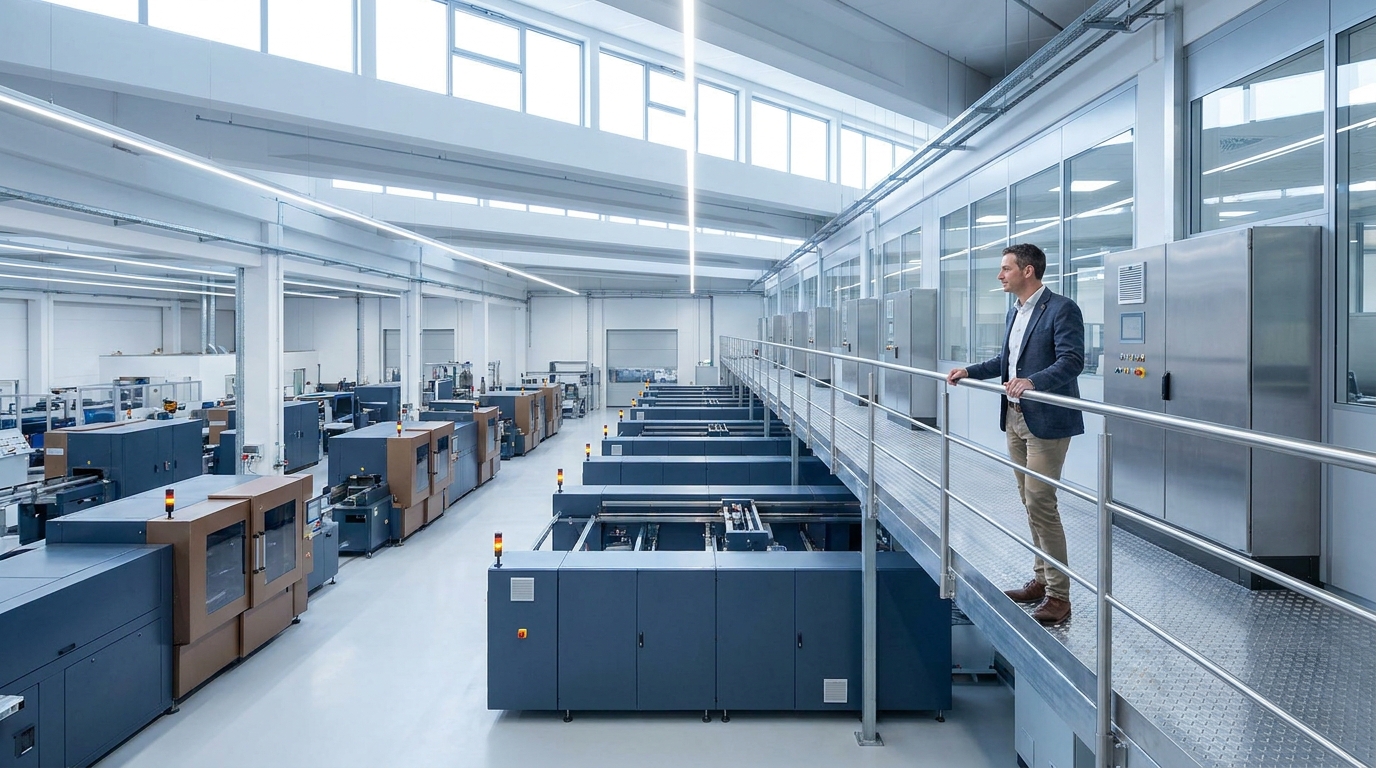)
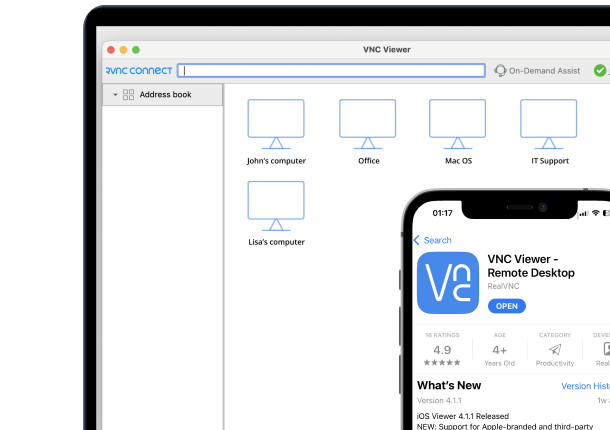
Twin data synchronization, model reviews, and legacy operational technology connectivity create legitimate remote-support sessions across plants, specialist teams, suppliers, and systems integrators. Those sessions may influence maintenance handover, controller review, or a production response, so they need the same accountability as the decisions supported by the live factory counterpart.
Dr. Guodong Shao’s NIST paper identifies integration between physical and virtual systems, multiple twins, and legacy MES, ERP, and PLM systems as an interoperability need (2023). RealVNC Connect serves as a controlled remote-access layer for the people maintaining those connections. It is not a digital-twin product or a replacement for manufacturing-data architecture.
- Multi-factor authentication (MFA) and single sign-on (SSO): MFA and SSO with Microsoft Entra ID or Okta provide identity assurance before remote work begins.
- Role-based access controls (RBAC): RBAC and granular action-based permissions limit who may view, control, or transfer files during a session.
- Session oversight: Session monitoring, recording, and detailed audit logs provide evidence for validation review and operational follow-up.
- Code Connect: Single-use 9-digit session codes create time-bound, revocable access for third-party support without standing credentials.
This control layer keeps access aligned with the workflow around connected production systems. When an engineer reviews a model discrepancy or a supplier assists with a controller issue, authorized administrators retain records of who connected, when the session occurred, and what permissions applied. That supports root-cause review and change-control evidence while keeping production programs focused on trustworthy decisions rather than unconstrained connectivity.
Final Words
Start with the production decision that keeps returning under pressure: a maintenance priority, a flow constraint, or a change that needs testing before it reaches the line. A digital twin in manufacturing earns its place when that decision has clear value, the required signals carry production context, and the model remains valid as equipment and operating conditions change. Simulation, monitored synchronization, and governed feedback each serve different purposes; move between them only when data quality, ownership, and review rules justify the next step.
That discipline protects both throughput and confidence in the decisions around connected operations. NIST places verification, validation, and uncertainty quantification at the center of advanced-manufacturing twin work, as described in its Digital Twins for Advanced Manufacturing program. The ISO 23247 framework guides the architecture discussion, while your organization still needs to define its interfaces, data contracts, and intervention boundaries. When specialist teams and third parties need remote access, RealVNC Connect combines multi-factor authentication and single sign-on (SSO), role-based access controls, and session recording with detailed audit logs to keep that work accountable. Arrange a meeting to discuss how RealVNC Connect can provide controlled, auditable remote access for the teams supporting connected production operations.
FAQs
What is the decision framework for a production twin?
A digital twin in manufacturing should be assessed through four questions: does it improve a material decision, does the available data represent the process well, are intervention boundaries defined, and can the approach scale? These dimensions are commonly expressed as decision value, system observability, intervention safety, and scale pathway. NIST also emphasizes integration, verification, validation, and uncertainty quantification in its Digital Twins for Advanced Manufacturing program.
What is the difference between a factory twin and simulation?
A factory simulation tests a proposed layout, process, or control logic against planned assumptions, while a production twin stays synchronized with an observable physical element. Simulation is useful for virtual commissioning and predeployment decisions; a synchronized representation supports analysis of current operating conditions. Neither approach is universally preferable, because the choice depends on the decision, data quality, and required response time.
How does ISO 23247 guide factory-twin architecture?
ISO 23247 guides the structure of manufacturing-twin discussions without prescribing one product stack, data format, or communications protocol. ISO/TC 184/SC 4 states in ISO/FDIS 23247-6 Digital Twin Composition in Manufacturing (2026), “As a framework, this document does not prescribe specific data formats or communication protocols.” Each organization still needs to define its interfaces, data contracts, validation criteria, and ownership model.
How can digital twins be used in smart manufacturing?
Digital twins connect operational data with a defined manufacturing decision, such as testing a process change, prioritizing maintenance, or investigating quality variation. The model must preserve context from equipment, product, batch, quality, and maintenance systems so teams can interpret signals correctly. Start with a bounded use case, then introduce broader synchronization only after the data and review process meet agreed criteria.
What are practical digital twin examples in manufacturing?
Practical examples include machine simulation for virtual commissioning, production-line monitoring, predictive maintenance analysis, and quality investigation. Cleveland Systems Engineering used machine simulation and virtual commissioning in a case reported by Siemens, with a reported reduction in design and commissioning time; the result is specific to that implementation and is not a general benchmark. A Ningbo smoke-alarm workshop study also describes an OPC Unified Architecture (OPC UA)-enabled production-line system.
How does RealVNC support factory-twin workflows?
RealVNC Connect controls remote engineering and support activity through multi-factor authentication (MFA), single sign-on (SSO), role-based access controls (RBAC), and granular action-based permissions. Session monitoring, session recording, and detailed audit logs provide records for validation reviews, maintenance handover, and operational follow-up, while Code Connect provides time-bound third-party access through single-use 9-digit session codes. These controls apply to the remote-access work around connected production systems; RealVNC Connect does not replace the twin, manufacturing data architecture, or plant-control systems.