



Picture this: A new student walks into a school looking for the main office or where a class or meeting is to be held, but there are no clear signs, so they wander the hallways asking random individuals. Unfortunately, many schools find themselves facing this challenge daily. In fact, according to research from the National School Public Relations Association, poor internal communication is one of the top five challenges school administrators report year after year.
Digital signage for schools is one of the most practical systems available to fix this. Not as a tech novelty, but as a real operational upgrade that touches communication, safety, culture, and visitor experience all at once.
What Is Digital Signage for Schools?
School digital signage refers to a system made up of displays, media players, content management software, templates, scheduling, and remote publishing tools that manage content in real time. Screens can be placed in hallways, reception areas, cafeterias, gymnasiums, and outdoors to pass information to several audiences.
Importantly, educational digital signage solutions can display repeated, visible engagement messaging for students, which matters a lot as a meaningful share of most schools’ population is disengaging from daily attendance. Attendance works accounts that “in 2022-23, two years after schools reopened for in-person learning, a majority of students still attended schools with 20% or higher levels of chronic absence”.
What Components Make School Digital Signage Work?
How well your school’s digital signage turns out depends on how each of its different components fits together, be it the software, displays, media players, network infrastructure, governance, or support. This means that buying an expensive screen is useless if the software behind it is clunky and requires technical expertise. As Visix frames the question: Can a non-technical front-office staff member update a message in 60 seconds? If the answer is yes, that software is the right fit for your educational digital signage.
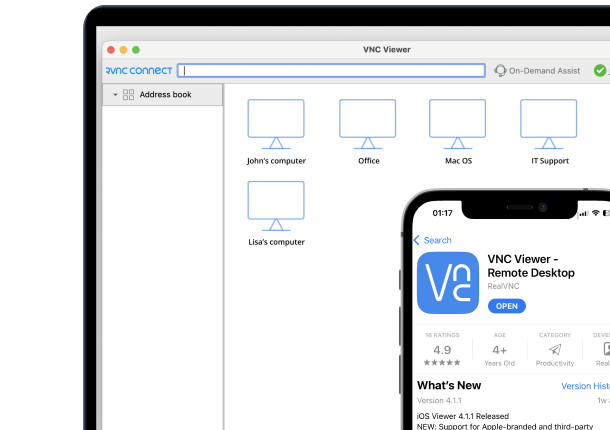
Meanwhile, with tools like RealVNC Connect, you can implement role-based permissions so that access to the signage system software can be layered rather than all-or-nothing. It can support district leaders, school staff, teachers, athletics teams, and emergency communications owners, who update content regularly. However, it is only part of the system, let’s break it down.
School Signage Software and Content Management
The CMS and signage software feature is the component that acts as a dashboard for slides, videos, menus, calendars, emergency notices, live feeds, and templates. Most modern school signage software possesses an intuitive interface, with drag-and-drop functionality, branded templates, calendar integrations, approvals, user roles, emergency overrides, and screen grouping.
Displays, Players, Networks, and Placement
These are the physical components of a school’s digital signage system. It consists of the following parts:
- Displays: Depending on the environment, the types of displays you can choose from include commercial displays, consumer TVs, interactive kiosks, video walls, e-ink displays, and outdoor-rated screens.
- Media Players: Media players connect the display screens to the content management system (CMS), ensuring smooth and reliable playback of videos, images, and interactive applications.
- Other Infrastructural Needs: These include network capabilities such as Ethernet or Wi-Fi, safe power, mounting, glare control, ventilation, screen height, ADA-aware placement, and bandwidth.
How Does School Digital Signage Compare to PA Announcements?
What sets education digital signage solutions apart is that it is strong for repeatable, visual, targeted, and non-intrusive messaging people can absorb on their own time. This makes it a natural complement rather than a replacement to existing information channels such as PA announcements, printed posters, emails, LMS posts, mobile alerts, and websites.
Take, for instance, NCES reports that 96% of public schools had a written active-shooter plan and 95.5% drilled students in 2021–22. In cases like these, signage can visually reinforce safety protocols schools already have in place.
Core Differences Between Static and Audio Channels
Posters are the cheapest means of information dissemination in schools, but they are static in nature, and the only way to update them is by reprinting and rehanging them. They are also easy to overlook, even requiring excessive labor to keep them on track. PA announcements solve some of these problems, especially since it grabs attention and can easily be updated. But they are temporary and audio-based, making them less effective in noisy environments.
Digital signage stands out because it delivers both audible and visual messaging. It supports rich media, multilingual messages, countdowns, maps, live calendars, and scheduled rotations.
Where School Signage and Other Alerts Overlap
During emergencies, schedule disruption, or campus-wide morning announcements, digital signage doesn’t have to carry all the workload; instead, it should function with other alert channels to pass information to its audience. This is particularly true for coordinating emergency signage, where PA systems, radios, SMS, email, access control, and staff procedures play a role.
CISA’s guidance on emergency communications reinforces this: “When an agency and/or region procures new equipment, that agency and/or region should plan and conduct training and exercises to make the best use of that equipment.” This is because, according to the continuum, “optimal interoperability is contingent upon an agency’s and jurisdiction’s needs” rather than a single hardware or digital sign.
What Does Digital Signage for Schools Look Like in Practice?
The most useful way to understand this is to look at what schools are doing with it in practice, because the use cases go well beyond “show some announcements.” Here is how school digital signage is used in practice:
- Wayfinding and Visitor Navigation: Digital displays at entrances and corridor junctions can show maps, direct visitors to the right office, and update when rooms change.
- Daily Announcements and Schedule Updates: Complementing the morning PA system or the printed daily sheet, digital signage displays allow students and staff to see schedule changes, room swaps, and event reminders.
- Emergency Alerts and Safety Messaging: Emergency protocols can push lockdown alerts, fire evacuation routes, or severe weather notices to every screen simultaneously.
- Digital Menu Boards and Nutritional Information: Digital screens in dining areas update menus daily, highlight allergen information, and even improve student recognition of diet plans through rotating content.
In each of these instances, you need secure remote access to effectively manage content for all the endpoints and media players. That’s where the Real VNC Connect tool comes in, allowing front office personnel and administrators to make real-time updates by providing secure access remotely.
Where Is Campus Digital Signage Used Most?
A digital signage platform in K–12 school districts and campuses isn’t a new sight. In the past, it might have been used in front of the school or in announcement areas, but it’s now being integrated into all spaces, including:
- Entrances
- Hallways
- Cafeterias
- Offices
- Libraries
- Athletic areas
- Residence halls
- Event spaces
The digital signage content displayed varies by audience and location. Academic buildings may focus on announcements, bell schedules, room schedules, and exam notices. Student centers might prioritize upcoming events and club promotions. Dining areas display menus and allergen notes, while major entrances could reveal visitor directions and policy reminders. During emergencies, screens across campus can switch instantly to priority alerts.
K-12 School and District Uses
In K12 schools, you can use digital signage to extend learning into any space where you mount a display, especially since digital signage supports integration with Google Slides and Canva. It comes in handy in areas such as:
- Instructional Scaffolding: Introduce new topics that are coming up in class.
- Reinforcement: Display highlights from previous lessons to help with retention, especially as an exam is approaching.
- Microlearning: Use small snippets of advice or quick quiz questions that students can answer via a QR code.
Higher Education and Multi-Campus Uses
Digital signage in campuses is mainly used for wayfinding, event discovery, department messaging, safety alerts, transportation, and visitor experience. Common locations where a display screen may be located include:
- Student unions
- Libraries
- Lecture buildings
- Dormitories
- Admissions offices
- Labs
- Event venues.
What Trends Are Shaping School Digital Signage?
Some of the latest trends in digital signage are in the following areas:
- AI-Driven Content and Automation: Nowadays, generative AI can produce daily announcements or summarize sports highlights with minimal staff effort.
- Interactive Kiosks: Touchscreen kiosks increasingly appear in hallways and main entrances. By allowing visitors or students to navigate campus maps, check in, or look up schedules, these terminals reduce front-office tasks.
- E-paper and Low Power Displays: Districts are adopting LED screens that consume less power, especially for room schedules, door signs, always-on notices, and sustainability-focused uses.
Best Practices for Implementing Digital Signage for Schools
Follow these practical steps when implementing digital signage in your school district:
1. Clarify Goals
Outline the primary objectives, such as emergency alerts or daily announcements, better wayfinding, and stronger recognition to guide the hardware and messaging strategy.
2. Audit Locations and Infrastructure
Install screens in corridors, libraries, cafeterias, while considering network quality, power, mounting safety, visibility, glare, accessibility, and maintenance access.
3. Choose Software and Build Content Governance Before Hardware
Map out and compare CMS usability, role-based permissions, emergency overrides, and approvals before setting up screens.
4. Pilot High Impact Screen First
Start by setting up screens in high-traffic locations before moving to less critical areas.
5. Measure and Improve
Ensure content freshness and focus on repeated questions or queries.
What Security Risks Affect School Signage Networks?
The US Department of Education reports that “school districts across the country are experiencing an average of five cyber incidents per week”. This could stem from shared logins, outdated media players, exposed admin portals, unapproved publishing, compromised emergency messages, unsecured remote access, and accidental student data exposure.
This is why aligning with NIST CSF 2.0, ISO/IEC 27001:2022, and CISA K-12 guidelines has become critical for schools implementing digital signage. Also, using the Real VNC Connect tool is non-negotiable, since it provides secure remote access for endpoints with session-level encryption, MFA, RBAC, session recording, and audit logging.
Conclusion
K-12 schools, colleges, and universities are always in constant motion, with classes and events shifting. As a result, students and visitors move quickly between school buildings, often relying on whatever information is most visible at the moment. Digital signage for schools provides that visibility with centralized control, strengthening communication across academic departments, student services, dining operations, and safety teams.
FAQs
What is digital signage for schools?
Digital signage for schools refers to centrally managed digital screens used to disseminate campus information. In higher education, it shares announcements, schedules, safety alerts, event promotions, and wayfinding content.
How do schools use digital signage?
Digital signage for universities and colleges is often used for hallway announcements, lobby visitor information, digital menu boards, athletic updates, classroom reminders, emergency alerts, and event promotion. K-12 schools and colleges may use it differently depending on audience, campus size, and communication goals.
What are the benefits of digital signage in education?
The benefits of digital signage for schools include improved student engagement, real-time updates and announcements, and a more interesting campus experience. You can better ascertain if your school’s digital signage is efficient when you measure its goals beforehand.
What should schools look for in digital signage software?
Ease of use is non-negotiable when it comes to school digital signage. This is because non-technical staff are the ones who will update content regularly.
How much does school digital signage cost?
Often, costs vary based on the number of screens, media players, software licensing, installation, and ongoing management. Educational institutions should factor in the total cost of ownership rather than hardware alone, including scalability and administrative efficiency.