



In any manufacturing environment where change is constant, communication is critical to keeping everyone informed and engaged. Yet companies struggle with finding the right mix of communication tools to reach their workers. That’s the problem digital signage for manufacturing aims to fix. It is transforming operations by providing dynamic, secure, and accessible displays that keep workers informed, improve workplace safety, and boost productivity.
The opportunity is significant: In Deloitte’s 2025 Smart Manufacturing Survey, manufacturers reported up to a 20% improvement in production output and up to a 20% lift in employee productivity from smart-manufacturing initiatives, and 92% say smart manufacturing will be the main driver of competitiveness over the next three years.
What Is Digital Signage for Manufacturing?
Digital signage for manufacturing is the network of screens, media players, and software that display live production data, safety messages, shift updates, and operational instructions. It has evolved from simple digital notice boards to full-blown communication systems that connect to production systems, schedules, dashboards, and alert feeds. The type of content it displays depends on its audience and location, but mainly consists of time-sensitive information, such as the following:
- Output versus target content
- Downtime notices
- Maintenance notices
- Quality issues
- Emergency instructions
In factory settings, the hardware components of the digital signage system matter, requiring the most ideal solutions because of dust, heat, vibration, brightness, and mounting conditions. For the software components, a user-friendly CMS is necessary, but ownership and governance even through remote access should be defined early because signage sits across operations, IT, and safety workflows.
What Makes Factory Digital Signage Work?
Before setting up a manufacturing digital signage solution, it is critical to evaluate both the software and hardware components, since when any of these layers fail, it often leads to stale content, failed emergency alerts, or screen downtime.
Industrial Displays and Media Players
These are the physical components that mainly consist of displays, enclosures, mounting, and players. You can place these components in areas such as production lines, maintenance bays, loading docks, breakrooms, quality stations, and entrances. It forms a major part of the manufacturing environment, even more important than in office or retail signage. This is because the factory has areas with heat, dust, washdown exposure, or airborne particles that put displays like consumer TVs at risk.
The considerations that matter most when setting up a manufacturing digital signage solution include the following:
- Brightness
- Viewing distance
- Enclosure rating
- Vibration tolerance
- Mounting height
Ingress protection ratings define how well industrial signage equipment is protected against dust and water, ensuring reliability, safety, and compliance in challenging environments. Importantly, they are defined in IEC 60529, which is an international standard that rates the resistance of enclosures of electric and electronic devices against the intrusion of dust and liquids.
Software, Content, and Data Integrations
This is the intangible section that keeps your signage system accurate, timely, and relevant. It does the heavy lifting of pulling real-time data from trusted enterprise systems through APIs, direct software integrations, or by embedding BI dashboards. This unique feature mitigates the need for manual data entry and ensures that workers see only verified content on any display. The common dashboard content includes:
- Downtime
- Output rates
- Safety compliance
- Inventory
- Order status
- Quality status
- Efficiency
Integrating manufacturing signage solutions comes with the demand for a unified data ecosystem and phased cybersecurity architecture. It involves using middleware to translate legacy data, establishing cloud data lakes to resolve silos, enforcing a standardized taxonomy, and implementing Purdue-aligned segmentation. Also, there is a need for time-stamp or validation indicators that allow teams and workers to determine whether live data is current.
How Do Digital Signs Compare to Andon Boards?
Andon boards are visual signal systems that show line status, abnormalities, stoppages, or calls for help. When a problem occurs, the board signals it using colour-coded lights or displays so operators, supervisors, and support teams can respond immediately. They’re effective in most cases, but digital signage for manufacturing extends visual management by adding richer data, multiple zones, historical context, and centralized scheduling.
Core Differences Between Signs and Andon Systems
Both andon boards and digital signage communicate information and manufacturing floor production metrics, but they serve different functional needs. With Andon boards, updates happen at fixed intervals like hourly counts and end-of-shift tallies, while digital signs are flexible in the content they display. They can aggregate downtime causes, trigger alerts, and display quality data as it’s captured, and even interpret it for work teams. This makes Andon boards the ideal fit for tactile routines such as daily standups. While digital signs are better suited to fast updates across multiple lines, zones, or facilities.
Where Digital Signage and Lean Boards Overlap
In most situations factories find themselves, combining lean boards with digital signage is the best way to solve communication problems. Examples of these operations include the following:
- Line status
- Work-instruction reminders
- Take-time progress
- Defect alerts
- Maintenance holds.
These systems can make work status visible without long explanations. The only necessary caveat is to ensure consistent standards for colors, icons, labels, escalation paths, and content ownership. Also, signage should support supervisor routines rather than create another unmanaged communication channel.
Real-World Examples of Manufacturing Signage
Here’s how different manufacturing facilities are using manufacturing signage to make a difference in their operations (we know a thing or two because we work with a lot of them):
Production Floor Communication
When it comes to getting information to your team fast, digital displays are second to none in the production line. Its benefits include:
- Real-Time Performance Updates: Large displays showing production numbers and targets help your operators stay on track.
- Work Instructions: Step-by-step instructions on screens near each workstation help new hires quickly get up to speed.
- Preventive Maintenance Alerts: When machines start showing signs of trouble, digital displays flash maintenance alerts
- Real-Time Quality Control: Quality control screens highlight defect patterns as soon as they emerge.
Employee Communication
Digital signage solutions ensure that the right employees get the right message at the right time. It is flipping the script in the following areas:
- Shift Handover: Digital displays at each workstation ensure incoming teams know precisely what happened during the previous shift.
- Company Updates in Real-Time: Important company updates reach everyone instantly. No more relying on word-of-mouth or bulletin boards that get lost in the shuffle.
- Team Recognition: When a team hits a target or exceeds expectations, digital signage celebrates it for everyone to see.
- Training Reminders & Certifications: Upcoming training schedules or certification deadlines pop up on screens automatically.
Supply Chain Visibility
In this area, digital signage keeps your team in the loop with live updates on stock levels, incoming shipments, and production timelines. The areas where it is used include:
- Inventory Level Update: Screens in receiving areas show inventory levels in real time.
- Loading Dock Management: Displays in loading docks help coordinate incoming and outgoing shipments.
- Production Schedule Adjustments: When production schedules change, they’re instantly displayed across logistics screens.
Where Is Factory Digital Signage Used?
Digital signage enhances the plant environment with a clear, real-time communication network, whether through KPIs, digital safety alerts, schedules, training, and logistics updates. Let’s break down each of these areas.
Production, Quality, and Maintenance Areas
In production departments, digital signage is playing an important role supporting line-side decisions, maintenance visibility, and quality control. American Quality and Productivity Center (AQPC) reports that rework and scrap can equate to 2.2% of a company’s revenues: $32m a year for an organization with annual sales of $2b–and that’s not including layers of other significant costs due to logjams, delayed production, and missed deadlines. Popular examples with digital signage making a difference include:
- OEE boards
- Maintenance queues
- CMMS alerts
- Defect containment notices
- Work-instruction reminders.
With displays reflecting content such as machine downtime, output rates, order status, inventory, quality status, and employee or machine efficiency, waste is reduced significantly.
Safety, Logistics, and Workforce Communication
Digital signage for manufacturing helps reduce confusion, reinforce safety messages, and keep all shifts informed. It can be used for safety alerts and compliance by displaying real-time warnings, emergency instructions, PPE reminders, and safety KPIs. Safety-critical communication must be fast, clear, and multilingual, and screens outperform printed posters in both clarity and urgency.
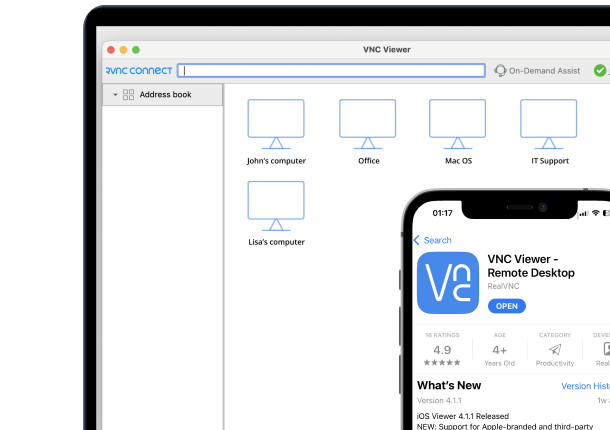
Also, integrating remote access governance with Real VNC Connect is vital. The tool allows its users to designate monitoring and troubleshooting roles in a zero-trust policy to IT teams, operational heads, and communication groups through role-based access control, multi-factor authentication, and granular permission boundaries.
What Is Next for Manufacturing Signage?
Factory signage is moving from static slides toward live communication hubs connected to production, safety, maintenance, and workforce systems. Let’s break down some of the latest trends:
- Live Data Feeds: Live data is becoming essential in manufacturing signage because it provides instant visibility into production processes, machine performance, and potential issues. This immediate access allows teams to respond quickly to equipment malfunctions, delays, or inefficiencies, minimizing downtime and reducing waste.
- Edge Computing and Playback: This involves cached content, local playback, lower latency, and resilience if a network link drops. It is moving computation closer to machines and production lines, enabling smart factories to run with real-time responsiveness, operational autonomy, and scalability across distributed industrial environments.
- Interactive Stations Analytics: These are supplements to passive displays, useful for SOP lookup, troubleshooting steps, or maintenance status. This is considered a move away from static signs and towards active smart-factory hubs that connect directly to production lines.
- Tighter IT/OT Governance: As the demand for connected devices and displays increases, plants are using tools like RealVNC Connect to ensure role-based governance and granular control.
What Risks Come With Connected Factory Screens?
In truth, connected factory systems create new entry points for attackers. This is why signage players must be inventoried, patched, monitored, segmented, and governed through clear ownership. Beyond cyberthreats, the risks factory’s signage systems face include:
- Incorrect KPI Data: This usually happens as a result of bad data feeds, late updates, and confusing layouts.
- Failed Emergency Overrides: This could happen as a result of software freezing, which has a catastrophic impact in emergencies.
- Poor Screen Placement: This creates physical safety hazards, worker fatigue, and operational blind spots.
- Underpowered Networks: This limits connected factory screens by causing severe data lag, display freezing, and system dropouts.
- Weak Permissions: This issue creates severe operational risks, including unauthorized equipment control, production line shutdowns, and malware lateral movement across corporate and manufacturing plant networks.
- Unmanaged Remote Access: This introduces severe vulnerabilities, primarily unauthorized network entry, ransomware deployment, and physical operational hazards.
Considering these risks, aligning with frameworks including the NIST CSF 2.0, NIST SP 800-82 Rev. 3, IEC 62443-3-3, and ISO/IEC 27001:2022 guidelines has become critical when setting up digital signage for plants and factories.
How Do You Implement Digital Signage for Manufacturing?
Follow these simple tips when implementing a manufacturing signage system on your device.
1. Define Goals
First, determine the communication problem you want to solve, whether it is faster escalation, clearer shift handovers, safer alerts, or reduced manual dashboard reporting.
2. Map Screen Locations
Next, draft out screen locations based on audiences and compatibility. Ideal locations include: line ends, breakrooms, maintenance bays, entrances, and loading docks.
3. Pick Hardware Components
We recommend that you select industrial-ready hardware based on brightness, enclosure rating, mounting, player type, power, and network access.
4. Select Integrations
Connect to a small set of trusted data sources first, such as MES, ERP, CMMS, BI, or quality systems.
5. Set Governance Rules
Set content rules, owners, approval paths, color standards, escalation logic, review dates, alert testing, fallback content, and remote-management workflows.
Conclusion
Digital signage for manufacturing isn’t just a nice-to-have—it’s essential since manufacturing teams often struggle with communication breakdowns, production visibility gaps, and delayed safety messaging. Digital signage for manufacturing centralizes real-time information across the plant, creating a responsive environment.
When implementing it in your plant, ensure that you consider the right industrial displays, reliable software and CMS controls, clean MES/SCADA/ERP integrations, secure network planning, and a clear content strategy tied to KPIs and safety goals. Also, we recommend that you assess their highest-value use cases first, such as Andon alerts, OEE dashboards, or OSHA-related safety messaging, before planning a phased factory signage deployment.
FAQ
How does digital signage improve factory floor communication?
Digital signage for manufacturing gives workers, supervisors, and managers a shared source of real-time information. It includes production targets, downtime alerts, safety notices, shift updates, and quality warnings displayed where teams can act on them.
What displays work best in manufacturing environments?
When considering displays in a manufacturing environment, go for rugged, industrial-grade screens that can handle dust, heat, vibration, moisture, and long operating hours. You should consider IP ratings, protective enclosures, brightness, mounting options, and outdoor industrial displays.
Can digital signage integrate with MES or ERP systems?
Many digital signage software platforms can connect with MES, SCADA, ERP, WMS, or business intelligence tools through APIs, dashboards, or data feeds. However, legacy systems may require middleware, IT support, and careful security review.
What is an Andon system in manufacturing?
Andon visual system is a way to signal production status, quality issues, stoppages, or requests for support on the line. Digital signage systems have revolutionized it through broadcasting live alerts, escalation messages, and performance data.
How do you measure ROI from factory digital signage?
The factors that determine ROI for factory signage include the following:
- Reduced downtime
- Faster response to line issues
- Fewer safety incidents
- Improved throughput
- Better shift handovers
- Lower manual communication effort
It is critical to assess the goal of each screen before implementation.