


Remote work and the need for remote access are not a passing trend for IT teams anymore. For most organizations, it’s become the standard way of doing things, up there with DevOps and cybersecurity. With this shift comes an increase in demand for secure remote access solutions that are both reliable and scalable.
As businesses start adopting more flexible work environments, traditional solutions like VPNs and perimeter firewall rules become more burdensome than helpful, not to mention they represent data and security risks.
Cloud-based remote access solutions are transforming how these companies connect to their devices, both in the office and out in the field. These solutions cut through the complexity, offering a much more secure and simple way to remotely control machines from a distance. RealVNC Connect, with over 25 years of experience in creating and modernising secure remote access, is leading the charge. Its cloud-brokering is an intelligent, secure, and high-performing method of securely accessing systems without manual configuration or complicated network access rules.
In this guide, we will be walking through cloud-based remote access software architectures. We will explain how RealVNC Connect takes the best of both worlds: cloud connectivity for ease and performance, and on-premises connections for environments that demand strict control.
Whether you’re new to remote access or looking for a more efficient way to scale your remote operations, this buyer’s guide has all the details you need to make an informed choice.
What Are Cloud-Based Remote Access Solutions?
Cloud-based remote access solutions refer to the software and infrastructure that enable secure access to remote devices across a cloud connection, rather than a direct peer-to-peer connection. These solutions leverage what’s known as “cloud-based connection brokering”. This is a method by which cloud infrastructure facilitates secure connections without the need for traditional infrastructure and network connection configuration.
Unlike older remote access tech like VPNs that give end nodes access to an entire subnet, cloud-based solutions like RealVNC Connect provide connections to specific devices over HTTPS via an API rather than via inbound ports or complex network routing.
As connections are brokered over the cloud, these solutions streamline connectivity via intelligent brokering services that automatically handle the connection process between the two machines. These machines can be physical laptops and servers, cloud-hosted or hypervized VMs, or even mobile access on devices that run Android or iOS.
It’s important to note that these cloud-based remote access solutions differ from VDI solutions such as KASM Workspaces or Citrix DaaS, or RDP/VNC over HTTPs like Apache Gaucamole in that IP roaming and network changes do not affect connectivity and can be utilized on existing systems.
Cloud-based remote access software like RealVNC Connect utilizes intelligent routing models. They first attempt an encrypted peer-to-peer connection based on IP and routing availability, then fall back to an encrypted cloud relay that offers the same performance and security as a direct connection. These cloud-brokered remote connections solve a lot of the NAT traversal issues seen across modern networks, where end nodes are behind layers of CGNAT, firewalls, and proxy servers.
What makes RealVNC Connect truly stand out is its hybrid approach that offers both cloud-based connections and the optional capability for direct-only connections to devices and systems inside more controlled environments. That is a level of flexibility that gives businesses both simplified cloud connectivity and the ability to maintain control where required.
How Cloud Secure Remote Connection Brokering Works
Each cloud-brokered remote access platform establishes connectivity differently. Here, we will be focusing on how RealVNC Connect establishes connections over the cloud, and, unlike the alternatives, guarantees enterprise-grade security throughout the entire process.
In this scenario, we will be explaining how RealVNC Connect intelligent routing connects two endpoints: A physical Windows 11 desktop from a remote site and a Debian 12 Linux VM with XFCE window manager running on an ESX host in a data center. The viewer (Windows desktop) requests a remote session with the server (Linux VM) via the RealVNC Connect application.
Let us have a look at how this works in more detail below.
The Intelligent Connection Handshake
The intelligent handshake process in RealVNC Connect begins when both the remote device and the local device (both with the RealVNC Connect application installed) make an outbound connection.
The technician will start by selecting the Linux server from a list of known devices within the application and requesting the remote session. RealVNC Connect will first attempt the connect with the server directly via peer-to-peer, utilizing NAT traversal techniques like STUN, but as the Windows desktop is located off-site on a cellular connection, network factors like CGNAT and firewall rules mean the initial connection attempt will fail.
Traditionally, a perimeter firewall rule and inbound port connection would need to be made, exposing the Linux server to the public internet. With a RealVNC Connect cloud-brokered connection, however, the connection can be established over an encrypted cloud relay through secure datacenters located throughout the world.
These datacenters merely broker the connection. They do not have access to the session information itself and comply with ISO 27001. As RealVNC’s infrastructure runs independently of CDNs like Cloudflare or AWS, outages on these consolidated services will never affect your connection attempt and performance.
Because these connections are outbound (like visiting a website over HTTPS), firewalls typically allow them through without any additional configuration. Advanced security features like end-to-end encryption via AES-128 or AES-256 bit mean the session data stays safe.
Peer-to-Peer vs. Cloud Relay
When establishing a connection, peer-to-peer (direct) connections are the first choice for RealVNC Connect, as they allow session data to flow within local network systems, directly between two devices. This approach minimizes latency and ultimately improves the performance and user experience.
When network hardware like firewalls or NAT blocks any direct connection attempt, RealVNC Connect seamlessly fails back to its cloud relay.
In environments where a cloud relay is simply not an option due to strict compliance regulations or air-gapped isolated networks, RealVNC Connect provides the option to disable relay connections entirely. This hybrid approach provides organizations with complete control over their connectivity, while still enabling remote support via cloud-brokered connections on machines that are less subject to strict data protection.
Security and Compliance in Cloud-Based Remote Access
Remote access comes with its fair share of security risks if not configured correctly from day one. Data security and protection are RealVNC’s top priority and begin out of the box, from the very first connection. Below, we will take a look at how RealVNC keeps your data safe, whether via direct connections or through the cloud.
Zero-Knowledge Encryption, Data Privacy, and Enhanced Security
Real VNC’s zero-knowledge architecture means that even though session data passes through our cloud servers, RealVNC itself can’t actually decrypt it. Sessions are secured with AES-GCM encryption, and Perfect Forward Secrecy (PFS) means that even past sessions can never be decrypted.
Additionally, RSA key-based fingerprint verification makes sure that users are only able to connect to intended devices, while the RFB 5 protocol, designed by RealVNC, mandates the use of modern cipher suites and strong cryptography for each and every connection.
Lastly, RealVNC never stores any session data within the cloud-brokering platform, even if your team member happens to work with RealVNC, not even they would be able to access session information.
We have really only scratched the surface of the security features of RealVNC. For a deeper look into RealVNC Connect’s security standards, download our Security Whitepaper.
Central Administration and Access Control
Adding to existing robust security features is RealVNC Connect’s centralized user and access management. Here, administrators have complete control over which team members can access what, with administration provided through a centralized portal.
User roles like User, Manager, and Admin govern what each team member can see and do within the system, and can be assigned via GPO from AD DS. These granular device-level permissions can even allow admins to set specific actions allowed during a session, meaning there is tight control over who can access and do what.
Meeting the highest security features standards also means providing multi-factor authentication (MFA) support and email-based 2FA enabled by default. Instant access revocation is completely possible without ever touching a remote device, making it far easier for administrators to maintain complete control and mitigate many of the security risks that have traditionally plagued remote access tools.
Cloud-Based vs. On-Premises Deployment: Choosing the Right Model
The right deployment model for safe and efficient remote access software comes down to your unique business operations and needs. With cloud-based and on-prem models, it typically boils down to this:
- Cloud-based: The business has a distributed fleet with a need for remote support on devices where a secure connection is required, but data can leave the private network (albeit securely).
- On-premises: Your infrastructure moves extremely sensitive data, devices, or sensors, and data cannot leave the private network in any form. Here, even licensing and management are performed in an offline environment.
- Hybrid: A mix of both cases, where administrators can isolate some devices and mandate direct connections, while leaving devices such as office machines with the ability to use a cloud broker.
Here is a quick comparison of the two models to better understand where your business model fits:
| Feature | Cloud-Based Connectivity | On-Premises Connectivity |
|---|---|---|
| Setup Time | < 5 minutes (sign in to RealVNC App) | Hours to days (manual IP/hostname config) |
| Firewall Configuration | None required (outbound only) | Required (configure ports, routing) |
| Device Discovery | Automatic (appears in Portal) | Manual (requires IP/hostname) |
| Internet Required | Yes (for brokering service) | No (with On-Prem Licensing) |
| Performance (LAN) | Good (auto-optimized) | Excellent (no intermediary) |
| Best For | Remote workers, MSPs, distributed teams | Air-gapped networks, high-security zones |
| RealVNC Product | RealVNC Connect (default) | RealVNC Connect with On-Prem License |
Most organizations will benefit from a hybrid solution, allowing easy switching between cloud and on-prem models depending on the security needs of individual devices.
RealVNC Connect Deployment Scenarios and Use Cases
RealVNC Connect is an adaptable and scalable remote access solution with a wide range of use cases. Any business that needs to remotely access devices across a distance can benefit. However, there are some industries and sectors where RealVNC Connect is the leading remote access solution due to its flexibility and enterprise-grade features:
MSP and IT Support Teams
Managed Service Providers (MSPs) especially need to deal with a vast number of endpoints, each with its own set of network rules and unique firewall configurations. The RealVNC Connect cloud broker enables remote support without needing to reconfigure the networks of clients with which they have support contracts.
RealVNC Connect also includes an on-demand assist feature, where technicians can connect to any device using a one-time code for immediate access. Built-in features like session recording, permissions escalation (UAC), file transfer, unattended access, and resume-on-reboot all make the day-to-day operations of a help desk easier.
Remote and Hybrid Workforce
When your business has a truly distributed workforce connecting over a VPN, every remote endpoint is a potential entry point into the network — especially with BYOD devices. Most remote workers come with a double-sided technical hurdle. They need to gain access to internal jumpboxes, and IT support teams need to access their devices to provide ad-hoc support.
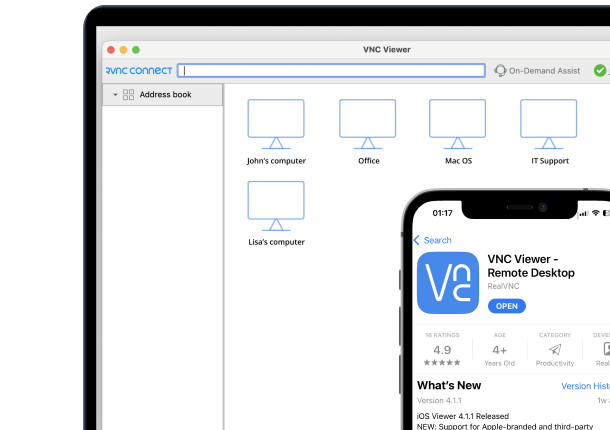
The RealVNC Connect app provides both a viewer and server functionality within one unified app. The same application can be deployed company-wide, meaning IT teams only need to roll out a single app, whether operating systems in use are Windows, macOS, Linux, or mobile devices.
Cloud Infrastructure Management
Headless servers or cloud instances like AWS or Azure VMs don’t come with an adequate remote access solution by default. Like their physical counterparts, businesses still have to open inbound RDP or SSH ports for corporate access. RealVNC Connect secures access to server GUIs without exposing management ports.
Combining the RealVNC Connect cloud-based remote access solution with on-prem connectivity is the best way to keep cloud server access secure and compliant.
Evaluating Cloud Remote Access Solutions: Key Criteria
Criteria such as security features, flexibility, and how easy a solution is to deploy are important factors to consider when evaluating which remote access solution is best for your business. Below, we have presented a basic framework that can help assess your options:
- Architecture and Connectivity Approach: Evaluate whether or not the solution features a cloud-brokering, intelligent routing feature, rather than a static relay approach. If your business requires both, RealVNC Connect offers the flexibility to use a hybrid approach.
- Security Architecture: Check if the solution offers enterprise-ready security features out of the box. Features like end-to-end encryption, zero-knowledge design, and compliance with data protection frameworks are all security measures offered by RealVNC Connect from the very first connection.
- Centralized Administration: When you install remote access software, if you are expected to configure every single endpoint, the task of deployment becomes more work than it’s worth. Look for a solution like RealVNC Connect, which allows a centralized configuration and user access option.
- Deployment Flexibility: Consider whether the solution allows installation from existing application deployment solutions like SCCM and MECM. For offline networks, a true offline licensing solution should also be offered. RealVNC Connect offers both, allowing organizations to adopt a true hybrid solution.
- Platform and Use Case Coverage: Single OS environments are rare nowadays, and even if you run a complete Windows or Linux setup, future requirements may force you to run additional operating systems. Your remote access solution should offer full cross-platform support for Windows, macOS, Linux, iOS, and Android devices.
RealVNC Connect satisfies all these requirements and addresses the key criteria, making it a cost-effective solution that enhances operational efficiency across the organization.
Deployment and Implementation Considerations
A remote access infrastructure project that takes months isn’t ideal for organizations with IT teams already focused on scaling and interoperability of existing and new systems. RealVNC Connect supports a quick deployment that naturally fits into modern IT systems and existing toolsets.
For smaller businesses, creating an account and having your IT team install the RealVNC Connect unified app across target devices is the first step. Once installed, signing into the portal where connected devices will appear, and assigning permissions centrally can allow initial secure remote access immediately without firewall changes.
Larger organizations typically have a focus on consistency and scale. RealVNC Connect supports full enterprise deployment through MSI packages, Group Policy, and platform tools like Jamf and InTune. Bulk connectivity can be achieved seamlessly using connectivity tokens, which simplifies the rollout across hundreds of endpoints.
Across both SMB and enterprise, RealVNC Connect remote access remains predictable, controlled, and aligned with existing workflows. There is no need to reinvent the wheel just to fit in a new tool.
Conclusion
Modern distributed teams need a secure remote access tool that fits the reality of modern remote work without having to redesign existing security, support, and network infrastructure around the product. The real decision now is selecting remote access products that combine intelligent cloud connectivity, strong enterprise-grade security, and practical deployment options for both online and offline environments.
RealVNC Connect takes that approach with a single system that prefers direct connections where possible, and automatically falls back to a secure and high-performing connection when networks refuse to cooperate.
If you are evaluating platforms, start with a small pilot, validate policy and usability, then audit needs early on. A free trial of RealVNC Connect makes it easy to test remote access on a few endpoints before you scale up.
Frequently Asked Questions (FAQs)
Does cloud-based access send screen data through the cloud?
RealVNC Connect will first attempt a peer-to-peer (direct) connection for better latency and performance. If a direct connection is unavailable, it relays the connection through a cloud-brokering service. These cloud connections stay encrypted and cannot be accessed, even by RealVNC.
Do I need to open firewall ports for cloud-based remote access?
A cloud-brokered remote access tool like RealVNC Connect uses outbound HTTPs (just like a website), so you get easy access without needing to open inbound ports on the firewall.
Can I use RealVNC Connect without any internet access?
While it may sound counterintuitive, you can, in fact, use RealVNC Connect offline. With Enterprise offline deployments, connections to a remote computer can be made by IP or hostname (with local or split-horizon DNS).
How secure is RealVNC Connect compared to VPN?
For secure remote access, a RealVNC Connect session is established with end-to-end encryption, just like a VPN. The difference is that using a VPN broadens network reach, with cyber threats and exploits possible after just one compromise.
Can I disable cloud relay for strict compliance requirements?
Yes. Administrators can disable cloud relay entirely, so connections will not attempt to use a cloud broker if direct connections cannot be established. This is an ideal solution for air-gapped and secure offline environments.
Can I provide ad-hoc support without installing software on the user’s device?
Yes. The on-demand assist feature provides remote support software for individual users across multiple platforms. It suits remote teams and IT support that need to handle one-off incidents.