



A contractor’s laptop picks up malware, and the stolen password signs in through the VPN. Nothing inside the network stops it from reaching the finance share or the customer database. Tickets pile up, payroll slips, and you’re the one explaining to the board how one login reached so much.
A zero trust strategy for managers is a funded, owned plan to check every access request before it reaches a specific application or file. You decide who needs which resource, grant only that access, and phase in checks such as multi-factor authentication (MFA) and device health, starting with your most critical assets.
Perimeter security fails in this scenario since it treats anything inside the network as trusted. Cloud applications, hybrid work, and personal devices have erased that single “inside,” so a valid password alone should never be enough. No single product delivers the fix, which means you build it in stages and assign an owner to each one.
The calls that are yours to make: which assets go first, who answers for each control, and how much friction your users will accept before they start working around it.
What Does a Zero Trust Strategy for Managers Involve?
A zero trust program for IT and security leaders replaces trust in network location with an access decision on every request. Each decision weighs identity, device health, and the specific resource being requested, then grants only the access that task needs. For a manager, that turns security into an owned, funded, and measurable program with audit evidence.
The National Institute of Standards and Technology (NIST) defines zero trust in SP 800-207, Zero Trust Architecture as a cybersecurity paradigm focused on resource protection that minimizes uncertainty in least-privilege, per-request access decisions and treats the network as compromised. Perimeter defense assumes the opposite: anything inside the network is trusted. CIO Modern Enterprise’s framework guide notes that cloud, hybrid work, and unmanaged devices have dissolved that perimeter, and that this opens paths for lateral movement.
Remote access shows where the gap bites first. In a sample of 876 select connection types offered by initial access brokers, 44% were virtual private network (VPN) connections, according to the Verizon 2026 Data Breach Investigations Report (DBIR). That describes exposure in one sample. It is no verdict on VPNs, which stay a legitimate model when paired with per-resource checks.
The U.S. Department of Education’s move from VPN-dependent remote work to secure access service edge (SASE) shows what a per-request decision changes day to day. The Technology Modernization Fund’s FY24 Annual Report (2024) says the move removed repeated reauthentication, lost connections during report submission, and VPN reconnects.
Which Four Pressures Are Reshaping Access Risk?
Four pressures decide where your first access decisions land:
- Remote-access exposure: broad paths give a stolen credential network-wide reach, so each path needs an owner and a scope review.
- Third-party reach: outside technicians and suppliers hold access you don’t directly manage, so their sessions need the tightest scope and time limits.
- Distributed workloads: mission-critical applications now run across SaaS, hybrid-cloud, and multicloud environments that traditional firewalls may not directly protect, so policy has to follow the resource.
- Audit and board pressure: auditors and directors want evidence of who reached what, so logging and reporting start in the first pilot.
Which NIST and CISA Pillars Should Anchor the Program?
NIST’s tenets govern how each access decision is made, and CISA’s pillars organize who owns the work. Together they give you one scaffold: per-session, least-privilege decisions on one side, and five pillars plus three cross-cutting capabilities on the other. Use both, and each identity, network, or data project fits into a single program.
The Cybersecurity and Infrastructure Security Agency (CISA) Zero Trust Maturity Model Version 2.0 (2023) organizes work across five pillars and three cross-cutting capabilities, which keeps identity, network, and data initiatives from running as disconnected projects. NIST’s seven tenets supply the rules inside each decision: treat all data sources and computing services as resources, apply dynamic policy, and require authentication and authorization before access.
Balanced coverage matters since a program that finishes Identity and leaves Data unowned only moves the gap. When identity, network, and data teams disagree on sequencing, someone with authority has to settle it, and that person needs a name before the first pilot starts.
How Do NIST Tenets and CISA Pillars Fit Together?
Read the NIST tenets as the rules for one access decision and the CISA pillars as the map of where the work lives. The table pairs each pillar with the decision it informs and the misreading that most often derails it.
| Pillar or capability | Decision it informs | Common misread |
|---|---|---|
| Identity | Who may request access, and how strongly they must prove it | Treating the MFA rollout as the whole pillar and leaving privileged and third-party identities unowned |
| Devices | Which endpoints qualify for which resources, based on health | Counting enrolled devices instead of checking health at each request |
| Networks | Which paths stay open between users, workloads, and services | Assuming a new gateway ends the need for per-resource policy |
| Applications and Workloads | How each application authenticates users and protects its data | Leaving legacy applications outside policy since they can’t be changed |
| Data | Which data needs tighter rules, based on its value | Buying encryption tools before classifying what matters |
| Visibility and Analytics, Automation and Orchestration, Governance | Which evidence, automation, and decision rights hold the pillars together | Funding them last, then finding no owner or evidence when auditors ask |
Pick the pillar your first pilot touches, and name the ones it leaves alone.
Who Holds Decision Rights and Budget Accountability?
Third-party reach shows what an unowned decision costs: breaches involving a third party made up 48% of all breaches in Verizon’s 2026 DBIR news release, following a 60% jump. Unowned third-party and privileged identities are a decision-rights gap, and tooling alone won’t close it. The Department of Homeland Security (DHS) Zero Trust Implementation Strategy (October 2023) gives its Chief Information Security Officer (CISO) Council the calls on technical standards, reference designs, and where scarce investment goes. Borrow that split:
- Executive sponsor: owns the budget, settles disputes between identity, network, and data teams, and signs off on scope and funding.
- Program lead: owns the roadmap and the pilot, and signs off on the decision to widen enforcement.
- Architecture standards owner: owns policy standards and reference designs, and signs off on exceptions, including legacy systems.
- Investment prioritization: a standing forum that ranks control spending by risk and business impact, and signs off on what gets funded next.
What Five KPIs Prove Board-Level Access Risk Is Falling?
Five KPIs show whether access risk is falling rather than activity rising. They measure how much of the environment the program covers, whether policies stop what they should, and how far an intruder can travel. Two more track pillar maturity and user experience, so the board sees trends instead of tool counts.
Gartner’s John Watts, VP Analyst, advises measuring the proportion of the environment and risk domains covered, and reporting zero-trust-specific measures rather than repurposed endpoint-detection metrics (Gartner, 2024). Name each KPI once, then report it the same way every quarter:
- Coverage: the share of the environment under per-request policy. It decides where the pilot expands next.
- Policy effectiveness: whether policies stop what they should and let legitimate work through. It decides which policies need tuning.
- Lateral-movement containment: how far a compromised account can reach before policy stops it. It decides where segmentation work goes next.
- Maturity stage by pillar: each pillar’s position on CISA’s four stages (Traditional, Initial, Advanced, Optimal), where governance moves from ad hoc, manually enforced policy toward continuously enforced policy with dynamic updates. It decides which pillar gets the next funding.
- Access experience and resilience: friction and availability, tracked together. We recommend reading them as a pair, so a control is judged on both. DHS names dissatisfaction with available solutions as the primary cause of shadow IT, meaning tools users adopt without IT approval. This KPI decides whether a control is ready to widen.
| KPI | Measure | What it signals to leaders | Common error |
|---|---|---|---|
| Coverage | Users, devices, applications, and data stores under policy, trended over time | How much of the environment the program governs | Reporting pilot coverage as if it described everything |
| Policy effectiveness | Challenges and blocks that were warranted, and legitimate work interrupted | Whether policies protect without breaking work | Counting policies written instead of outcomes |
| Lateral-movement containment | Distance a test or real compromised account travels before policy stops it | Whether segmentation and least privilege limit reach | Counting alerts raised instead of movement stopped |
| Maturity stage by pillar | Each pillar’s CISA stage | Where investment is uneven | Averaging pillars into one score that hides the weak ones |
| Access experience and resilience | User-reported friction and access availability, together | Whether controls hold up under daily use | Tracking security results without user friction |
Directional trends matter more than any single reading, so set a recurring review. Randy Resnick, Office Director of the Department of Defense Zero Trust Portfolio Management Office, told GovCIO Media in March 2024: “It’s not a one-and-done. In October, we’re going to have a version 2.0 of the implementation plan.” When the board asks what the program costs, the IBM and Ponemon Institute Cost of a Data Breach Report 2026 puts the global average breach at USD 4.99 million, a 12% increase and a record high. Use that as exposure context for the funding request; the KPIs above show how much of that exposure you’re reducing.
How Do You Phase a Zero Trust Rollout Without Disruption?
A phased rollout starts with inventory and a narrow pilot, builds identity and device foundations next, and narrows broad access in increments as legacy and new controls coexist. Segmentation comes last, after dependencies are mapped and tested. No set duration applies; pace depends on inventory completeness, legacy coexistence, and pilot results.
NIST’s June 2025 takeaways from SP 1800-35 treat identity, MFA, authorization, and device health as foundations. The five steps below follow that order:
- Step #1: Inventory and scope. Build a complete list of users, devices, applications, and data flows for one use case, drawing on asset records and access logs. Decide what the pilot leaves out.
- Step #2: Map policy to business use cases. Write deny-by-default, least-privilege policies with each use-case owner. Decide who approves exceptions.
- Step #3: Set identity and device foundations. Get MFA, authorization, and device-health checks running, with security information and event management (SIEM) and vulnerability assessment tooling live beforehand. Decide which signals gate access.
- Step #4: Pilot, then narrow broad access. Observe full-device VPN traffic first, then allow only what each user profile needs through per-app tunneling. Decide when each broad path closes.
- Step #5: Segment, verify, repeat. Prioritize candidates, map dependencies, test in permissive mode, then enforce. CISA’s microsegmentation guidance (2025) notes that fine-grained segments reduce lateral movement but are harder to maintain, and coarse segments are easier to manage and need compensating controls. Decide granularity, and update incident-response procedures as segments go live.
| Step | Success check |
|---|---|
| Step #1: Inventory and scope | Every item in pilot scope has a named owner in the inventory |
| Step #2: Map policy to business use cases | Business owners have approved a policy for each use case |
| Step #3: Set identity and device foundations | Pilot users pass MFA and device-health checks, and logs reach the SIEM |
| Step #4: Pilot, then narrow broad access | Pilot users finish normal work through per-app access, and the broad path sits unused |
| Step #5: Segment, verify, repeat | Authorized and unauthorized, managed and unmanaged, on-premises and internet, and service-to-service paths behave as policy says, and incident-response runbooks reflect the new segments |
The sequence stays narrow for a reason: 46% of 181 organizations implementing, developing, or considering zero trust named potential disruption to workflow, processes, or productivity as a top challenge (CyberRisk Alliance Business Intelligence, 2024). Keep a user-feedback loop open through Steps #3 and #4, and expand only when a step’s success check passes. Regulated organizations need more audit evidence per step, and mid-market teams combine roles since they have fewer owners; neither changes the order.
Verification Fatigue and Mis-Scoped Pilots Stall Rollouts
Rollouts stall in predictable places, and each has a guardrail you can set before the pilot starts.
- Verification fatigue: Excessive security challenges create security fatigue and hurt productivity, and simpler MFA on familiar devices can improve acceptance. Guardrail: challenge by risk signal, and review the prompt rate with pilot users every cycle.
- Mis-scoped pilots: a pilot that is too broad or detached from real workflows pushes users toward workarounds, the disruption concern the survey above captured. Guardrail: one business use case, one business owner, and a feedback channel users actually reach.
- Approved plans without full scope: the U.S. Government Accountability Office (GAO) found in GAO-26-107693 (2026) that the Federal Aviation Administration’s zero trust implementation plan fully aligned with only three of seven NIST migration practices. It had gaps in identifying actors, assets, processes, and data flows, and in planning how to monitor the policy decision point, and it lacked detailed transition steps for the Research and Development environment. Guardrail: require a full inventory and transition steps for every environment before sign-off.
- Tool sprawl: large organizations face visibility gaps from numerous disconnected security tools, and CIO Modern Enterprise cites a unified framework for policy enforcement as the remedy. Guardrail: one policy owner per resource and a switch-off date for each parallel enforcement point.
Expect legacy and zero trust controls to coexist for a period, and review privileged access on a schedule, since unreviewed privileges are where insider threat exposure builds. Before you approve a roadmap, ask to see the full inventory, a named owner for each pillar, and the pilot’s success checks. Rising help-desk tickets about blocked access, or users sharing accounts, are early signs people are routing around your controls.
Where RealVNC Fits in Least-Privilege Access Control
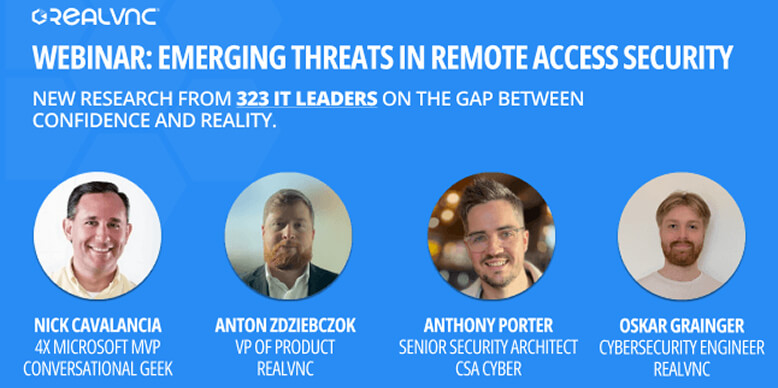
Remote access is where several gaps from the earlier sections meet: broad paths into the network, outside technicians with reach you don’t directly manage, and board questions you can’t answer without session evidence. RealVNC’s Emerging Threats in Remote Access Security 2026 report surveyed 323 qualified IT professionals whose organizations use remote-access solutions in Q1 2026. It found that 47% reported a remote-access incident in the past 24 months, and 55% of respondents who were very or extremely confident in their security had still experienced one. Confidence doesn’t equal protection.
RealVNC Connect gives you four controls that map to those gaps. Role-based access controls (RBAC) with granular action-based permissions let you allow keyboard, mouse, and file transfer separately, so a session matches the role. Multi-factor authentication (MFA) and single sign-on (SSO) with Microsoft Entra ID or Okta on Enterprise plans keep identity checks in your existing identity provider. Code Connect gives an outside technician one-time attended access: the person at the device shares a 9-digit code that refreshes every 2 minutes and approves the connection before it starts. Session recording and audit logs add evidence. Users can record sessions where permissions allow, with recordings saved locally on the controlling device, and the Audit tool in the RealVNC Connect Portal logs cloud connections and team changes, exportable as CSV.
RealVNC Connect is one remote-access control within your Identity, Devices, and Visibility and Analytics work. It doesn’t replace your identity provider, segmentation, or telemetry platforms, and it makes no zero trust certification claim. What it gives your first pilot is a defensible outcome: each remote session scoped to a role, tied to an authenticated user, and logged, so the Coverage KPI and your privileged-access reviews draw on exported records.
Final Words
A stolen password shouldn’t be able to wander from a contractor’s laptop into your finance share, and a good zero trust strategy for managers is built to stop it. That takes a named owner who holds the budget, a narrow pilot tied to one business use case, and identity and device checks in place before you start segmenting. Five KPIs, from coverage to access experience, then show your board whether risk is actually falling. Skip the ownership step and the work scatters across identity, network, and data teams, with nobody able to say what the program covers.
Remote access is a sensible place to prove the approach. RealVNC Connect gives your first pilot role-based access controls with granular action-based permissions, so keyboard, mouse, and file transfer are allowed separately. Multi-factor authentication (MFA) with single sign-on (SSO) through Microsoft Entra ID or Okta on Enterprise plans keeps identity checks in your existing provider. Session recording and audit logs show who reached what. It sits inside your Identity and Visibility and Analytics work and doesn’t replace the rest of the program. Done well, your board gets evidence instead of assurances, and your users keep working. Book a 30-minute demo to see how RealVNC Connect scopes and records remote-access sessions so your first pilot produces audit-ready evidence.
FAQs
What does the CISA zero trust maturity model measure?
CISA’s Zero Trust Maturity Model Version 2.0 (2023) measures progress across five pillars and three cross-cutting capabilities. Each pillar and capability lands at one of four stages: Traditional, Initial, Advanced, or Optimal. Scoring them separately shows where investment is uneven, which a single averaged score hides. Use the stage for each pillar to decide which one gets the next round of funding.
How does per-request verification differ from VPN-based remote access?
A traditional VPN typically authenticates a user once and then extends network-level reach. Per-request verification checks identity, device health, and the specific resource every time access is requested, so a stolen password reaches one resource instead of the whole network. VPNs remain a legitimate model when paired with per-resource checks. In practice, you observe full-device VPN traffic first, then allow only what each user profile needs through per-app tunneling.
Which standards should anchor a zero trust program?
A zero trust strategy for managers anchors on two public documents: NIST SP 800-207 for how each access decision is made, and CISA’s maturity model for where each pillar stands. NIST SP 1800-35 adds the implementation sequence, from inventory through incremental rollout and verification. The Department of Homeland Security’s Zero Trust Implementation Strategy (October 2023) shows one way to split decision rights, with a CISO Council that owns technical standards, reference designs, and investment priorities. Cite each document by name in your board materials so reviewers can trace every decision to a source.
What are the disadvantages of zero trust security?
The main drawbacks are user friction, workflow disruption during rollout, and a long period of running legacy and new controls side by side. Excessive security challenges create fatigue and hurt productivity, so users start working around the controls. A narrow pilot, risk-based challenges, and a feedback channel users can actually reach keep that friction manageable. Plan for coexistence from the start, since few environments switch over in one step.
Can RealVNC Connect limit what an outside technician can do during a support session?
Yes. Role-based access controls with granular action-based permissions let you allow keyboard, mouse, and file transfer separately, so a session matches the technician’s role. For one-time attended access, Code Connect uses a 9-digit code that refreshes every 2 minutes, and the person at the device approves the connection before it starts. Users with the right permissions can record sessions, saved locally on the controlling device, and the Audit tool in the RealVNC Connect Portal logs cloud connections and exports them as CSV. That gives you a record of who did what for your privileged-access reviews.
How long does a mid-market rollout take, and when should you expand beyond the pilot?
There’s no reliable fixed duration, since pace depends on inventory completeness, how long legacy controls stay in place, and what the pilot shows. Expand only when the step’s success check passes: pilot users finish normal work through per-app access, MFA and device-health checks succeed, logs reach your security information and event management (SIEM) tool, and the broad VPN path sits unused. Mid-market teams often combine roles since they have fewer owners, which changes who signs off but not the order of the steps.