


In the modern world, remote access tools and software remain exploitative entry points to a company’s resources and operations. Once access is compromised the risks cannot be overestimated with the 2025 Verizon Data Breach Investigations report stating that stolen credentials were involved in 22% of all confirmed breaches. Even more interesting, the SANS Institute found that among organizations experiencing security incidents, 50% of those incidents originated from external connectivity or remote access pathways.
Together, these figures confirm that remote access pathways remain one of the most targeted entry points by third party access for enterprise breaches and VPN connectivity alone doesn’t make a remote-support tool secure. In this guide, we will unravel what remote support security is, its components, real world examples, and best practices.
What Is Remote Support Security?
Remote support security is the combination of policies, technical safeguards, and operating procedures that protect attended and unattended remote support from unauthorized third party access. viewing, control, credential misuse, and data exposure. It is not just a single technology or device, but protocols comprising verified identities, encrypted sessions, limited permissions, complete visibility, and prompt removal of unnecessary access that keep regular remote access under control. The goal is to grant access to a specific endpoint and task, rather than automatically opening access to the wider network.
Which Controls Make Remote Support Secure?
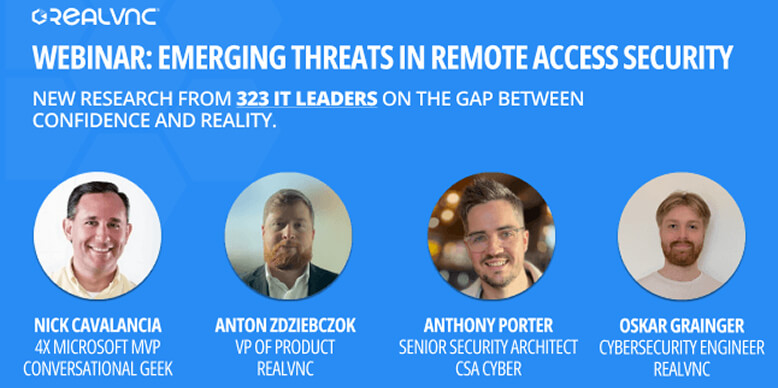
A secure remote support system relies on two major complementary layers comprising controls that protect the connection and active session, and protocols that restrict the people, devices, and actions involved. Before going into details, we must point out no security layer can completely make an enterprise invulnerable to attacks. Insight on Emerging Threats in Remote Access Security pointed out, “66% of IT professionals feel very or extremely confident in their remote access security, yet 47% of organizations experienced an incident, and 55% of that confident group were among them”.
| Control | What It Protects | Example Policy | Evidence Produced |
|---|---|---|---|
| Encryption (TLS + session) | Data in transit. | Enforce TLS 1.2+ for connection setup. | Encryption protects confidentiality, not identity or accountability. |
| MFA | Account/identity at point of access. | Require MFA before session start and again before privileged actions. | Authentication event logs (timestamp, success/failure). |
| RBAC / Least Privilege | Scope of what an authenticated user can access. | Tier 1 support gets view-only access; admins require step-up auth for elevation. | Access-grant records tied to role definitions; permission change logs. |
| Session Logging | Post-hoc visibility | Log and retain all remote sessions (metadata + recording). | Full session audit trail |
Session Encryption and Connection Protection
Encrypting remote-support traffic reduces the risk of data interception while crossing untrusted networks, however encryption alone does not confirm that the connected endpoint is legitimate. That is why the establishment of a certificate validation and authenticated connection setup is needed as it helps prevent man-in-the-middle attacks, impersonated endpoints, and fake service infrastructure. A session-based remote-support platform and a VPN are sometimes seen as one, however, a VPN typically provides broader network connectivity by encrypting a network tunnel, while a remote-support platform creates an authenticated, encrypted session that can restrict access to a specific device and support task. This narrower scope reduces unnecessary exposure compared with general network access.
However encryption capabilities, protocols, and security standards vary by product and configuration, so organizations should verify vendor documentation before making specific claims. Both encrypted transport and identity verified sessions are needed for a proper secure remote support. Documenting encryption standards, certificate practices, protocol versions, and regulatory requirements helps in risk management and security evaluation. Furthermore, organisations should define their policies for additional features such as file transfer, clipboard and screen sharing, and chat.
Identity, Permissions, and Session Evidence
A strong reliable remote-support security depends on multiple layers of control rather than a single safeguard, these layers include: Identity verification, mandatory multi-factor authentication (MFA), role-based permissions, and comprehensive session logging. One could argue that workforce MFA adoption is needed for every administrator, managed service provider (MSP) technician, third-party vendor, or high-risk support workflow because of its 70% in January 2025, but that is not the case as only adopting workforce MFA does not strengthen authentication and authorization processes. Organizations also need Privileged Access Management (PAM) platforms and identity providers (IdPs) to strengthen authentication and authorization processes, although it can not replace the security controls built into a remote computer support solution.
How Does Secure Remote Support Compare With VPNs?
Although VPNs and secure remote-support platforms address different access needs, VPNs provide approved network connectivity, whereas secure remote support restricts technicians to a specific endpoint and support task. To strengthen both approaches, organizations make use of “Zero Trust”.
| Access Model | Typical Scope | Primary Risk | Recommended Safeguard |
|---|---|---|---|
| VPN | Network access | Lateral movement | MFA, segmentation, RBAC |
| Session-Based Remote Support | Named device and task | Unauthorized session access | MFA, approvals, session logging |
| Zero Trust | Context-based access | Misconfigured policies | Continuous verification, least privilege |
Core Differences Between VPN and Session Access
The most significant difference lies in the scope of access.
- Visibility and accountability also differ between these approaches.
- Session-based remote support can use endpoint-level authorization to create a direct relationship between a technician, the session, and the specific remote device being supported.
- VPNs generally provide network-level connectivity, although additional access controls can be used to restrict users to specific devices or network resources.
- VPN is more suitable for users who require network level connectivity across multiple resources.
- Endpoint level session authorisation is a better fit for targeted remote support, device maintenance, and contractor access.
Where Zero Trust Adds Protection
Zero trust security model in simple terms, is a security model that provides remote assistance and requires strict identity verification for every person and device trying to remotely access network resources. It assumes threats exist both inside and outside the network. Rather than relying on a one-time authentication, continuous evaluation reduces standing privileges while improving visibility, accountability, and ability to detect and respond to threats early. Core of principles of zero trust:
- The principle of “Verify Explicitly”: This principle requires that every remote support session is evaluated using multiple sources of information and all technicians identity is authenticated with multi-factor authentication (MFA).
- The principle of least privilege: Limits technicians access to only the permissions required to complete an approved support task. Organizations provide just-in-time (JIT), time-limited permissions that expire automatically after work is done.
- The principle of assume breach: It recognises that authentication should not be the sole medium to proof of trust. This foundation of this principle is backed by this report made by Verizon’s 2026 Data Breach Investigations Report, 62% of breaches involved a human element, including errors, social engineering, misuse, or stolen credentials.
Real-World Remote Support Security Examples
Below are some examples that demonstrate how security depends on well defined policies, access controls, and audit evidence:
- Roadchef enabled its three-person remote team to support 28 motorway service stations using RealVNC, reducing unnecessary travel while maintaining accountability through named technician accounts, mandatory MFA, endpoint grouping, and detailed session logs. Using the MSP system, a technician receives a time-bound access to a customer’s order only after the customer’s identity and support ticket have been verified, with the session protected by MFA, restricted to the approved device and task, fully logged, and automatically terminated when work is complete.
- Pratt & Whitney supports approximately 400 employees across 80 test facilities, highlighting the importance of role-based, system-scoped access that limits technicians to approved systems within sensitive technical environments.
Together, these examples show that secure remote support relies on identity verification, least-privilege access, session evidence, and clear approval processes. Platforms such as RealVNC Connect can support cross-platform, session-based access with MFA enforcement, audit logging, and session recording for suitable workflows, but they should not replace identity and access management (IAM), privileged access management (PAM), and broader network security controls.
Where Is Secure Remote Support Used?
Secure remote support is used whenever IT teams must maintain systems without on-site visit, from corporate offices and branch locations to industrial facilities and customer environments. To prevent hacking like in the case of the Clorox hacking incident in August 2023, organisations employ secure remote support like MSPs(Managed Service Provider).
| Environment | Typical Remote Task | Primary Security Concern | Control Priority |
|---|---|---|---|
| Enterprise IT | User troubleshooting | Credential misuse | MFA, RBAC, session logs |
| MSP | Customer support | Cross-customer access | Tenant isolation, approvals |
| Operational Technology | Equipment maintenance | Process disruption | Segmentation, monitoring |
| Healthcare/Labs | Device support | Sensitive data and safety | Least privilege, audit trails |
Enterprise IT and Managed Service Support
Enterprise service desks and MSPs make use of it for user troubleshooting issues and unattended access for approved maintenance of servers, workstations, kiosks, and connected devices. In cases where multiple support teams, acquisitions, contractors, or customer tenants are involved, a centralized governance is needed to ensure consistent logging, access reviews, and incident response procedures.
To address the risk of shadow IT remote control tools which creates unmanaged access paths outside central logging, access review, and incident response processes, every remote session should be linked to a valid ticket or approved maintenance request, and a limit should be placed to improve accountability and auditability.
OT and Regulated Environment Support
Remote support is used for operational technology (OT) and regulated environment support but it requires stronger safeguards as unauthorized changes can affect physical processes. Systems such as laboratory equipment, appliances, hypervisors, PLCs, HMIs, industrial controllers, and SCADA environments may require stronger segmentation, approval, and monitoring controls. It should be segmented from corporate IT networks and accessed only though approved maintenance windows, explicit authorization, and carefully defined technician roles.
Organisations may use frameworks such as IEC 62443 and NIST SP 800-82 Rev. 3 as guidance for implementing risk-based controls, including controlled connectivity and network segmentation rather than direct internet exposure. SOC 2 and ISO/IEC 27001:2022 both emphasises on identifying risks to information assets and implementing controls proportionate to those risks, however, industry-specific regulations may require additional controls.
How Will Remote Support Security Change?
As technology continues to develop so will remote support security evolve, as we now see in the introduction of continuous verification, just-in-time (JIT) access, faster risk-based vulnerability remediation, and clearer shared-responsibility models for cloud-managed environments. Most organizations can now adapt the Zero Trust principle which is broadly talked about in NIST SP 800-207 instead of trusting a user completely after successfully logging in.
Another major change is going to be on risk-based patch management. According to Verizon’s 2026 Data Breach Investigations Report, only 26% of vulnerabilities listed in CISA’s Known Exploited Vulnerabilities (KEV) catalog were fully remediated in 2025, with the median remediation time increasing to 43 days, highlighting the need to prioritize vulnerabilities that are actively exploited rather than relying solely on routine patch cycles.
Data location, log retention, access reviews, and the division of security duties between the vendor and customer is also affected as there is a big shift to cloud managed and hybrid deployment remote support platforms.
What Risks Threaten Remote Support Sessions?
Remote support sessions are open to hacking when attackers impersonate users, compromise technician accounts, exploit unpatched software, intercept unverified connections, or abuse excessive privileges to move across an organisation’s environment. As seen in the September 2023 attack on MGM Resorts by the group called “Scattered Spider threat”, weak identity verification processes can be used to bypass secure remote access technologies.
| Risk | How It Appears in Support | Mitigation |
|---|---|---|
| Credential phishing & MFA-reset fraud | Stolen technician credentials or fraudulent help-desk requests | Out-of-band verification, phishing-resistant MFA, activity monitoring |
| Man-in-the-middle attacks | Unverified or spoofed remote connections | Authenticated session establishment, certificate validation, encrypted sessions |
| Lateral movement | Compromised accounts used to access additional systems | Network segmentation, RBAC, least-privilege access |
| Unpatched software | Exploited remote-support clients, gateways, or operating systems | Asset inventory, timely patching, vulnerability management |
| Compliance gaps | Missing logs, approval records, or excessive standing access | Session logging, audit trails, periodic access and permission reviews |
Best Practices For Remote Support Security: Implementation
Implementation should follow a repeatable, risk based process beginning with identifying all remote access paths before configuring security controls. Unattended access deployments require particularly strong controls, including encryption, MFA, credential protection, least privilege, approvals, monitoring, recording where appropriate, and periodic reviews. Clear ownership for remote support tooling, endpoint inventories, access approvals, and patch management decisions should be conducted frequently.
- First, identify approved tools, endpoints, technician groups , third-party accounts, and unmanaged alternatives creating shadow IT exposure.
- Enforce strong identity checks and establish out-of-band verification for password rests, MFA changes, and high risk support requests.
- Apply least privilege on access. Limits access by categories or job type and vendors should have time bound approvals.
- Every session should be properly protected using encrypted traffic and authenticated connection setup.
- Appropriate logs and recording should be properly documented.
- Conduct regular access reviews, test help desk identity verification, and patch all remote support components.
For more useful guidance and tips, ISO/IEC 27001:2022, NIST CSF 2.0, NIST SP 800-82 Rev. 3, and IEC 62443 frameworks provide in-depth information.
Conclusion
Remote support security is about ensuring there are no loop holes or back doors for unauthorized access. To achieve this balance, a layered approach that combines phishing resistant MFA, strong identity verification, encrypted and authentication sessions, least privileged access, device posture checks, continuous monitoring, and comprehensive session loggings must be put in place. Layering also helps reduce risk more effectively as no single control is sufficient on its own.
Frequently Asked Questions
Is remote support secure?
Remote support is prone to hacks if not properly secured using the right tools and operating process. It is an open system and if not properly secured, third parties can come in from the back end.
What encryption should remote support use?
End-to-end data encryption is the most ideal for protecting session data. How a remote support provider manages encryption keys, authenticates endpoints, and secure data should always be verified.
How does zero trust improve remote support security?
It verified user, device, context, and requested resources instead of trusting everyone on the corporate network or VPN. Constant evaluation is done even after users are successfully logged in.
What should be logged in a remote support software session?
Session recording, alerts, and tamper resistant retention. Also, while initiating and approving the session, device targeted, timestamps, authentication events, actions taken, file transfers, privilege changes, and session outcome.
How do you secure unattended remote access?
Using MFA enforcement, names administrator account, privilege access management, roles based permissions, endpoint patching, and approval or just-in-time access. However all these will not matter if security details are not left confidential.