



The pressure on IT leadership rarely arrives as a single request. A board wants an artificial intelligence plan, finance wants proof of value, and operations need the core services to keep working. Security teams must manage new forms of risk.
IT trends for CIOs and IT directors describe the leadership shifts shaping those decisions: technology leaders must connect investment choices to business outcomes and maintain reliability, security, and defined accountability. The role now reaches beyond infrastructure into executive coordination, workforce capability, and the practical governance of emerging technology.
This article examines the trends changing the CIO agenda, from generative AI oversight and cybersecurity resilience to identity and access management, cloud economics, modernization, operational governance, and disciplined technology investment.
What IT Trends for CIOs Demand Attention Now?
The hardest planning decisions arrive when each priority looks reasonable on its own, yet the combined funding, control, and staffing demand does not fit. IT trends for CIOs and IT directors demand one connected agenda: governed AI adoption, identity-centred security, selective cloud placement, and financial accountability must be assessed together. The task is portfolio coherence under constraint.
Think of the portfolio as an investment committee’s agenda. Each initiative has expected value, dependencies, risk, and an opportunity cost; funding every proposal without comparing those factors leaves leadership with activity but no defined direction. The Federal Reserve’s Monitoring AI Adoption in the U.S. Economy reported that about 18% of U.S. firms had adopted AI by year-end 2025, but adoption alone says little about governed value at enterprise scale.
Employee access changes the control question. A separate infrastructure plan, security plan, and innovation plan will produce competing priorities when leaders fail to connect their decision rights.
Which pressures are converging on IT leadership?
- AI diffusion: Wider employee access increases the need for a governed intake, review, and approval route.
- Identity exposure: Hybrid work and external support add access paths that require consistent assurance.
- Cost scrutiny: Multi-cloud spend requires engineering, finance, and product leaders to share ownership.
- Modernization drag: Technical debt slows the adoption of new platforms, controls, and automation.
| Legacy IT Planning | Current Leadership Requirement | Board-Level Consequence |
|---|---|---|
| Separate project business cases | One view of dependencies and ownership | Funding decisions reflect trade-offs |
| AI experimentation outside core controls | Approved use cases with review routes | Leaders can see accountability |
| Cloud spend reviewed after invoices arrive | Unit economics tied to service demand | Cost decisions become operational |
| Security measured through tool deployment | Control evidence tied to business services | Resilience discussion becomes credible |
A coherent portfolio gives executives a usable choice: fund the shared capabilities that make several initiatives governable, or defer work that cannot yet sustain its own operating demands.
The 4 Lenses for an Executive IT Trend Portfolio
A trend merits investment when it creates business value that the organization can control, operate, and afford over time. Adoption momentum is not enough. CIOs need to assess Business Value, Control Exposure, Operating Readiness, and Economic Sustainability together, then use the result to frame a board discussion around evidence rather than enthusiasm.
This model does not replace sector-specific judgment. It makes dependencies visible: an AI use case may promise a worthwhile outcome, but weak identity assurance or missing operational data means the organization is not ready to scale it. Autonomy expands the management surface. Delegated actions still need accountable oversight.
- Business Value: What business outcome, service improvement, or risk reduction justifies continued funding?
- Control Exposure: Which data, identities, decisions, and external parties fall within the initiative’s control boundary?
- Operating Readiness: Are named owners, reliable telemetry, skills, and remediation capacity in place after a pilot ends?
- Economic Sustainability: Do ongoing vendor commitments, staffing needs, technical debt, and workload costs remain acceptable?
How do value and control exposure interact?
The initiatives with the broadest data access or decision authority deserve executive review early, even when their immediate business case is compelling. That sequence protects delivery speed: teams know the approval route before work spreads across departments. Reet Kaur, Chief Information Security Officer and AI governance author, wrote in The CISO’s Guide to Mapping AI Governance to NIST AI RMF. She explains: “That is what effective AI governance should accomplish. It should help the business move faster while staying inside clear guardrails.”
The OECD’s Recommendation of the Council on Artificial Intelligence (revised 2024) grounds that judgment in accountability, transparency, robustness, security, and privacy. Innovation velocity becomes durable when leaders can explain who owns the outcome, which controls apply, and how exceptions receive review.
What proves operating and economic readiness?
Operating readiness means more than a funded team and a working demonstration. It requires named owners, operational data that leaders trust, and the capacity to correct control failures without pausing a critical service. Economic sustainability includes vendor concentration, data-transfer charges, technical debt, and staffing requirements.
The FinOps Foundation’s FinOps Framework defines FinOps as a cross-functional cloud financial-management practice across engineering, finance, and product teams, built around continuous optimization rather than occasional cost cutting. That matters: cloud economics belongs in service decisions, where demand and accountability are visible.
| Portfolio Lens | Executive Question | Evidence to Review | Decision Signal | Common Misread |
|---|---|---|---|---|
| Business Value | What outcome will improve? | Service, customer, or process evidence | Clear accountable benefit | Usage equals value |
| Control Exposure | What requires oversight? | Data classes and access routes | Defined control boundary | A policy alone proves control |
| Operating Readiness | Who runs it after launch? | Ownership, telemetry, skills | Repeatable operating model | Pilot staffing will continue |
| Economic Sustainability | What does durable delivery require? | Unit costs and commitments | Funding remains defensible | Total spend tells the whole story |
Which IT Trends for CIOs Belong in Board Reporting?
)
Board reporting should show directional evidence that links technology work to business exposure, resilience, investment outcomes, and named ownership. IT trends for CIOs and IT directors belong in the board pack when the discussion helps directors choose a funding path, accept a defined risk, or challenge unclear accountability. A dashboard of tool activity does neither.
Security adoption figures need context before they become a governance signal. Hughes’ 2025 Secure Network Access Report reported that 38% of surveyed organizations were implementing Zero Trust and 42% planned implementation within one year. Those figures describe adoption intent, not measurable maturity or control effectiveness.
- Governed AI value realization: Report approved use cases, accountable owners, and evidence of business impact. This supports funding choices; raw employee usage can mistake experimentation for value.
- Identity and access assurance: Show privileged pathways, external-support access, and policy exceptions across hybrid work. This supports risk acceptance; counting identities alone hides weak assurance.
- Cloud unit economics: Compare cost trends with demand, workload placement, and product ownership. This supports placement decisions; total spend without service context misleads.
- Modernization capacity: Assess technical-debt concentration, delivery flow, and the ability to retire legacy dependencies. This supports sequencing; project milestones do not prove service readiness.
- Operational resilience: Report recovery readiness, critical-service dependencies, and unresolved control gaps in business terms. This supports investment choices; incident counts without service impact lack meaning.
Wade Zarriello, Director of Infrastructure and User Services at Centers for Medicare & Medicaid Services, told GovCIO Media: “Using zero trust as an operating system to help enable not only ease of access and reduce bottlenecks in the infrastructure, but also strengthen cyber security, has been a key piece for us moving forward in our modernization efforts.” His perspective illustrates why control objectives need to sit inside operating work rather than beside it.
| Board Indicator | What It Signals | Decision It Supports | Common Error |
|---|---|---|---|
| Approved AI use cases | Accountable value delivery | Scale, redesign, or defer | Treating usage as impact |
| Access assurance | Control over critical pathways | Risk acceptance and investment | Reporting identity counts alone |
| Cloud unit economics | Service-level cost discipline | Placement and funding choices | Reading total spend in isolation |
| Legacy retirement readiness | Modernization capacity | Sequencing decisions | Equating migration with retirement |
| Recovery readiness | Resilience of critical services | Control remediation priority | Using generic uptime measures |
A board pack earns attention when every indicator leads to a decision, an owner, and a review date.
Build an IT Trend Roadmap Around Trade-Offs
A credible roadmap states what leadership is choosing between, rather than presenting every initiative as equally urgent. The real choices include enterprise standards versus local experimentation, cloud flexibility versus predictable unit cost, and modernization speed versus service continuity. Regulated, global, and asset-intensive organizations will weigh those tensions differently, but each needs criteria that people can apply consistently.
Workload placement is one example. InfoWorld’s Cloud trends 2025: Repatriation and sustainability make their marks, reporting Flexera’s 2025 State of the Cloud Report, noted that slightly more than one-fifth of workloads and data had moved back from cloud environments. Repatriation is not automatically a reversal; it can be a deliberate response to service economics, sovereignty needs, latency, or resilience requirements.
- Set enterprise guardrails before scaling: Define policy boundaries, risk thresholds, and escalation routes before deploying consequential AI or autonomous workflows.
- Fund shared capabilities, not isolated pilots: Prioritize identity, data governance, telemetry, platform engineering, and FinOps practices that improve several initiatives.
- Place workloads by service economics and criticality: Assess latency, sovereignty, resilience, operating cost, and modernization constraints as one decision.
- Review the portfolio on a fixed cadence: Use quarterly reviews to stop, scale, redesign, or defer initiatives as evidence changes.
Guidehouse’s Driving mission impact through AI governance describes a U.S. federal agency that established enterprise AI governance, standardized AI evaluation, and improved coordination among decentralized teams. The case illustrates federated governance: central teams define the rules and review model, and local teams retain responsibility for the work closest to their mission.
| Strategic Tension | Context That Favors Each Direction | Implication |
|---|---|---|
| Central standards vs local experimentation | Common controls for shared data; local testing for bounded use cases | Define escalation and exception routes |
| Cloud flexibility vs predictable unit cost | Elastic demand; stable workloads with clear service economics | Review placement by workload |
| Modernization speed vs service continuity | Change urgency; critical legacy dependencies | Sequence retirement around service risk |
| Vendor breadth vs consolidation | Specialist needs; shared control requirements | Make concentration an explicit choice |
A roadmap becomes defensible when leaders can show why one option received funding, what evidence would change the decision, and who owns the consequence.
Where Do CIO Trend Programs Create Governance Gaps?
Trend programs stall when responsibility is scattered across executives, teams use tools outside approved routes, or controls cannot produce evidence that auditors and leaders can review. These are operating-model design problems. The technology category may be sound, yet unclear decision rights will still create unmanaged exceptions and delayed accountability.
Ashley P. Moore, Office of the CIO at the U.S. Agency for Global Media, stated in a NIST submission. The submission states: “Provide sufficient oversight into the internal/external impact assessments, governance, ethics, and accountability of the use of these technologies around the agency, within public/private sector agreements and established service level agreements.” That expectation applies to the operating evidence behind decisions, not merely to policy documents.
- Decision-right ambiguity: Assign ownership for policy, risk acceptance, investment approval, and exception management.
- Shadow AI exposure: Establish approved experimentation pathways so data, model, and procurement controls remain visible.
- Identity inconsistency: Apply assurance requirements across employees, contractors, service providers, and privileged support workflows.
- Capability debt: Fund skills, operating procedures, and evidence collection alongside the underlying technology.
Post-quantum preparation needs the same discipline. Inventory cryptographic dependencies, identify service owners, and record where future migration decisions will affect customer-facing or critical internal services. No universal deadline belongs in the roadmap without a defined regulatory or contractual requirement.
The test is plain: if leadership cannot name the owner, control objective, evidence source, and exception route for an initiative, it is not fully governed.
How RealVNC Closes the CIO Trend-Execution Gap
)
CIO trend execution depends on what happens during daily support and remediation work. Hybrid support, privileged maintenance, and external assistance can create inconsistent records without identity, authorization, and session evidence operating together. A board-level security objective has little value when the access workflow beneath it cannot show who connected to a critical system, under which permissions, and when.
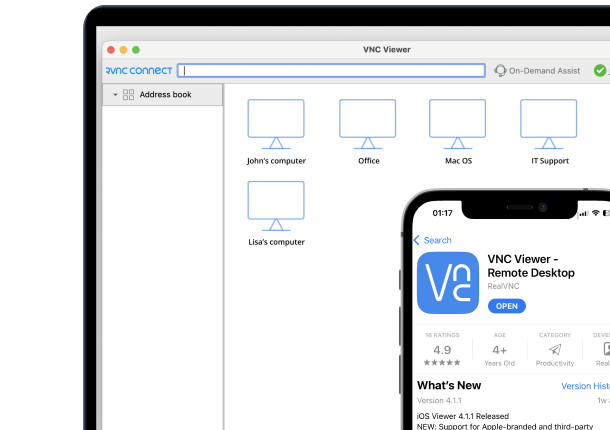
RealVNC Connect supports controlled remote-access workflows that connect enterprise identity policy with operational evidence:
- Single sign-on (SSO) with Microsoft Entra ID or Okta and multi-factor authentication (MFA): aligns remote-access authentication with enterprise identity policy.
- Role-based access controls (RBAC) and granular action-based permissions: separate keyboard, mouse, and file-transfer permissions for least-privilege work.
- Session monitoring, session recording, and detailed audit logs: provide records for operational review, incident analysis, and audit preparation.
- Code Connect: uses single-use nine-digit session codes for temporary third-party access without standing credentials.
These controls address a defined workflow gap rather than replacing an identity provider, FinOps practice, or broader governance program. Enterprise-grade security and compliance includes cloud-brokered, zero-knowledge architecture, AES-256/AES-GCM encryption, Perfect Forward Secrecy, RSA 2048-bit endpoint authentication, ISO/IEC 27001:2022 certification, and Cloud + Direct deployment options.
Consistent remote-access controls give CIOs more detailed evidence for cybersecurity board reporting, stronger hybrid-workforce governance, and more defensible operational resilience when support work reaches critical systems.
Final Words
IT trends for CIOs and IT directors demand choices that hold up beyond the pilot: fund initiatives with demonstrable business value, defined control boundaries, operating ownership, and durable economics. Board reporting then becomes useful when it connects AI governance, identity assurance, cloud placement, and modernization work to a decision, an owner, and a review date.
That discipline reaches into daily operations. RealVNC Connect brings single sign-on (SSO), multi-factor authentication (MFA), role-based access controls, and session evidence into remote-support workflows, so privileged maintenance and third-party assistance follow the same accountability standards as the wider executive roadmap. Leave those access routes unmanaged, and resilience claims become harder to prove when leaders need evidence most. Book a 30-minute demo to see how controlled remote access maps to your governance and resilience priorities.
FAQs
These answers give CIOs and IT directors a concise way to apply the article’s portfolio and governance framework.
What framework prioritizes enterprise IT shifts?
IT trends for CIOs and IT directors are best prioritized through four lenses: Business Value, Control Exposure, Operating Readiness, and Economic Sustainability. Together, they show whether an initiative deserves funding, further review, or a defined pause.
How is adoption different from operational maturity?
Adoption means an organization has started an initiative; operational maturity requires measurable outcomes, durable ownership, repeatable controls, and reviewable evidence. A zero-trust program, for example, needs defined control objectives rather than product acquisition alone.
Which governance standards inform AI oversight?
The NIST AI Risk Management Framework informs AI oversight through Govern, Map, Measure, and Manage. The OECD AI Principles add emphasis on accountability, transparency, robustness, security, and privacy.
How does RealVNC support governed IT operations?
RealVNC Connect supports governed remote access through single sign-on (SSO), multi-factor authentication (MFA), role-based access controls, session recording, and detailed audit logs. Code Connect adds time-bound nine-digit session codes for controlled third-party access, giving teams clearer evidence during support and remediation work.